
Zero-Waste Buildings: Why They Matter in Modern India
Summary
Zero-waste buildings are vital for sustainable development in India, minimizing environmental impact through efficient design, responsible materials, and circular economy principles. They offer long-term savings and a healthier future.

Introduction
As Indian cities grow taller and wider, construction has become one of the biggest users of natural resources. At the same time, landfills are filling up faster than expected. In this situation, the idea of zero waste buildings is slowly gaining attention. These buildings are not just about looking green from outside. They are about reducing waste at every stage, from planning to demolition. In simple words, they try to leave almost nothing behind. This shift towards sustainable construction is becoming important for both builders and homebuyers.
Understanding the Idea of Zero-Waste Buildings
A zero-waste building is designed to avoid sending waste to landfills. It focuses on reuse, recycling, and responsible disposal.
During construction, materials are carefully planned to reduce leftovers. During daily use, waste is sorted and recycled. At the end of the building’s life, parts are reused instead of being dumped.
This approach connects well with waste free buildings and long-term environmental thinking.
Why Zero-Waste Buildings Are Becoming Important
The construction industry produces massive waste every year. In India, broken concrete, bricks, wood, and plastic often end up in open dumping grounds.
By promoting green buildings India, developers can reduce pollution and protect natural resources. Less waste also means less pressure on landfills and lower carbon emissions.
Slowly, people are realising that ignoring waste today creates bigger problems tomorrow.
Role of Sustainable Design in Waste Reduction
Design plays a big role in controlling waste. Poor planning leads to material wastage and unnecessary demolition later.
In zero waste building design principles, architects focus on flexible layouts, modular systems, and adaptable spaces. This means buildings can change with time instead of being torn down.
When spaces are designed smartly, wastage automatically reduces. It sounds simple, but it needs experience and long-term thinking.
Choosing the Right Construction Materials
Material selection decides how green a building really is. Traditional buildings use heavy cement and steel, which have high carbon footprints.
Zero-waste projects prefer recycled steel, reclaimed wood, fly ash bricks, bamboo, and low-impact concrete. These materials support sustainable building practices India.
Local sourcing also matters. It reduces transport pollution and supports regional suppliers.
Circular Economy in Construction
One of the key ideas behind zero-waste buildings is the circular economy in construction. Instead of “use and throw,” it promotes “use and reuse.”
Materials are selected so they can be dismantled and reused later. Composite materials that cannot be separated are avoided.
This creates a closed system where resources keep circulating instead of being wasted.
Designing for Deconstruction
Most buildings today are designed only for construction, not for dismantling. When demolished, everything becomes waste.
Zero-waste projects follow Design for Deconstruction. Bolts and screws are preferred over permanent adhesives. Joints are made reversible.
This allows materials to be recovered easily. It is an important part of zero waste construction methods.
Energy Efficiency and Waste Control
Energy waste is also a form of environmental waste. Excessive power use increases pollution.
Zero-waste buildings focus on natural light, cross ventilation, insulation, and efficient appliances. Solar panels and smart controls reduce dependency on fossil fuels.
These features connect strongly with eco friendly architecture and long-term savings.
Water Management in Zero-Waste Buildings
Water scarcity is a major concern in India. Zero-waste buildings treat water as a valuable resource.
Rainwater harvesting, greywater recycling, and low-flow fixtures are standard features. Treated wastewater is reused for gardening and flushing.
This reduces dependency on municipal supply and prevents water wastage.
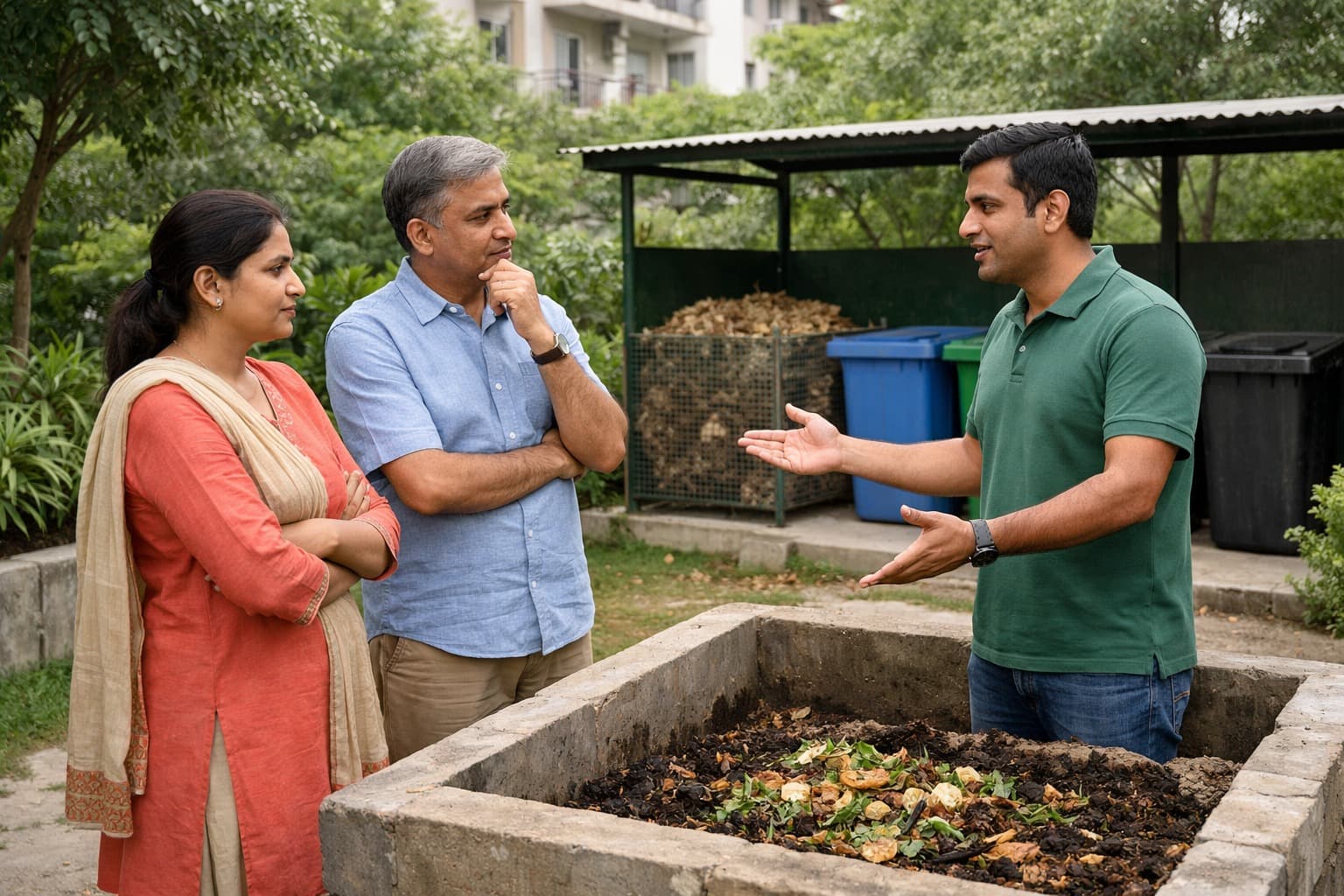
Waste Management Systems Inside Buildings
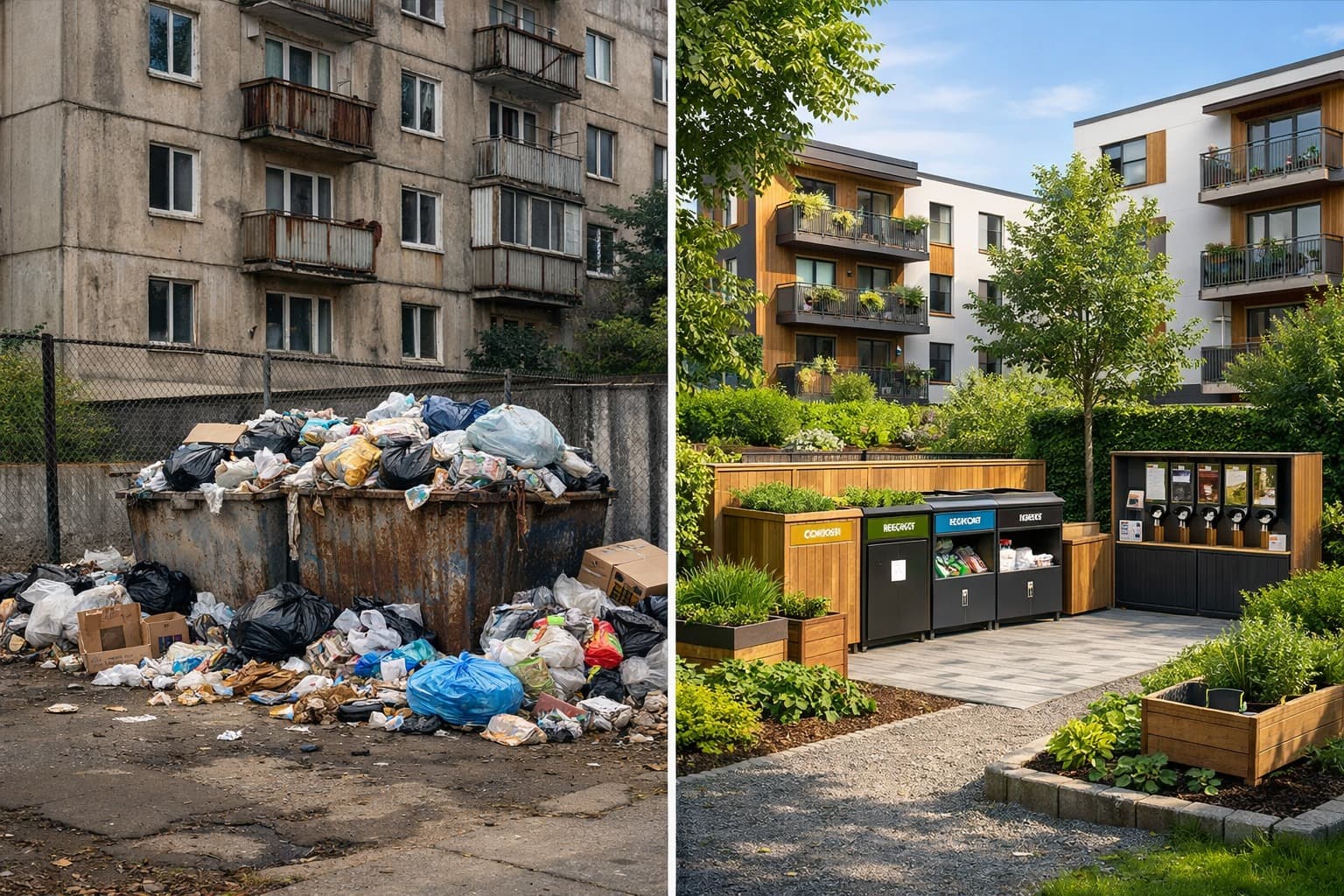
A building cannot become zero-waste without proper internal systems. Dustbins alone are not enough.
Separate bins for dry waste, wet waste, and recyclables are provided. Composting units handle organic waste. Recyclable material is collected systematically.
Such systems make eco friendly commercial buildings and residential projects truly functional.
Construction Phase and Waste Control
Most waste is generated during construction. Broken tiles, excess cement, and packaging materials are common.
Zero-waste projects follow strict waste management plans. Materials are delivered as needed. Prefabrication reduces cutting waste.
Off-site manufacturing improves accuracy and reduces damage. These practices improve efficiency and reduce losses.
Role of Technology in Zero-Waste Design
Modern technology helps track energy, water, and waste usage. Smart meters and monitoring systems show real-time data.
Builders and facility managers can quickly identify problems. Over time, this helps improve performance.
Technology makes sustainable construction more practical and measurable.
Behaviour of Occupants and Its Impact
Even the best building fails if residents are careless. Throwing mixed waste, wasting water, and misusing systems destroys sustainability.
Zero-waste living needs awareness and cooperation. Signboards, workshops, and small reminders help build habits.
Sustainability is not only about buildings. It is about people too.
Certifications and Regulatory Support
Many certification systems promote zero-waste practices. LEED, GRIHA, and IGBC are popular in India.
Certified projects usually follow complete guide to zero waste building design and planning standards. They are more trustworthy for buyers.
Government policies are also slowly supporting green development.
Cost Factor and Long-Term Benefits
Many believe zero-waste buildings are expensive. Initial costs may be slightly higher due to advanced systems.
But lower electricity bills, water savings, and reduced repairs balance this over time. Maintenance costs are also lower.
In the long run, such buildings are more economical and stable investments.
Challenges in Implementing Zero-Waste Projects
Despite benefits, challenges remain. Sustainable materials may not be available everywhere. Skilled professionals are limited.
Coordination between designers, contractors, and users is complex. Sometimes budgets become tight.
Still, awareness is growing, and solutions are improving gradually.
Impact on Property Value and Market Demand
Buyers today prefer responsible projects. Green homes and offices attract better tenants and resale value.
With rising utility costs, people look for efficient spaces. This increases demand for zero-waste developments.
Developers who adopt these methods gain long-term credibility.
Future of Zero-Waste Buildings in India
India is moving towards climate commitments and smart city goals. Zero-waste buildings fit perfectly into this vision.
In coming years, features like recycling units, solar systems, and modular design may become standard.
The future of sustainable construction and waste free buildings looks strong and promising.
Conclusion
Zero-waste buildings represent a thoughtful way of building for the future. They reduce environmental damage, save resources, and create healthier spaces. Through smart design, responsible materials, efficient systems, and user participation, waste can be minimized at every stage. In a country facing pollution and resource stress, such buildings are not a luxury. They are a necessity. Choosing zero-waste construction today means protecting tomorrow.
Summary
Zero-waste buildings focus on reducing waste throughout their lifecycle, from construction to demolition. By using sustainable materials, modular design, recycling systems, and energy-efficient technologies, these buildings minimise environmental impact. They support circular economy principles and promote responsible living. Although initial costs may be slightly higher, long-term savings and higher property value make them worthwhile. In India’s growing urban landscape, zero-waste buildings offer a practical solution for sustainable development and healthier communities.