
Why Two 2BHKs of the Same Carpet Area Feel Different
Summary
Same carpet area, different feel? Layout, light, and design drastically impact how spacious a 2BHK feels. Discover key factors to consider when choosing a home that maximizes comfort and usability.

Introduction
Many homebuyers are surprised when they visit two 2BHK apartments with the same carpet area but experience completely different space perceptions. On paper, both homes may measure the same, yet one feels open and comfortable while the other feels tight and crowded. This difference is not accidental. It is influenced by design, layout, lighting, ventilation, and interior planning. Understanding these factors helps buyers make better decisions and choose homes that feel spacious and functional in daily life.
Understanding Carpet Area
Carpet area refers to the actual usable space inside a flat, excluding walls, balconies, and common areas. It includes bedrooms, living room, kitchen, bathrooms, and internal passages. While carpet area gives a fair idea of usable space, it does not explain how efficiently that space is planned. Two homes can have identical carpet areas but very different usability due to layout and design choices.
Importance of Layout Planning
Layout is one of the biggest reasons why two similar-sized homes feel different. A well-designed layout minimises wasted space and improves movement. Apartments with straight, simple layouts usually feel larger than those with narrow corridors or awkward corners. If too much space is used for passages, the rooms become smaller. A balanced layout ensures that every square foot is useful and accessible.
Room Size Distribution
How space is divided among rooms plays a major role in comfort. In some 2BHKs, the living room is spacious but bedrooms are small. In others, bedrooms are large but the kitchen is cramped. When space is unevenly distributed, the home may feel uncomfortable. A flat with well-proportioned rooms usually feels more practical and spacious, even if the carpet area is the same.
Ceiling Height and Vertical Space
Ceiling height affects how open a home feels. Higher ceilings create a sense of airiness and freedom. Lower ceilings make rooms feel closed and compact. Even a difference of a few inches can change the perception of space. Apartments with better vertical space often feel more premium and comfortable.

Natural Light and Ventilation
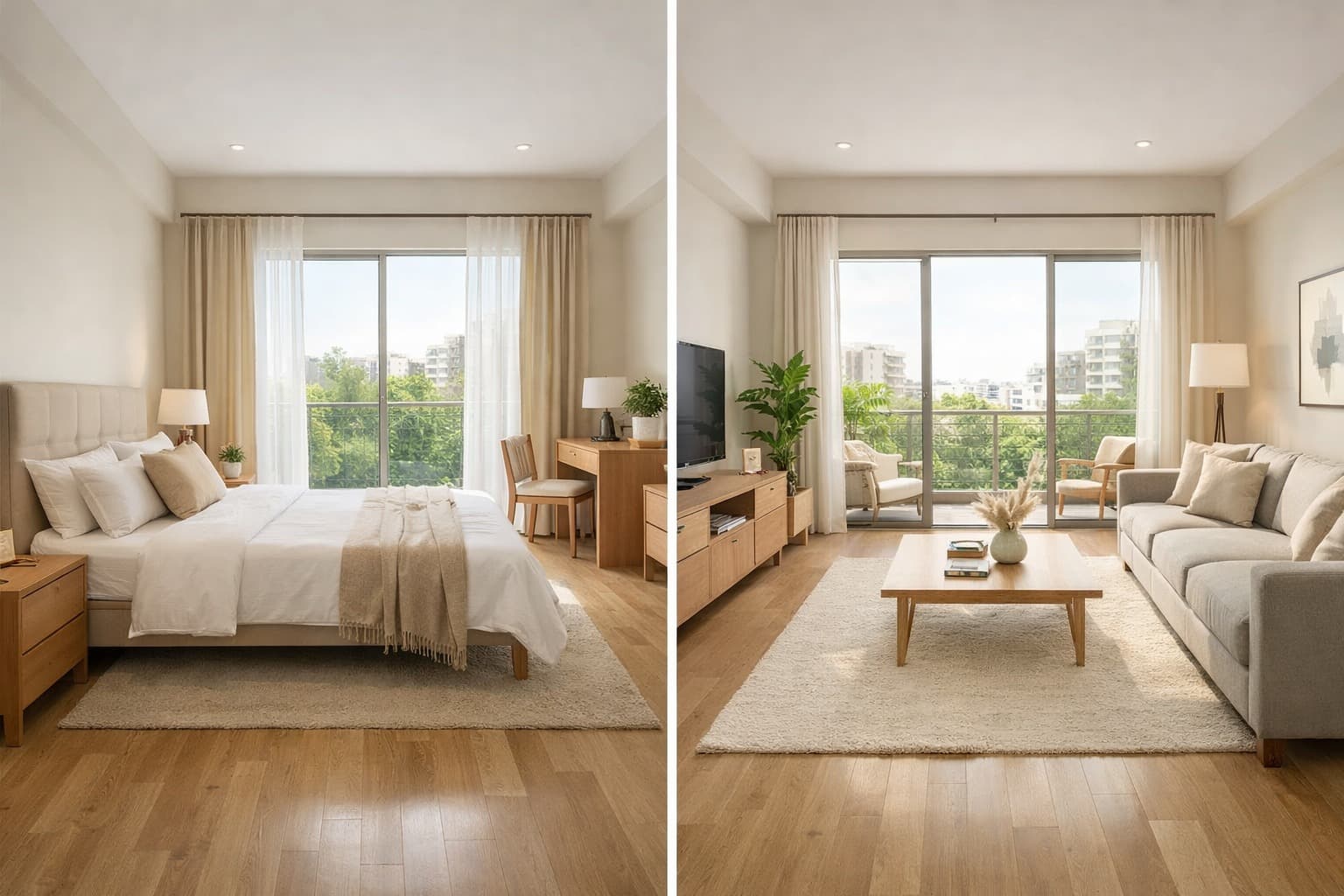
Homes with good sunlight and ventilation always feel bigger. Large windows, multiple openings, and cross-ventilation improve airflow and brightness. Natural light removes shadows and makes rooms look wider. On the other hand, dark flats with limited windows feel smaller, even if they have the same carpet area. Good ventilation also improves health and comfort.
Shape and Structure of Rooms
The shape of rooms influences usability. Square and rectangular rooms are easier to furnish and utilise. Irregular shapes, curved walls, or narrow corners reduce usable space. Even if the total area is the same, poorly shaped rooms feel inconvenient. Regular-shaped rooms provide better flexibility for furniture and storage.
Balcony and Door Placement
Balconies connected to living rooms or bedrooms extend visual space. When doors open towards a balcony or large window, the room feels larger. Sliding doors and wide openings also improve movement. In contrast, poorly placed doors and small balconies limit openness and reduce the sense of space.
Furniture and Interior Design
Furniture selection has a strong impact on how a home feels. Large sofas, bulky wardrobes, and heavy dining tables can crowd a room. Smart, compact furniture improves circulation. Wall-mounted units, foldable beds, and modular kitchens help save space. Minimalist interiors make even small homes feel open and organised.
Colour and Material Choices
Light colours reflect more light and create an open atmosphere. White, beige, pastel shades, and soft greys make rooms look larger. Dark colours absorb light and make spaces feel smaller. Flooring material, wall finishes, and ceiling treatments also influence visual space. Glossy tiles and mirrors enhance brightness and depth.
Storage Planning
Poor storage leads to clutter, which makes homes feel cramped. Apartments with built-in wardrobes, loft storage, and kitchen cabinets remain organised. When storage is insufficient, belongings pile up in corners and passages. A clutter-free home always feels more spacious than a messy one of the same size.
Orientation and Floor Level
The direction in which a flat faces affects light and wind flow. East- and north-facing homes generally receive better daylight. Higher-floor apartments usually get more light and ventilation. Lower floors may feel darker due to nearby buildings. These factors change how open or closed a home feels.
Builder Design Philosophy
Different builders follow different design standards. Some focus on maximum efficiency, while others prioritise aesthetics or cost-saving. Quality developers invest in better layouts, window placement, and proportions. Poor planning can reduce comfort, even in large apartments. Choosing reputed builders improves the chances of getting a better-designed home.
Psychological Impact of Space
Human perception also matters. Bright homes, open views, and greenery create a positive feeling. Homes facing parks, lakes, or open areas feel larger than those facing walls or crowded buildings. Noise levels, privacy, and surroundings also influence how spacious a home feels emotionally.
How Buyers Can Evaluate Space Better
Homebuyers should not rely only on carpet area figures. They should walk through the flat and observe movement, light, and ventilation. Checking furniture placement possibilities is helpful. Buyers should open windows, stand in rooms, and visualise daily activities. Visiting sample flats and comparing layouts improves understanding.
Tips for Making Small Homes Feel Bigger
Residents can improve space perception through smart design. Using mirrors, light curtains, and open shelves increases openness. Avoiding unnecessary partitions helps maintain flow. Keeping interiors simple and organised enhances comfort. Good lighting, especially warm LED lights, also improves ambience.
Summary
Two 2BHK apartments with the same carpet area can feel very different because of layout, room proportions, ceiling height, lighting, ventilation, and interior planning. Design efficiency matters more than numbers on paper. A well-planned home provides comfort, functionality, and visual openness. Homebuyers should focus on usability, not just size, when choosing a property. By understanding these factors, buyers can select homes that truly match their lifestyle and expectations.