
Why Some Small Kitchens Work Better Than Large Ones
Summary
Small kitchens often outperform large ones in practical cooking efficiency due to a tighter work triangle, less clutter, and easier cleaning. Smart design maximizes limited space, making compact kitchens a smarter choice for most daily cooking needs.

Introduction
Ask any homebuyer what they want in a kitchen and the answer almost always includes the word big. More counter space. More storage. More room to move. And yet anyone who has actually cooked in a sprawling kitchen with the stove on one end and the sink on the other knows the uncomfortable truth nobody puts in a brochure. Small kitchen design often beats a large one in the one thing that actually matters: how easily you can cook a meal without walking a marathon between steps.
The Triangle That Decides Everything
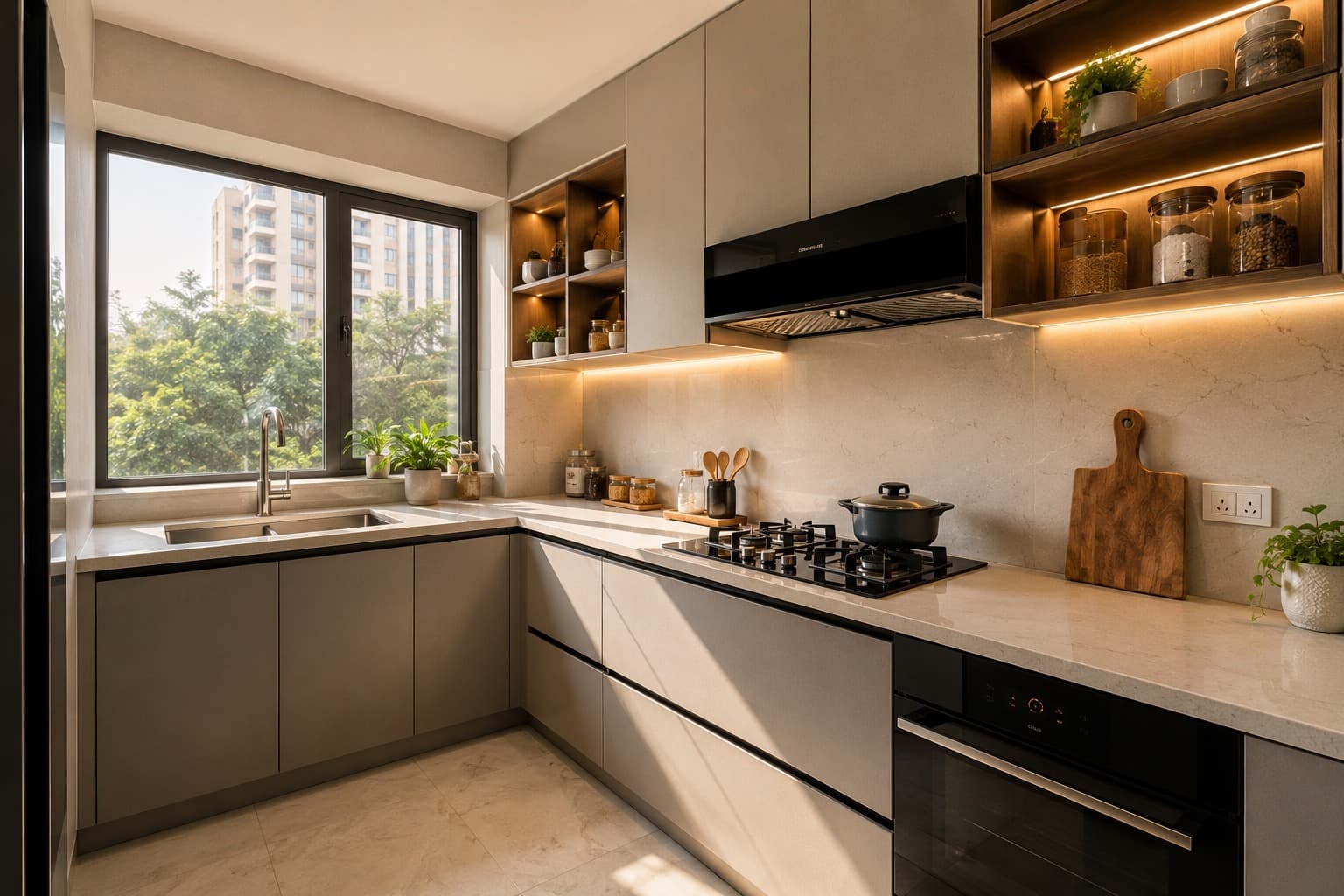
Every kitchen, regardless of size, revolves around three points: the stove, the sink, and the refrigerator. The distance between these three points determines how much physical effort goes into preparing a single meal. In a compact kitchen, these three points naturally sit close together because there simply is not enough room for them to drift apart.
In a large kitchen, the opposite happens. Designers spread the layout out to fill the available area, and suddenly the cook is walking six steps to rinse vegetables, six more to place them on the stove, and another stretch to reach the fridge for the next ingredient. Over the course of preparing dinner for a family, that adds up to genuine fatigue. A tighter kitchen triangle small space layout cuts that walking distance dramatically, and most people who have cooked in both setups will tell you which one leaves them less tired by the time the meal is on the table.
Less Space, Less Clutter by Default
A small kitchen forces discipline. There is no room for the extra appliance that gets used twice a year, no shelf space for the gadget bought on impulse during a sale. Every item earns its place through actual use, not optimism.
This is not a limitation. It is a quiet advantage. Households with compact kitchens tend to report less daily frustration simply because everything they reach for is exactly where they expect it. Large kitchens, paradoxically, often become storage zones for things that rarely get used, which buries the genuinely useful items under accumulated clutter.
The Cleaning Reality Nobody Talks About
A bigger kitchen means a bigger surface area to wipe down, more floor to mop, and more cabinet fronts collecting grease and dust. After a long day, the appeal of a smaller kitchen becomes obvious in a way that has nothing to do with design philosophy and everything to do with practical exhaustion.
Compact kitchens take a fraction of the time to clean thoroughly. That time saving, repeated daily, adds up to hours every month that most homeowners would rather spend doing anything else.
Where Smart Design Closes the Gap
None of this means small kitchens are automatically better in every situation. A poorly designed compact kitchen with no logical flow is worse than a well-planned large one. The real advantage shows up when smart small kitchen design choices are paired with the naturally tight footprint.
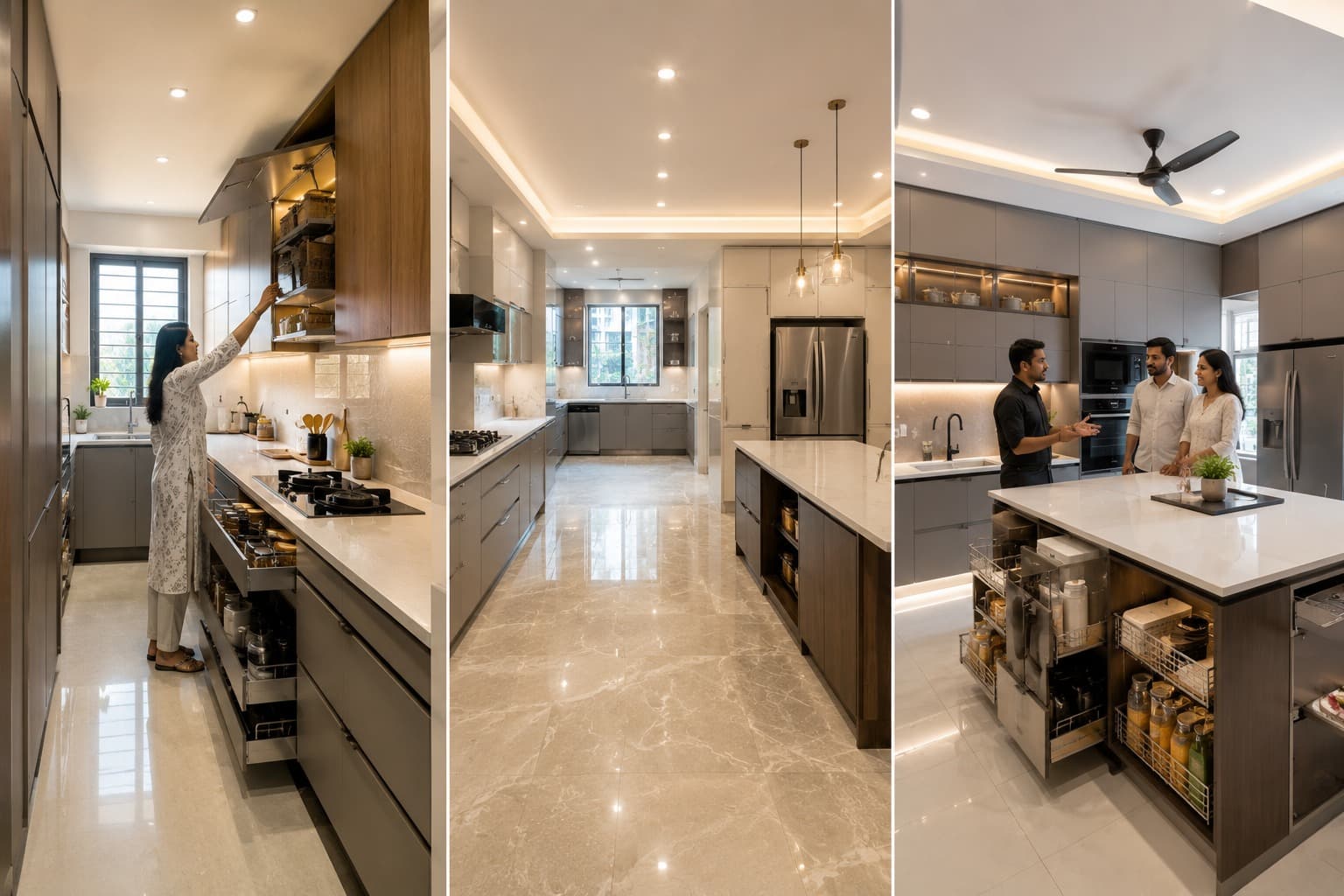
Vertical storage that uses wall height rather than floor area, pull-out organisers inside lower cabinets, and a single continuous countertop without awkward breaks all multiply the usefulness of limited square footage. A well-designed 80 square foot kitchen can outperform a poorly planned 150 square foot one on every measure that matters during actual cooking.
When a Large Kitchen Genuinely Wins
There is one scenario where size does help: when multiple people cook together regularly, or when the kitchen doubles as a social and dining space for a large joint family. In these cases, the extra room reduces collisions and allows parallel activity. But for the average urban household cooking for two to four people daily, the compact kitchen consistently wins on workflow.
Summary
Why some small kitchens work better than large ones in Indian homes comes down to a tighter work triangle, forced discipline against clutter, and significantly lower daily cleaning effort. How compact kitchens improve cooking efficiency and workflow is rooted in shorter distances between the stove, sink, and fridge during actual meal preparation. The size of a kitchen matters far less than how intelligently that space is organised, and for most everyday households, smaller often means smarter.