
Why Same Carpet Area Can Feel So Different: Unlocking the Secrets of Spaciousness
Summary
Identical carpet areas can feel vastly different. Spaciousness relies on layout, light, and design, not just square footage. Buyers should prioritize thoughtful design and usability over mere numbers to make smarter choices.

Introduction
Have you ever visited two flats with exactly the same carpet area, yet one feels open and airy while the other feels tight and boxed in? It is confusing. On paper, both may show 750 square feet. But when you step inside, the experience feels completely different. Many buyers assume space is only about numbers. It is not. Layout, light, design and even wall placement quietly change how a home feels. Understanding this can save you from disappointment later.
Understanding Carpet Area Clearly
Before discussing spaciousness, we must understand RERA carpet area properly. Under RERA carpet area calculation, it means the net usable floor area within internal walls, including partition walls but excluding balconies, terraces, and external wall thickness.
Earlier, builders focused on built up area or super built-up numbers. That created confusion. The difference between carpet and super built up area is simple: carpet area is what you actually use, while super built-up includes common areas like lifts and corridors. RERA brought standardisation, but numbers alone still do not guarantee comfort.
Why Numbers Do Not Tell the Full Story
Two flats can both show 800 sq ft under RERA carpet area vs built up area explained formats, yet feel worlds apart. Why?
Because spaciousness is psychological as much as physical. When rooms are chopped into small sections, the same area feels smaller. When the layout flows smoothly, the space feels bigger. So the real question is not only “how much area” but “how is it arranged?”
The Power of Flat Layout Design
Flat layout design plays the biggest role. Suppose one flat has a long dark corridor eating 80 sq ft. Another flat uses that space as part of the living room. Same carpet area. Very different experience.
Open kitchen concepts, fewer passageways, and rectangular room shapes improve visual openness. In fact, how flat layout design impacts spaciousness is something many architects carefully study. Wide entrances, fewer dead corners, and connected spaces create a sense of movement. And movement creates comfort.
Room Proportions Matter
A square room feels more usable than an oddly shaped one. Sometimes developers create narrow bedrooms just to increase room count. Technically area remains same, but usability reduces.
When buyers compare properties asking why same carpet area looks different, they often ignore proportions. A slightly wider living room with better wall alignment can completely change perception. Furniture placement becomes easier. Walking space improves. The home breathes better.

Natural Light and Ventilation
Light is magic. A well-lit 750 sq ft apartment can feel larger than a poorly ventilated 900 sq ft unit.
Large windows, cross ventilation, and balcony alignment affect visual depth. When sunlight enters deeply, shadows reduce and space appears expanded. This is why a spacious flat is not only about size but about brightness.
Ventilation also prevents suffocation. Air movement psychologically reduces the feeling of crowding.
Ceiling Height and Visual Lines
Ceiling height is often overlooked. Even with identical carpet area, a flat with 10-foot ceilings feels grander than one with 8.5-foot ceilings.
Long uninterrupted walls also help. When the eye travels without obstruction, the brain reads the room as larger. Too many beams, columns, or projections break that flow.
This subtle detailing explains why two flats with same carpet area feel different in size.
Smart Interior Planning
Once you buy a home, interior planning makes a huge difference. Using mirrors, lighter paint shades, and minimal partitions can dramatically enhance openness.
There are practical flat interior planning tips that designers use. For example, placing furniture against walls, choosing multipurpose pieces, and avoiding heavy dark wardrobes in small rooms.
If you wonder how to make small flat look spacious, start with decluttering. Too much furniture shrinks perception faster than you imagine.
Furniture Placement and Circulation Space
Many buyers misjudge space by focusing only on room dimensions. But circulation space matters equally. If furniture blocks walking paths, even a large room feels cramped.
Thoughtful furniture layout creates clear pathways. Open sightlines between entrance and window also help.
In small apartments, following tips to maximize carpet area in small apartments such as wall-mounted storage or sliding doors can protect usable space.
Builder Design Philosophy
Different developers follow different architectural philosophies. Some prioritize maximum room count. Others focus on openness and comfort.
While how builders calculate carpet area under RERA is standardized, how they design within that boundary differs widely. Two projects with identical numbers may reflect completely different priorities.
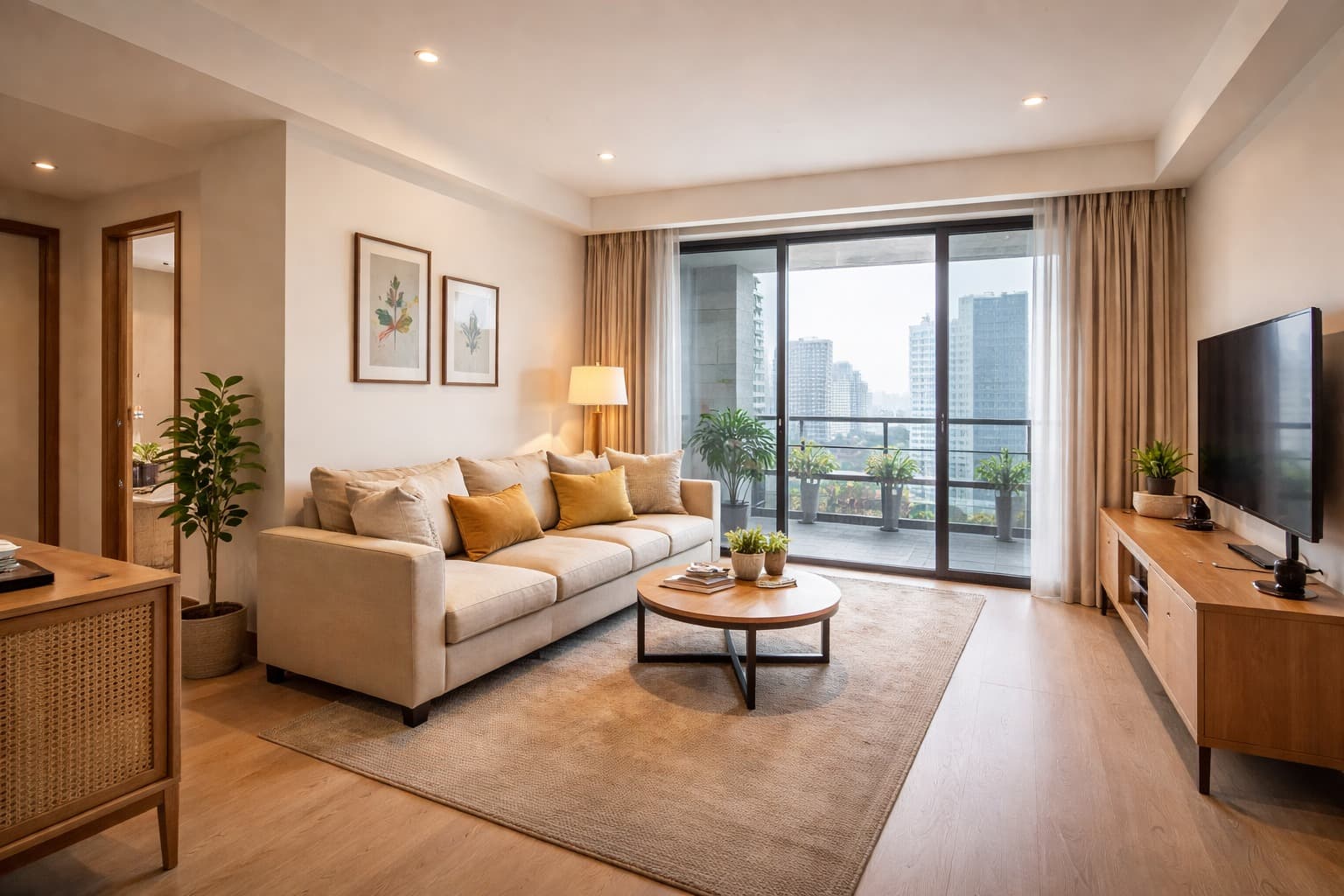
This is why visiting the sample flat carefully matters more than reading brochures.
Psychological Perception of Space
Human perception is tricky. Light colors, uniform flooring, and continuous patterns create visual expansion. Dark partitions, uneven tiles, and abrupt changes break space visually.
Even window placement impacts mood. A corner window creates depth. A blocked wall reduces it.
Sometimes, a flat does not feel small because of size, but because of how elements interact. That subtle difference explains the whole mystery.
Making a Smart Buying Decision
When evaluating flats, do not rely only on brochures mentioning RERA carpet area. Walk through the layout. Stand inside each room. Imagine furniture. Check window positions.
Compare layouts side by side rather than comparing just square footage. Ask yourself whether the design supports your lifestyle.
Remember, a thoughtfully planned 750 sq ft home can feel better than a poorly designed 900 sq ft unit. Space is not only measured. It is experienced.
Conclusion
The reason the same carpet area can feel different lies in layout efficiency, lighting, ventilation, ceiling height, and interior planning. RERA ensures transparency in numbers, but comfort depends on design intelligence. As a buyer, focus on how the home feels, not just what the brochure says. When you understand how design shapes perception, you make smarter decisions. And in property buying, that clarity makes all the difference.
Summary
Two flats with identical carpet area can feel very different because spaciousness depends on layout, light, ceiling height, ventilation, and furniture planning rather than just square footage. RERA standardizes carpet area calculation, but design efficiency varies across projects. Open layouts, better proportions, and smart interiors enhance perceived space. Buyers should compare floor plans carefully and assess usability instead of focusing only on numbers. Ultimately, comfort comes from thoughtful design, not merely from the area mentioned in brochures.