
Why Premium Homes Carry a Heavier Price Than You Think
Summary
Premium homes often carry a heavier price tag than perceived due to higher 'loading' from extensive shared amenities and additional Preferential Location Charges (PLC). Understanding the RERA-registered carpet area is crucial for accurately assessing the true cost per usable square foot.

What Exactly Is Loading
Before anything else, let us get the basics right. When a developer quotes you a price per square foot, that price almost never applies to the actual usable floor space inside your flat. It applies to something called the super built-up area, which includes your apartment plus a proportionate share of every common space in the building. Lobbies, staircases, lifts, corridors, the gym, the clubhouse, the rooftop garden. All of it gets distributed across every flat in the project.
The gap between what you pay for and what you actually live in is called loading. And in a standard mid-segment apartment building, that gap typically runs between 25 and 30 percent.
Why Premium Projects Have Higher Loading
Here is where things get interesting. In a basic residential tower with a lobby and two lifts, there is not much common space to distribute. The loading charges stay relatively contained.
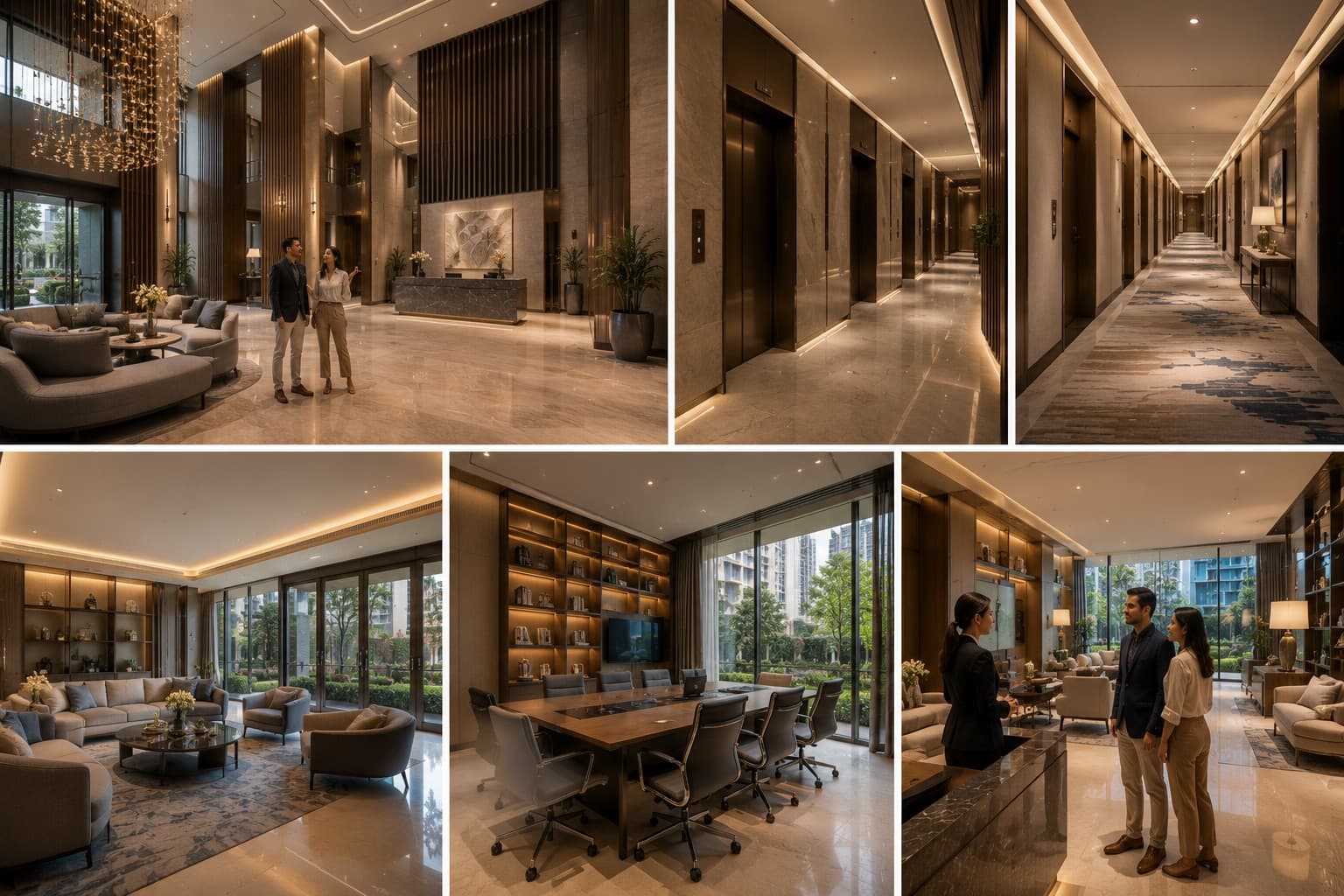
But walk into a premium amenities project and the equation shifts completely. Rooftop infinity pools. Triple-height club lounges. Landscaped podiums. Concierge desks. Yoga decks. Multipurpose courts and banquet halls. Every one of these additions increases the total common area of the building, and every square foot of that common area gets added to the super built-up area that buyers are charged for.
A project with a basic amenity package might carry 28 percent loading. A luxury project with a full lifestyle campus can push that figure to 40 or even 45 percent. This means two apartments with the same quoted size can have very different actual living spaces depending on how much amenity infrastructure sits in the building.
The Numbers Behind the Gap
Take a practical example. Say you are buying a flat priced at Rs 32,000 per square foot on a super built-up area of 1,200 square feet. Your total cost works out to Rs 3.84 crore. But if the loading charges are 40 percent, your carpet area is only around 720 square feet. You have effectively paid Rs 3.84 crore for a home where daily life happens in 720 square feet.
Now compare that to a project with 28 percent loading. The same 1,200 super built-up square feet gives you a carpet area closer to 864 square feet. That difference of 144 square feet is roughly the size of a bedroom. Same price on paper. Very different home in practice.
PLC Makes It Even Steeper
PLC charges, or Preferential Location Charges, sit on top of all this. If your flat faces a lake, gets better natural light, sits on a higher floor, or overlooks a park within the complex, the developer adds a per-square-foot surcharge specifically for that positioning advantage.
In high-end Mumbai and Bengaluru projects, PLC charges in luxury apartments can range from Rs 200 to Rs 600 per square foot depending on the developer and the floor. These are real additions to your cost that do not show up in the headline price but appear clearly in the payment schedule.

So Should You Avoid Premium Projects
Not at all. The point is not to shy away from premium housing but to go in with your eyes open. A well-designed luxury project with a strong amenity offering often delivers better resale liquidity and stronger property pricing appreciation over time than a bare-bones building in the same neighbourhood.
The right move is to request the RERA-registered carpet area before signing anything. Maharashtra's RERA mandates that all pricing disclosures must include carpet area separately, so any developer operating in good faith will have this number ready. Build your cost per usable square foot from that figure and compare honestly across projects.
Summary
Loading charges in premium amenities projects are higher because every square foot of shared lifestyle infrastructure gets distributed back to buyers through the super built-up area. When PLC charges stack on top, the gap between advertised price and actual cost widens further. Understanding the carpet area versus super built-up area distinction before committing to any premium housing purchase in India is not just useful. It is essential.