
Why Office Real Estate Is Still Growing Despite Remote Work
Summary
India's office real estate is thriving despite remote work, hitting record leasing in 2026. Driven by Global Capability Centres and flexible workspaces, demand adapts to hybrid needs, with Bengaluru and Hyderabad leading robust expansion.

Introduction
Back in 2021, plenty of analysts were ready to write the obituary for office buildings in India. Laptops from living rooms, video calls in pajamas, why would anyone need a leased floor in a glass tower again? And yet here we are in 2026, watching commercial real estate post its strongest numbers in years. Somebody clearly got the forecast wrong.
The Leasing Numbers Tell Their Own Story
Gross office leasing across the country touched close to 24.6 million square feet in the April to June quarter of 2026, the highest quarterly figure ever recorded. Widen the lens to the full first half of the year and total leasing crossed the mid forty million square feet mark, comfortably ahead of where things stood twelve months earlier. Numbers like that don't belong to a shrinking industry.
Global Capability Centres Changed the Equation
A big chunk of this demand traces back to global capability centres. These units, once treated as low cost support desks for foreign parent companies, now handle serious engineering, analytics and product work. During the record quarter, GCCs alone accounted for more than four out of every ten square feet leased nationally. That's a scale of commitment you don't build for a temporary trend.
Flexible Workspaces Stopped Being a Backup Plan
Coworking and managed office operators picked up close to a quarter of total leasing in the same stretch. What used to be the choice of cash strapped startups is now attracting large corporations that want speed and flexibility without a fifteen year lease hanging over their balance sheet. It's a quiet reversal nobody really announced out loud.
Landlords Are Being Judged More Harshly Now
Not every building is winning equally though. Tenants are chasing newer, better equipped towers with strong sustainability ratings, while older commercial stock sits half empty in the same micro markets. Owners of tired buildings from a decade ago are discovering that square footage alone no longer closes a deal.
Bengaluru and Hyderabad Keep Pulling Ahead
Bengaluru alone absorbed close to three in every ten square feet leased nationally in the first half of 2026. Hyderabad wasn't too far behind, contributing nearly a fifth of total demand on its own. Pune rounds out the trio of cities doing most of the heavy lifting for the entire country.
Developers Are Racing to Keep Pace
New office completions jumped sharply through the same period, and industry estimates point to national office stock crossing 900 million square feet within a couple of years. Vacancy rates are expected to ease further too, which tells you existing space is filling up faster than fresh towers can be delivered.

Hybrid Schedules Reshaped Demand, They Didn't Kill It
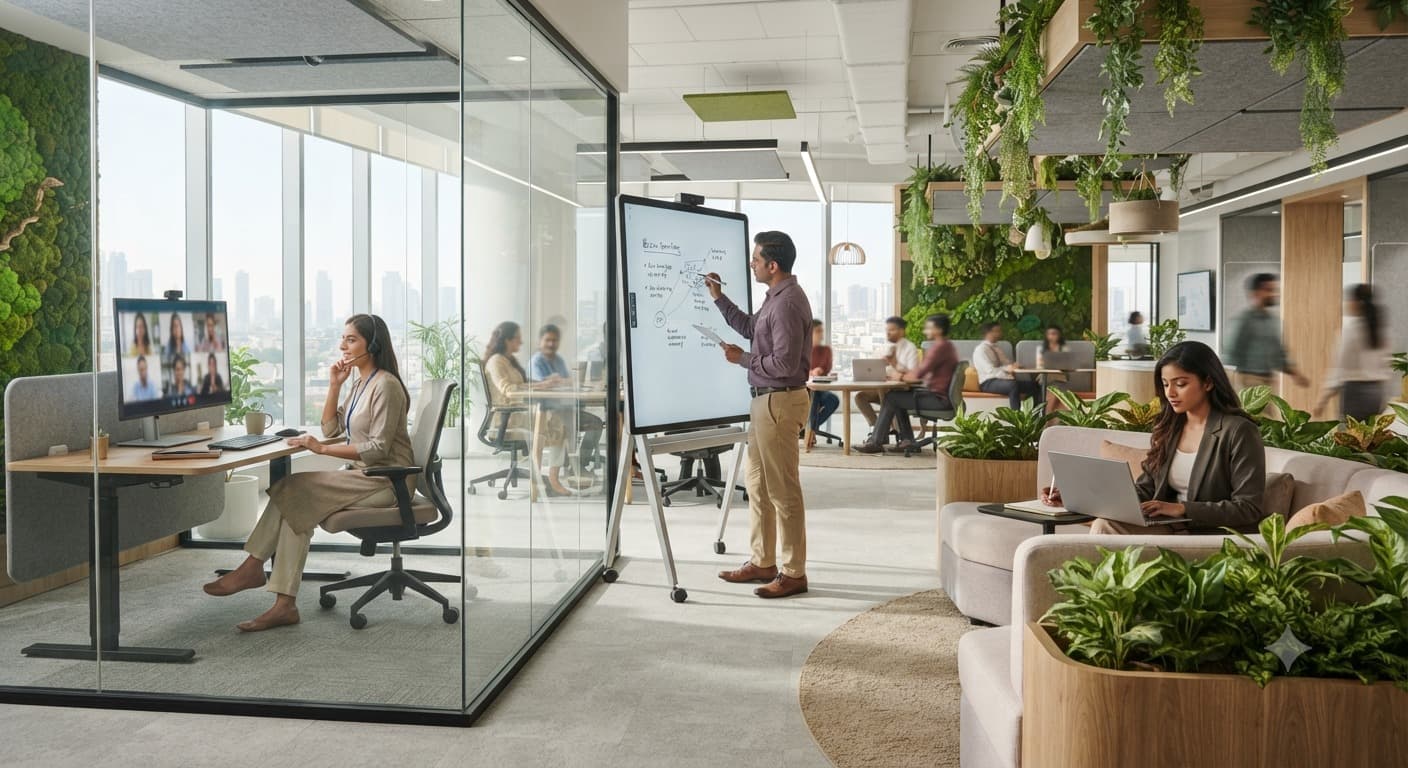
This is the part most predictions missed entirely. Employees splitting time between home and office didn't remove the need for a physical workplace, it just changed what that workplace needs to offer. Companies still want a shared base for culture and collaboration, just a smarter one with flexible seating instead of rows of fixed cubicles.
Beyond the Big Cities
Close to four out of every ten new GCC setups are now choosing locations outside the traditional metro belt altogether. Cost advantages, improving connectivity and a growing talent pool in smaller cities are quietly pulling corporate footprints toward places that barely registered on anyone's radar five years ago.
Summary
Office real estate in India has proven far tougher than the remote work narrative gave it credit for. Record breaking leasing through 2026, powered largely by global capability centres and flexible workspace operators, shows demand adapting rather than disappearing. Cities like Bengaluru and Hyderabad continue anchoring growth, even as newer locations enter the picture. For investors and occupiers, India's office story remains one of expansion, not retreat.