
Why Ground-Floor Flats in India Often Have More Area
Summary
Ground-floor flats in India often have more area due to private terraces, gardens, and structural design. Despite buyer reservations, lower prices per sq ft combined with extra space can offer excellent value, especially for families and seniors.

Introduction
Walk into the sales office of almost any mid-size or premium residential project in India and something slightly puzzling shows up in the floor plan folder. The ground-floor unit often carries a larger number against its area than the identical configuration on the fifth or the twelfth floor. Same number of bedrooms. Same basic layout. And yet the ground floor flat area reads differently. Buyers who notice this either assume it is a typo or a sales tactic. It is neither. There are specific, real reasons why the ground floor sometimes delivers more than the floors above, and understanding those reasons changes how you evaluate and price a purchase at this level entirely.
Private Terraces and Garden Attachments
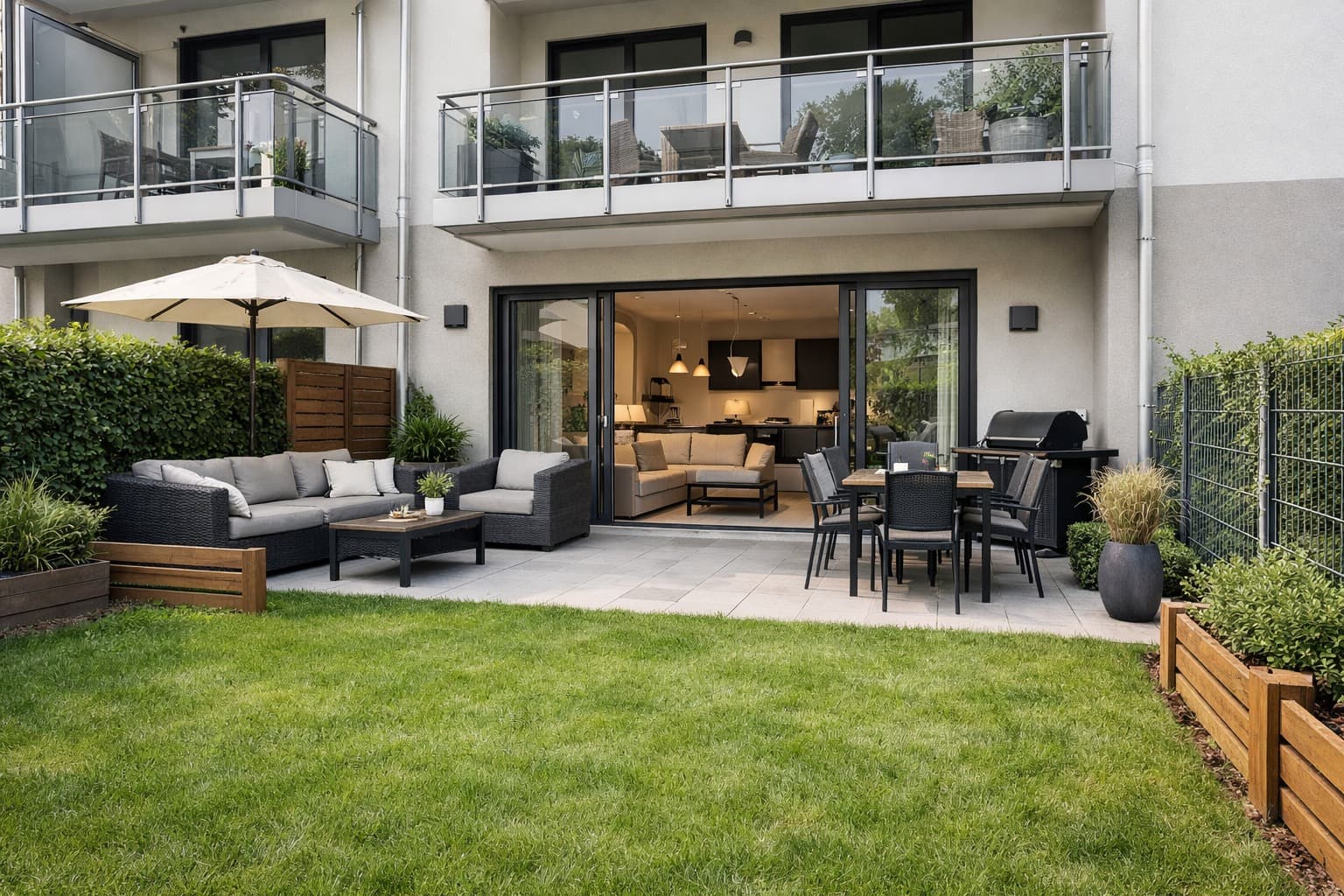
The most common reason a ground floor apartment India carries extra area is a private terrace or garden patch attached exclusively to that unit. Developers in projects with open land at the base of the building frequently allocate a portion of the surrounding green space or paved area to the ground-floor flat as an exclusive use zone. This space belongs to that unit in the sense that no other resident can use it. It shows up in the sale agreement as a private terrace area or exclusive open area.
Now, whether this counts toward the RERA carpet area is where buyers need to pay close attention. RERA's definition of carpet area excludes open terraces and exclusive open-to-sky areas. So that additional terrace or garden is real, usable, and exclusively yours, but it technically sits outside the RERA carpet area figure.
Utility Areas and Extended Balconies
Ground-floor flats in some projects also receive extended balcony depths or utility yards that upper-floor units do not get. A standard balcony on the fifth floor might measure 60 to 80 square feet. The ground-floor equivalent, designed to connect the indoor living space to the garden, can run to 150 or even 200 square feet. Some developers design a covered sit-out, a washing and utility area, and a direct garden step-down all as part of the ground-floor offering.
These additions create genuine living value. A family that uses outdoor space daily, whether for morning tea, children's play, or container gardening, gets something that upper-floor buyers simply cannot access in the same private, always-available way.
Structural Design and Stilt Parking Considerations
In projects built on a stilt-plus-floors model, the first habitable floor sitting directly above the parking level sometimes benefits from a slightly different structural configuration. Column placements designed for the parking grid below occasionally result in marginally more flexible internal space distribution on the floor immediately above. It is not a dramatic difference but it is a real one in certain building designs.
Older buildings that predate FSI rationalisation sometimes have ground-floor units with room layouts that simply could not be replicated on the upper floors because the original structural logic was entirely different at the base level. Buying a resale ground-floor flat in a building from the 1990s or early 2000s can occasionally yield carpet area surprises that the current title deed and building plan confirm as entirely legitimate.
Developer Strategies Around Ground-Floor Pricing
Here is where it gets interesting. Despite sometimes offering more total area, ground floor flats in India are almost always priced lower per square foot than identical configurations on higher floors. Developers know that the Indian buyer psyche has specific reservations about the ground floor: privacy concerns, mosquitoes and pests, security anxiety, and the absence of a view. To compensate, developers sweeten the ground-floor offering with the extra area and still price it at a discount.
This creates an unusual value situation. A buyer who is comfortable with ground-floor living, perhaps a senior citizen who values easy access and no lift dependency, or a family with young children who want a garden, ends up with significantly more usable space per rupee than any other buyer in the building. The math often works out very attractively once you calculate ground floor apartment carpet area on a per-square-foot cost basis.
What Buyers Need to Verify Before Purchasing
Not every ground-floor area claim is equally valuable and not all of it is legally yours in the same way. Buyers should ask specifically whether the private terrace or garden area is conveyed through the sale deed and whether it carries a maintenance obligation. Some developers treat the attached outdoor area as a license rather than a full ownership transfer, meaning the society or developer retains the technical right to modify that allocation in future.
Check the RERA registration documents for exactly how the area breakdown is described. Understand clearly what is RERA carpet area, what is exclusive open area, and what the total consideration covers.
Summary
Ground floor flats in Indian residential projects sometimes carry more total area than upper floors because of private terraces, exclusive garden zones, extended balconies, and in older buildings certain structural configurations that create genuinely larger usable footprints. The extra area often sits outside the RERA carpet area definition but delivers real daily value. For buyers who are comfortable at ground level, the combination of lower per-square-foot pricing and additional private outdoor space makes the ground floor flat one of the most underrated value propositions in the Indian apartment market.