
What Most Buyers Miss During a Site Visit and How to Fix That
Summary
Homebuyers often overlook critical details during property visits, focusing on emotion over functionality. This guide provides a practical checklist to assess true space efficiency, movement, and long-term livability, ensuring a smart purchase.

Introduction
Most people visit a property and come away remembering how it felt. The lobby smelled clean. The sample flat had good lighting. The sales executive was friendly. And then they book, believing they evaluated it properly.
They did not. Feelings during a site visit are unreliable. The sample flat is always staged with carefully selected furniture, soft lighting, and minimal clutter designed to make every room feel airier than it actually is. The job of a serious homebuyer is to cut through all of that and assess one thing above everything else: does this space actually work for daily life?
That requires a small but deliberate checklist of things to observe, measure, and question during those forty-five minutes on site.
Start with the Carpet-to-Built-Up Ratio
Before you even enter the flat, ask the sales team for the carpet area figure and the super built-up area figure in writing. Then divide the carpet area by the super built-up area and multiply by 100. Any project where this ratio falls below 68 to 70 percent is quietly taking significant money from you in the form of space you are paying for but can never actually use.
This single calculation eliminates a lot of overpriced options very quickly. A project where you are paying for 1,200 square feet but living in only 750 usable square feet is a worse deal than a project where 1,000 square feet gives you 720 square feet of real living area. The carpet area check is the most honest comparison tool available during any flat inspection India.
Walk the Actual Path People Take Daily
Once inside, stop thinking about rooms and start thinking about movement. Walk from the main door to the kitchen. Then from the master bedroom to the bathroom. Then from the living room to the balcony. Count your steps. Notice whether any of those paths feel unnecessarily long, oddly angled, or interrupted by a wall that serves no structural purpose.
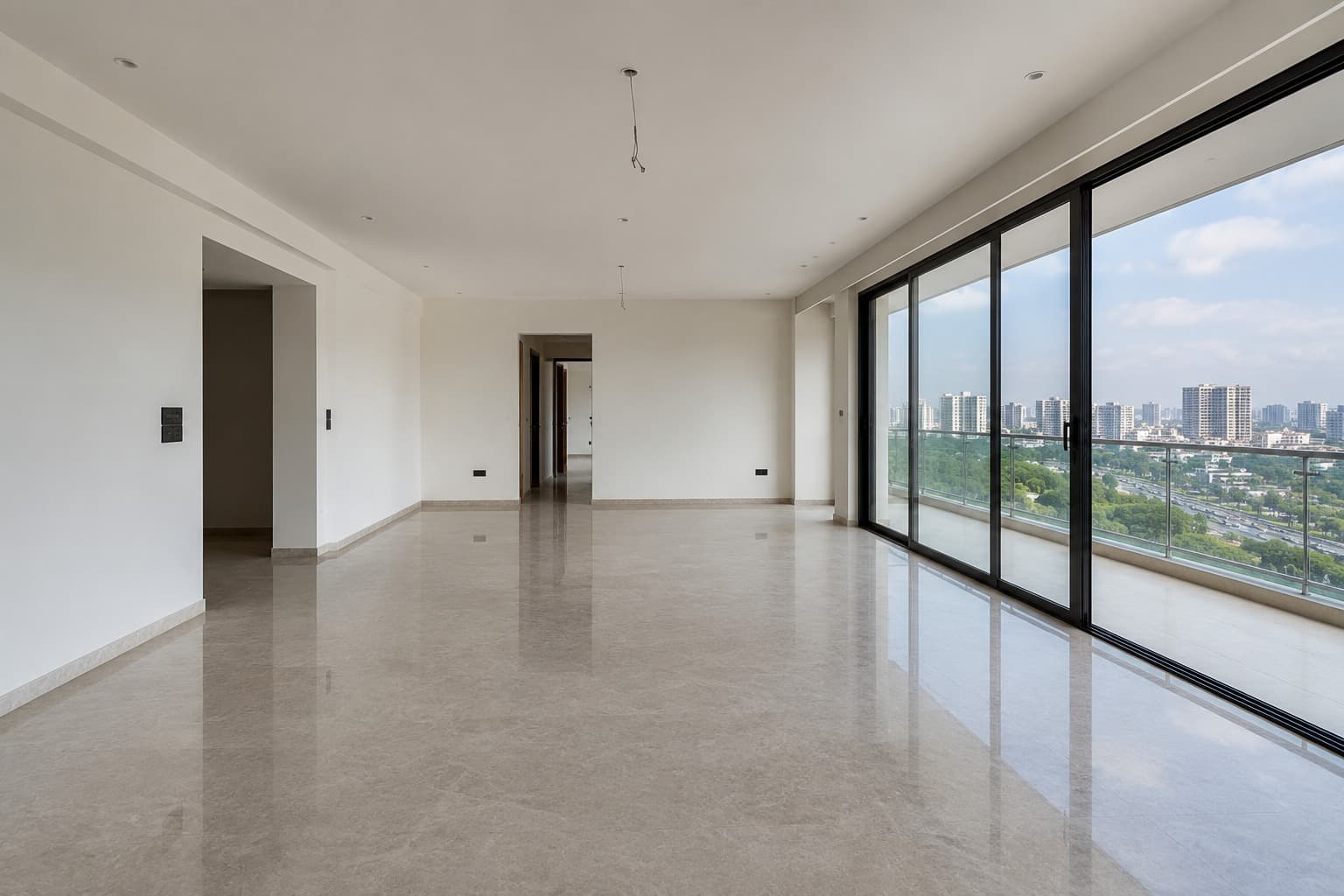
A well-designed apartment lets you move through it naturally without awkward turns or wasted corridor length. A poorly designed one makes simple daily movement feel like a puzzle. Signs of poor space utilisation are most visible when you trace these movement paths rather than stand in the centre of each room admiring the view.
Test Every Room with an Imaginary Furniture Arrangement
This exercise embarrasses some buyers because it feels overly literal. Do it anyway. Stand in the bedroom and mentally place the bed, the side tables, and a small wardrobe. Is there still enough walking space on both sides of the bed? Does the bathroom door open without hitting the bed frame? Can you open the wardrobe fully without the other door blocking it?
Repeat this in the living room. Place the sofa, a centre table, and a television unit. Is there still two to three feet of circulation space on either side? In an Indian household where extended family visits are frequent, this matters every weekend.
Irregular room shapes with angled walls or misplaced columns consistently fail this test, and the failure only becomes obvious after you have moved in and realised no standard furniture arrangement works cleanly.
Check Windows, Ventilation, and What You Are Actually Looking At
Good natural light is not the same as a window that faces another building's wall from four feet away. During your visit, look out of every window and identify what that view will actually be in five years. An open plot nearby may become a high-rise. A low structure across the road might redevelop.
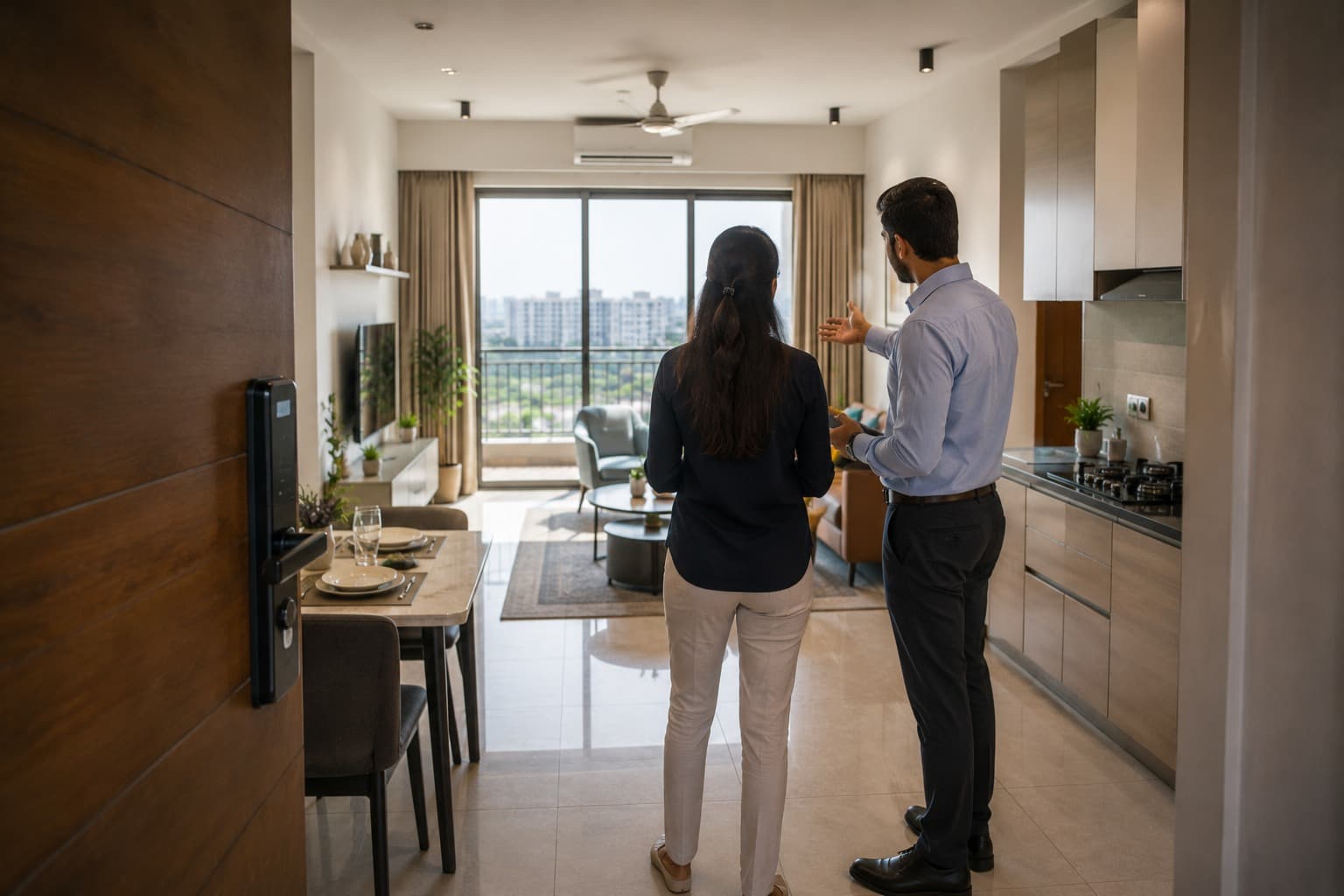
Also check whether two different walls in the apartment carry windows. Cross-ventilation through opposite or adjacent openings is what keeps Indian homes breathable through eight months of warm weather. A flat with windows only on one side will feel stuffy regardless of how large those windows are.
Do Not Skip the Entrance and Kitchen
The way a flat receives you at the entry and the way the kitchen is organised reveal the quality of thought behind the design. An entrance that dumps you directly into the centre of the living room without a buffer zone offers no privacy and no transitional space for footwear or bags.
A kitchen where the stove, sink, and refrigerator do not form a workable triangle forces extra steps into every meal you cook. Over twenty years, that inefficiency adds up to something real.
Summary
Judging space efficiency during a site visit comes down to numbers and movement, not aesthetics. Check the carpet area ratio before entering. Walk daily movement paths rather than standing still in each room. Test furniture placement mentally in every room. Verify cross-ventilation and what windows actually face. Evaluate the entry buffer and kitchen triangle. These five checks, done in under thirty minutes, will tell you more about whether an apartment genuinely works than any amount of time spent admiring the sample flat's interior design.