
What Makes a Residential Project Eco-Friendly in Modern India?
Summary
Eco-friendly homes in India prioritize sustainability through energy efficiency, water conservation, and responsible materials. They offer long-term savings, healthier living, and contribute to a greener future. Choosing green housing is a social responsibility.

Introduction
In recent years, the idea of living in harmony with nature has slowly entered Indian housing discussions. Buyers are no longer looking only at location and price. They are also asking about sustainability, energy savings, and long-term impact. This shift has increased interest in eco friendly homes and responsible construction. But what exactly makes a residential project green? Is it only about solar panels, or is there more to it? Let us explore how green residential projects are shaping the future of urban and suburban living in India.
Understanding the Concept of Eco-Friendly Housing
An eco-friendly residential project is designed to reduce harm to the environment while improving the quality of life for residents. These projects focus on saving energy, conserving water, reducing waste, and using natural resources wisely.
In India, sustainable housing India is becoming relevant because of rising pollution, water scarcity, and increasing electricity costs. A green home is not just about technology. It is about responsible thinking, planning, and long-term vision.
Why Eco-Friendly Projects Are Becoming Necessary
Cities are growing fast. With this growth comes pressure on land, water, and power systems. Traditional construction methods often ignore these limits.
That is why environment friendly houses are no longer optional. They are slowly becoming essential. Climate change, rising temperatures, and frequent water shortages have made people more conscious. Buyers now want homes that are future-ready, not just comfortable today.
Role of Sustainable Materials in Green Projects
One major factor in eco friendly buildings is the choice of construction materials. Conventional buildings rely heavily on cement and steel, which consume high energy during production.
Green projects prefer fly ash bricks, bamboo, recycled wood, natural stone, and low-impact concrete. These materials reduce carbon emissions and improve insulation. Over time, they also reduce repair and maintenance needs.
Small choices in materials make a big difference, though people often ignore this at first.
Energy Efficiency as a Core Feature
Energy use defines how eco-friendly a home truly is. In eco friendly residential projects in India, energy efficiency starts from design itself.
Buildings are oriented to maximise sunlight and airflow. Large windows, shaded balconies, and cross ventilation reduce dependence on air conditioners. Solar panels, LED lighting, and energy-efficient appliances further cut electricity bills.
This focus on energy efficient homes India benefits both the environment and household budgets.
Importance of Water Management Systems
Water conservation is critical in Indian cities. Many regions already face severe shortages.
Green housing projects use rainwater harvesting, groundwater recharge pits, and greywater recycling. Low-flow taps and dual-flush toilets are standard features in many eco friendly housing projects.
These systems ensure that residents depend less on municipal supply. Over time, this creates self-sufficient communities.
Smart Design and Natural Architecture
Design plays a silent but powerful role in sustainability. Poor design forces residents to use more electricity and water.
In green building features for homes, architects focus on compact layouts, shaded corridors, open courtyards, and natural ventilation. Proper spacing between buildings allows light and air to circulate.
This kind of planning feels simple, but it requires experience and thoughtful execution.
Indoor Air Quality and Healthy Living
Many modern homes suffer from poor indoor air quality due to chemical paints, artificial materials, and limited ventilation.
Eco-friendly projects use low-VOC paints, natural flooring, and proper ventilation systems. Plants and green balconies also help purify air.
As a result, residents experience fewer allergies, better sleep, and improved mental well-being. This is one of the hidden benefits of benefits of eco friendly homes for Indian families.
Waste Management and Recycling Practices
Waste is often ignored in housing planning. But sustainable projects treat waste as a resource.
Segregation at source, composting units, and recycling centres are common in advanced green projects. Organic waste is converted into manure for gardens.
This reduces landfill pressure and teaches residents responsible habits.
Government Certifications and Green Ratings
Several government and private bodies certify sustainable buildings. IGBC, GRIHA, and LEED are popular in India.
These certifications ensure that projects follow environmental standards. Buyers can trust such projects more.
Certified projects usually include most features of sustainable housing projects in India, making them safer long-term investments.
Cost of Eco-Friendly Residential Projects
Many people believe green homes are expensive. Initially, costs may be slightly higher due to specialised materials and systems.
However, lower electricity bills, reduced water costs, and minimal repairs balance this over time. In most cases, residents recover extra investment within 5 to 7 years.
So, when viewed properly, green homes are economical.
Eco-Friendly Housing in Urban India
People often ask if sustainable housing is possible in crowded cities. The answer is yes.
Cities like Bengaluru, Pune, and Hyderabad are leading examples. Many builders now follow how to build eco friendly house in Indian cities principles.
Vertical gardens, rooftop solar plants, shared rainwater systems, and smart lighting make urban green living practical.
Common Myths About Eco-Friendly Projects
Some believe green homes look boring. Others think they are only for rich people.
In reality, modern designs are stylish and flexible. Modular homes and compact layouts have made sustainability affordable.
Technology has removed many old limitations. What matters now is awareness.
How Buyers Can Identify a Truly Green Project
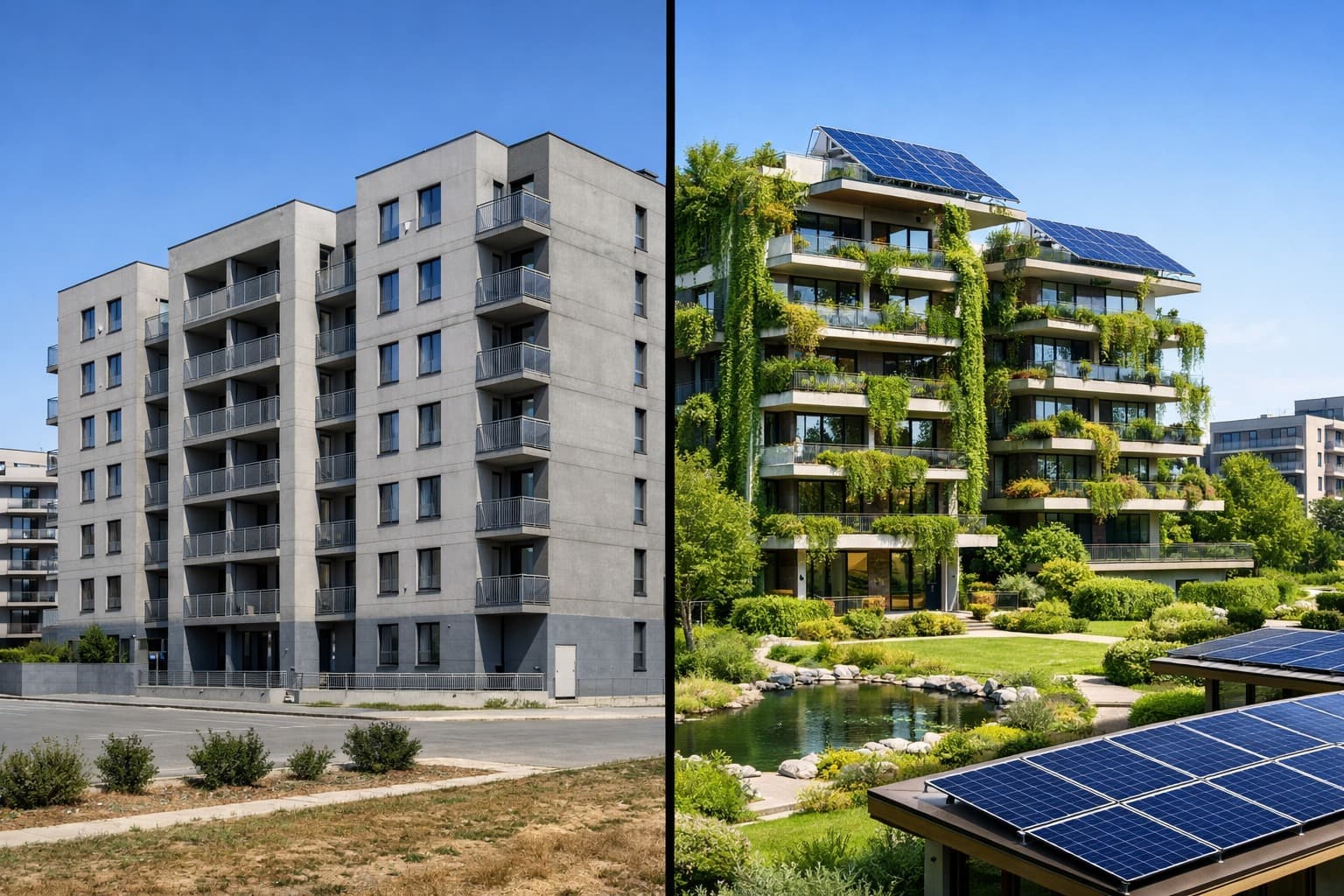
Not every project claiming sustainability is genuine. Buyers should ask about water systems, energy ratings, waste management, and materials.
They should also check certifications and maintenance plans. A true green project shows consistency, not just marketing.
This awareness helps in selecting projects aligned with what makes a residential project eco friendly in India.
Long-Term Investment Value of Green Homes
Eco-friendly homes generally have better resale value. As energy and water costs rise, buyers prefer efficient homes.
Banks and financial institutions are also offering green loans in some cases. Over time, sustainable homes become safer investments.
This makes them attractive to both end-users and investors.
Role of Residents in Maintaining Sustainability
Even the best-designed project fails without responsible residents. Overuse of water, careless waste disposal, and poor maintenance damage systems.
Sustainable living is a shared responsibility. Residents must cooperate to preserve long-term benefits.
Without this, even green buildings slowly lose their purpose.
Future of Green Residential Projects in India
With government focus on climate goals and smart cities, green housing will expand rapidly. Developers are already adapting.
The next decade will likely see eco-friendly features becoming standard, not optional. The complete guide to green residential projects in 2026 reflects this transition phase.
Sustainability is becoming part of mainstream housing culture.
Conclusion
An eco-friendly residential project is not defined by one feature. It is a combination of thoughtful design, efficient systems, responsible materials, and conscious residents. From energy and water savings to healthier living and long-term value, green homes offer multiple advantages. In a country facing environmental challenges, choosing sustainable housing is no longer just a personal choice. It is a social responsibility. The future of Indian real estate clearly lies in building smarter, greener, and more balanced communities.
Summary
Eco-friendly residential projects focus on sustainability through smart design, energy efficiency, water conservation, and responsible material use. These homes reduce environmental impact while improving comfort and lowering long-term costs. With features like solar power, rainwater harvesting, natural ventilation, and waste management, green housing supports healthier living. In India, rising awareness and government initiatives are driving this trend. Though initial costs may be slightly higher, long-term savings and better resale value make eco-friendly homes a practical and future-ready choice.