
Wall Paint Patterns That Bring Positive Energy Into Your Home
Summary
Discover how wall paint patterns can bring positive energy into your home by combining Vastu principles, color psychology, and spatial design. Learn which colors and patterns suit different rooms for a welcoming and harmonious environment.

Introduction
Every home has an energy to it. Walk into some spaces and you feel settled within minutes. Walk into others and something just feels off without you being able to name it. A lot of what creates that feeling is invisible: light, proportion, airflow, sound. But a surprisingly large portion of it is colour and pattern on the walls. Wall paint patterns positive energy is not a mystical concept dressed in interior design language. It is a combination of Vastu principles, colour psychology, and basic spatial design logic that Indian homeowners have been applying intuitively for centuries. What follows is a practical guide to patterns and colours that consistently work.
Why Walls Carry More Energy Than We Give Them Credit For
Walls are the largest continuous surface in any room. They catch light at every angle throughout the day, they define how spacious or enclosed a space feels, and they are the first thing the eye registers when entering. Vastu wall colours India recommendations have always been rooted in this understanding: the wall is not a background. It is an active participant in how a room feels.
Modern neuroscience backs much of what Vastu intuited. Warm yellows and soft oranges elevate mood. Blues and greens lower cortisol. Deep reds in small doses energise. None of this is accidental or superstitious. It is how the human visual system responds to colour wavelengths.
The Entry Wall: Your Home's First Impression
The wall you face when entering a home sets the emotional tone for everything beyond it. Positive energy home interiors consistently use this wall for their most intentional design choice. A soft terracotta, a warm mustard, or a pale sage green on the entrance wall signals welcome without demanding attention.
Avoid dark, heavy colours here unless the space receives excellent natural light. An entry wall painted in deep charcoal or navy in a poorly lit corridor creates an immediate sense of compression that no amount of furniture styling will fix.
Living Room Patterns: Warmth Without Overwhelm
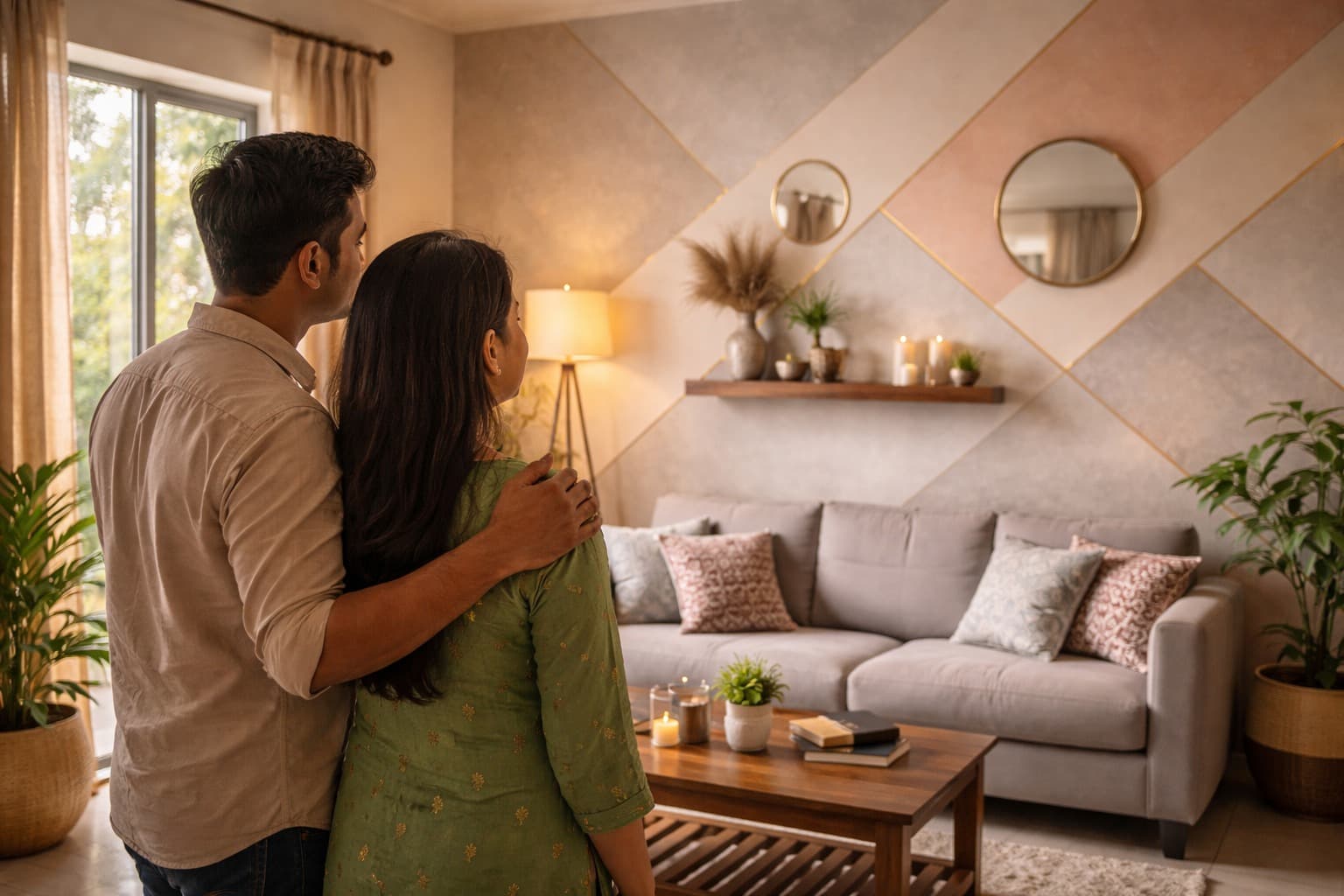
The living room is where family energy collects and where guests form their first impression of how a home feels. Vastu recommends the north, north-east, and east walls in yellow, green, or white for living spaces. But the pattern you apply matters as much as the colour.
Positive energy wall colours in the living room work best when the dominant wall carries a subtle texture or geometric pattern rather than a flat wash. Soft horizontal stripes in two tones of the same colour add warmth without visual noise. Lime wash and sponge techniques create organic texture that changes character as daylight moves, giving the room a living quality that flat paint cannot produce.
The Bedroom: Calm Over Everything Else
Bedrooms need paint decisions made with rest as the primary goal. Lucky colours home India traditions point toward light blues, soft greens, lavender, and warm whites for bedrooms. These are not arbitrary preferences. They are colours that the nervous system associates with safety, open sky, and natural environments, all of which lower alertness and support sleep.
Avoid red, bright orange, or anything in the high-energy spectrum for the bedroom's primary walls. A single accent wall in a slightly deeper tone of the room's base colour adds depth without activating the space. Keep pattern complexity low. The bedroom should feel like it asks nothing of you the moment you enter.
Kitchen Colours: Energy Without Anxiety
The kitchen in Vastu logic sits in the south-east, associated with fire and transformation. Yellow, orange, and red are the traditional recommendations. In practice, a full red kitchen creates visual fatigue quickly. The better approach is a soft terracotta or warm peach for the main walls with one bold accent tile or backsplash that introduces the fire palette without dominating.
Avoid black and grey in the kitchen unless the space is flooded with natural light. These colours absorb rather than reflect, making the kitchen feel heavier and more effortful than it needs to.
Geometric Patterns and Their Specific Effects
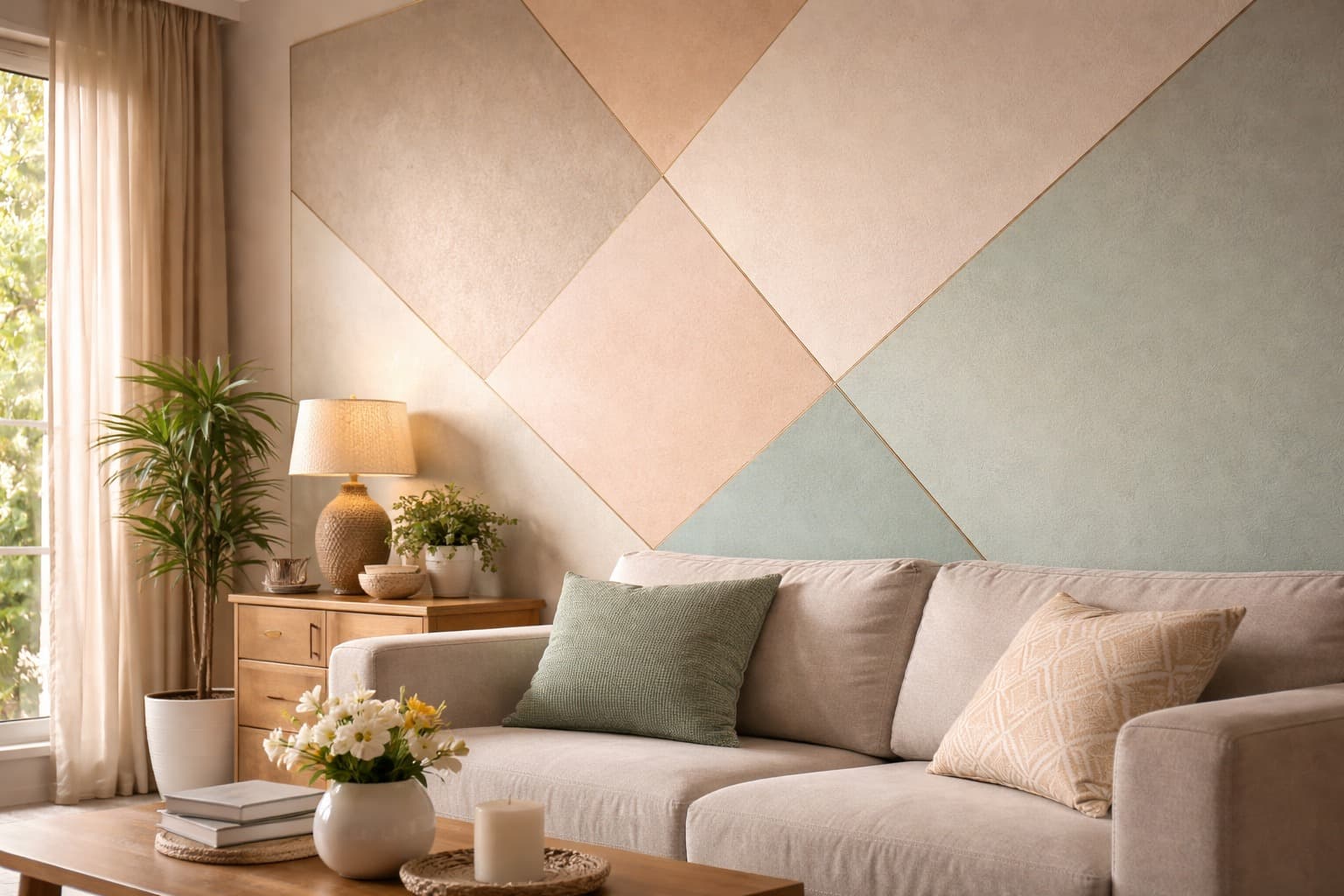
Not all wall painting home India patterns carry the same energy. Vertical lines draw the eye upward and create a sense of height and aspiration. They work well in low-ceilinged rooms or spaces where you want energy to feel upward-moving. Horizontal patterns expand the perception of width and create a grounding, settled feeling.
Circular and mandala-inspired patterns on a single feature wall introduce a centred, meditative quality that works particularly well in prayer rooms, meditation corners, and children's bedrooms. Avoid aggressive chevrons or sharp zigzag patterns in any space where rest or calm is the goal. They create visual tension that is tiring over time.
Colours by Direction: The Vastu Framework
North walls benefit from green and blue tones, associated with growth and water energy. South walls can carry deeper, warmer tones. East walls in yellow or white welcome morning light energy. West walls in neutral or earthy tones balance the evening sun.
This directional framework is not about rigidly painting every wall by compass. It is about using the room's orientation as a starting point for colour decisions rather than choosing purely by trend.
Summary
Wall paint patterns for positive energy in Indian homes combine vastu colour principles, spatial psychology, and pattern logic to create spaces that feel settled, welcoming, and alive. Warm yellows and soft greens energise without overwhelming. Positive energy wall colours in bedrooms prioritise calm blues and lavender. Geometric patterns carry directional energy that vertical and horizontal lines express differently. The best home interiors use colour and pattern as intentional tools rather than decorative afterthoughts, and the difference in how a room feels is immediate and lasting.