
Vastu for Flat Interiors: A Room-by-Room Guide Every Designer Should Know
Summary
This guide offers interior designers a room-by-room Vastu Shastra framework for flat interiors. Learn how specific placements, directions, and colors in living rooms, kitchens, and bedrooms create harmonious, balanced spaces that build client trust.

Why Vastu Cannot Be an Afterthought
Interior designers working in Indian cities will tell you the same thing. The moment a client walks in for a consultation, Vastu Shastra comes up. Sometimes within the first five minutes. And yet, most designers treat it as a constraint rather than a creative parameter.
That is a missed opportunity. Vastu for flat interiors is not about superstition. It is about understanding how direction, airflow, light, and spatial energy interact inside a closed apartment. When a designer understands these principles room by room, the result is a space that feels genuinely settled and balanced. Not just visually, but functionally.
The Living Room: Anchor It Right
The living room is the first thing a visitor experiences, and Vastu is fairly specific about how it should be arranged. Heavy furniture, sofas, and large storage units should occupy the South-West portion of the room. This direction is associated with stability, and placing structural weight there reflects that principle.
The centre of the room should stay open and uncluttered. A jammed centre kills the energy circulation that makes a living room feel inviting. The television unit belongs in the South-East. And if your client wants indoor plants, a money plant or bamboo in the East or North does well from a Vastu standpoint and also from a practical light-exposure perspective.
For colours, pale shades work best here. Cream, soft beige, pastel green, or a light blue all keep the energy calm without making the space feel cold.
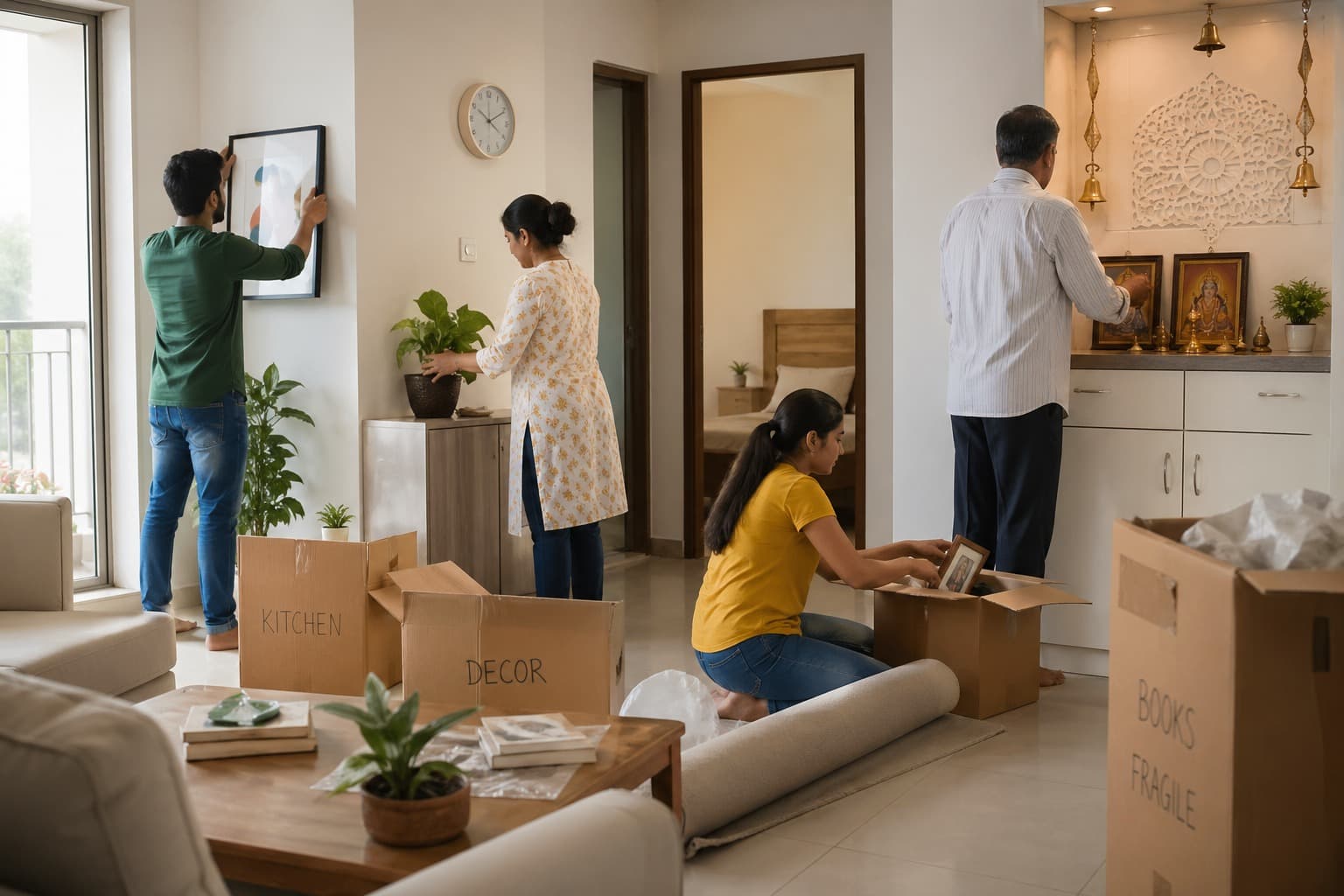
The Kitchen: Direction Before Décor
A kitchen that violates basic Vastu principles tends to feel chaotic regardless of how beautifully it is fitted. The cooking stove must sit in the South-East zone of the kitchen, and the person cooking should ideally face East while at the hob. This is one of the most consistent recommendations across all Vastu for flat guidelines.
The sink belongs in the North-East and should be positioned well away from the stove. Water and fire in close proximity is considered a negative energy combination.
Colours should lean warm. Yellow, orange, and light red tones support the kitchen's energy. Black is best avoided here entirely.
The Master Bedroom: Where Placement Determines Rest
Poor sleep is often a spatial problem before it is a medical one. In Vastu for bedroom interiors, the bed should be positioned in the South-West area of the room with the headboard towards the South or East wall. This placement is considered grounding and conducive to genuinely restorative sleep.
Mirrors should not directly face the bed. And electronics should be kept to a minimum, especially near the sleeping zone. Family photographs work well placed on the South-West wall, which is considered the direction of relationships and bonding.
Colours here should be soft and unhurried. Peach, cream, and light green all work well. Avoid anything sharp or overly saturated in a bedroom.
Children's Rooms and Study Spaces
For a child's bedroom, the head of the bed should point either East or South. The study table should sit in the East or North zone of the room, with the child facing East while studying. This direction is associated with clarity and learning across multiple Vastu traditions.
In a dedicated study room or home office, the person working should face either East or North. A small globe or crystal placed in the North-East corner is a traditional Vastu recommendation for focus and knowledge. Colours here should remain neutral, white, cream, or pale green, so the mind is not distracted.
The Pooja Room and Bathroom
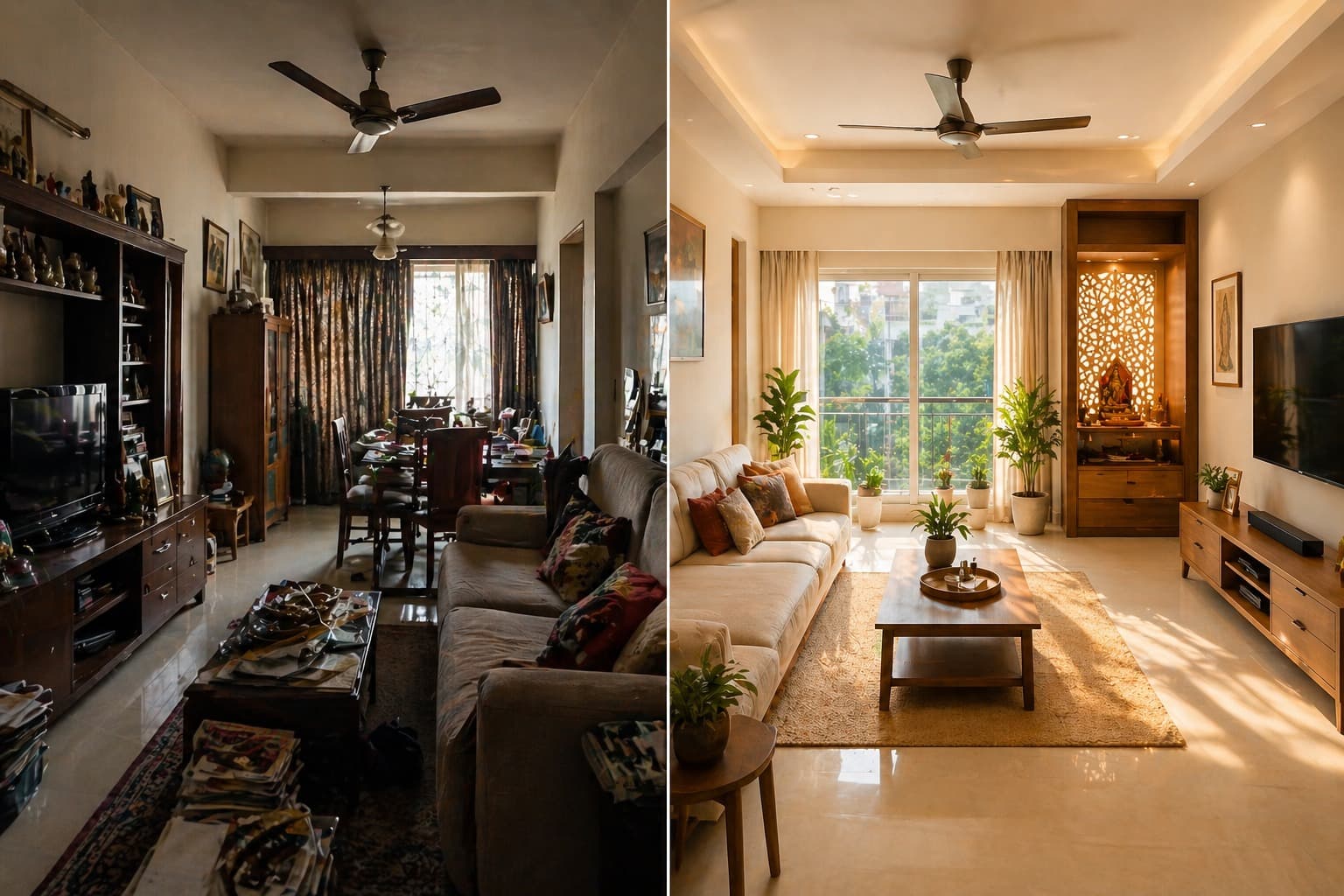
A Vastu-compliant pooja room requires the deity idols to face either West or East, with the worshipper facing East during prayer. Light, preferably a diya, should be kept burning in the evening. Broken idols should never remain in the pooja space. Colours here should be pure and calm, white, soft yellow, or a gentle sky blue.
Bathrooms are often overlooked in Vastu planning. The toilet should ideally be in the North-West or South zone. Shower and bathing areas work best in the East. The bathroom door should remain closed. Adequate ventilation through an exhaust fan is both a Vastu and practical requirement.
Summary
Vastu for flat interiors gives designers a directional framework that goes beyond aesthetics. From placing the stove in the South-East and the bed in the South-West, to choosing the right Vastu colours for each room and keeping bathrooms ventilated and pooja rooms clutter-free, every decision compounds into a home that feels genuinely harmonious.
For designers working with Indian homebuyers, integrating room-wise Vastu tips into the spatial plan from the beginning builds client trust and produces spaces that hold their quality long after handover.