
Types of EV Chargers for Residential Buildings: A Practical Guide for Indian Homebuyers
Summary
Explore EV charger options for Indian homes: wall-mounted for reliable daily charging, portable for flexibility, and fast chargers for larger projects. Learn about costs, safety, and housing society roles for EV readiness.

Introduction
Electric vehicles are no longer a future concept in India. They are becoming part of daily life. From compact EV cars to electric scooters, more people are shifting towards clean mobility. With this change, EV chargers for homes are now as important as parking spaces. Many buyers and housing societies are asking one basic question: how will charging work every day? Understanding types of EV chargers for homes helps residents make smarter decisions and avoid confusion later.
Growing Importance of Residential EV Charging
The rise in electric vehicles has created strong demand for residential EV charging facilities. Earlier, people depended mostly on public charging stations.
Today, most EV users prefer charging at home.
A proper home EV charger India setup ensures convenience, safety, and cost control. Charging overnight at home is cheaper and more reliable than depending on outside stations.
Understanding EV Charging Basics
Before selecting any charger, it is important to understand how electric car charging works. Chargers differ mainly in speed, power, and installation requirements.
Some chargers work with standard power supply, while others need special wiring. Some are slow and suitable for overnight use. Others are fast and need strong infrastructure. The right choice depends on daily travel, building capacity, and budget.
Wall-Mounted EV Chargers for Homes
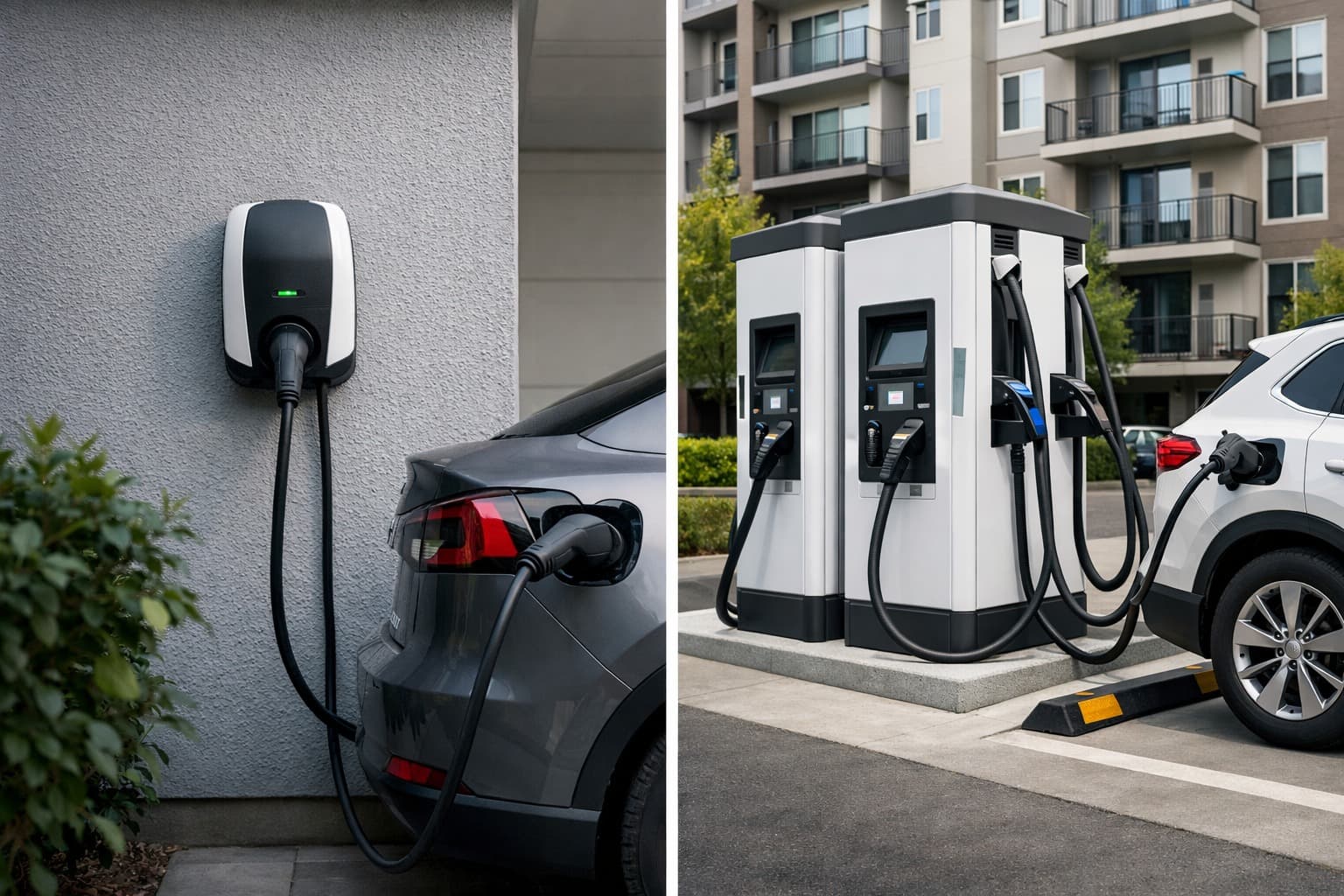
Wall-mounted chargers are the most common option for residential buildings. These are fixed units installed on walls or pillars in parking areas.
A wall mounted EV charger for apartment use provides stable and safe charging. It is directly connected to the building’s electrical system and usually includes protection features.
These chargers support regular overnight charging. Many also come with smart controls for scheduling and energy tracking.
Benefits of Wall-Mounted Chargers
Wall-mounted chargers are popular because they are reliable and easy to use. Once installed, users simply plug in and charge.
They reduce dependency on public EV charging stations. They also improve property value because EV-ready homes are becoming more attractive.
For housing societies, installing common wall-mounted chargers supports shared mobility goals.
Portable EV Chargers and Their Flexibility
Portable chargers are small devices that can be carried inside the vehicle. They can be plugged into suitable power outlets.
A portable EV charger for car is useful for people who travel frequently or live in rented homes. It works as a backup option when no fixed charger is available.
These chargers are slower but offer flexibility. They are helpful in emergencies and remote areas where charging infrastructure is limited.
Limitations of Portable Chargers
Although convenient, portable chargers are not ideal for daily heavy use. Charging time is longer, and safety depends on socket quality.
In many old buildings, power points may not support continuous load. This can cause overheating. So, portable chargers should be used carefully and mainly as secondary support.
Fast EV Chargers in Residential Projects
Fast chargers, also called DC chargers, are mostly used in public spaces. However, some premium housing projects are now installing them.
These chargers supply high power and can charge batteries quickly. They require advanced wiring, transformers, and approvals.
For most residential societies, fast chargers are costly. They are better suited for large gated communities or mixed-use projects.
Choosing the Right EV Charger for Your Home
Selecting the right charger depends on multiple factors. First is daily driving distance. People with long commutes need faster charging.
Second is power availability. Not all buildings can support high-load systems. Third is installation space and safety clearances.
A good home electric vehicle charging setup balances speed, safety, and affordability.
Role of Housing Societies in EV Charging
In apartments, individual charging is not always possible. Housing societies play a major role.
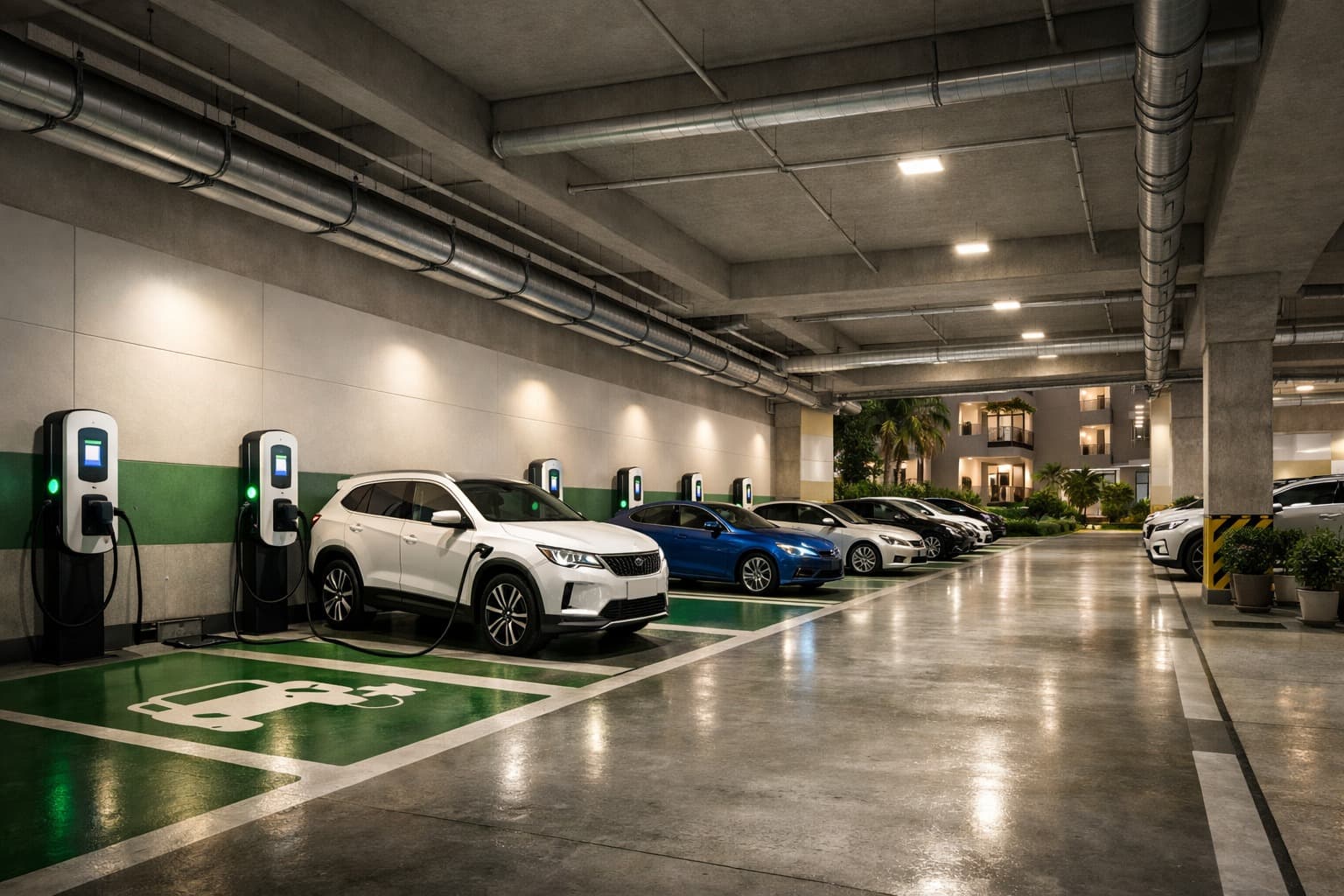
Many societies are now creating residential EV charging infrastructure for housing projects. They allocate common charging points and upgrade transformers.
Clear policies, billing systems, and safety audits are important. This avoids disputes and ensures fair usage.
Government Guidelines and Support
Indian authorities are encouraging EV adoption. New building guidelines promote EV-ready parking.
Some states offer subsidies for chargers. DISCOMs are also simplifying load enhancement procedures.
Following official rules helps societies avoid legal issues and ensures smooth approvals.
Cost Considerations for Residential Charging
Charging equipment cost varies by type. Wall-mounted chargers are moderately priced. Portable chargers are cheaper. Fast chargers are expensive.
Installation charges, wiring upgrades, and meter changes also add cost.
However, home charging remains cheaper than public charging in the long run. It also saves time and travel.
Safety and Maintenance Aspects
Safety is critical in EV charging. Poor wiring can cause fire risks.
Certified chargers, proper earthing, surge protection, and regular inspection are essential. Maintenance should not be ignored.
Users must avoid using damaged cables and unapproved adapters.
Smart Charging and Energy Management
Modern chargers offer smart features. These include load balancing, mobile apps, and usage reports.
Smart systems prevent overloading and help manage electricity bills. They are useful in shared parking environments.
Such systems are becoming part of residential EV charging solutions India.
Wall-Mounted vs Portable Chargers: A Practical Comparison
Many buyers ask about wall mounted vs portable EV chargers for Indian homes. Wall-mounted chargers are best for regular users with fixed parking.
Portable chargers suit temporary needs and travel. They cannot replace permanent setups.
For long-term convenience, wall-mounted systems are more reliable.
Impact on Property Value and Demand
EV-ready homes are gaining popularity. Buyers now ask about charging facilities during site visits.
Projects with proper charging infrastructure attract future-focused buyers and tenants. This improves resale potential.
Developers are slowly integrating charging into project planning.
Future of Residential EV Charging in India
The EV market is expected to grow rapidly. Charging systems will become more advanced and affordable.
Solar-linked charging, battery storage, and community charging hubs may become common.
The best types of EV chargers for residential buildings in India will continue evolving with technology.
Conclusion
Residential EV charging is no longer optional. It is becoming a basic housing requirement. Understanding different charger types helps buyers, societies, and developers make better choices. Wall-mounted chargers suit daily users, portable chargers offer backup support, and fast chargers serve large projects. With growing policy support and technological progress, home charging will become simpler and more reliable. Investing in proper charging infrastructure today ensures convenience, safety, and long-term value.
Summary
Residential EV charging is becoming essential as electric vehicle adoption rises in India. Wall-mounted chargers offer reliable daily charging, while portable chargers provide flexible backup support. Fast chargers suit large housing projects with strong infrastructure. Choosing the right system depends on usage, power availability, and safety standards. Housing societies play a key role in building shared infrastructure. With government support and smart technologies, home charging solutions are improving, making electric mobility more practical and attractive for Indian homeowners.