
Think Before You Sign: Real Questions Every NRI Must Ask Before Booking a Home in India
Summary
NRIs buying property in India often let emotions cloud judgment, making crucial checks vital. This guide outlines essential questions covering RERA registration, legal purchase eligibility, proper payment channels, NRI loan specifics, appointing a Power of Attorney, and vetting the builder's track record for a secure investment.

The Excitement Can Be Dangerous
There is something deeply personal about an NRI deciding to buy property back home. It is not just a financial transaction. It is a piece of identity being planted in familiar soil. And that emotional pull, beautiful as it is, can quietly cloud the judgment of even sharp, experienced people.
The Indian property market has genuinely improved over the past decade. But gaps still exist between what brochures promise and what buyers eventually receive. Asking the right questions before that booking amount leaves your account is not pessimism. It is protection.
Is This Property RERA Registered?
This is the first question, always. The Real Estate Regulation and Development Act requires most new residential projects above a basic threshold to be registered with the respective state authority before launch. The registration number must be clearly visible, and you should verify it on the state RERA portal yourself, not just take the sales team's word for it.
RERA verification for NRI buyers matters more than most people realise. A registered project legally binds the developer to stated delivery timelines and specifications. If something goes wrong, you have a proper grievance mechanism to fall back on. An unregistered project gives you very little formal recourse.
Can I Legally Buy This Type of Property?
Under FEMA rules for NRI buying residential property India, non-resident Indians and OCI cardholders can freely purchase residential apartments, villas, and commercial units without seeking special clearance from the Reserve Bank of India. What they cannot buy is agricultural land, farmhouses, or plantation property. These are off-limits unless acquired through inheritance from an eligible person.

This seems obvious, but some plotted developments in peripheral areas can fall into grey zones. Always have a property lawyer review the land classification certificate before you commit to anything.
How Will the Payment Actually Travel?
NRI home buying India involves specific payment channels that must be followed without exception. All funds need to flow through your NRE or NRO bank account. Direct remittance from an overseas account in foreign currency is permitted, but must come through proper banking channels with a clear trail.
Cash payments are illegal and can create serious complications during resale or repatriation of funds later. Ask the developer explicitly which payment modes they accept, and get confirmation in writing. Your future ability to repatriate sale proceeds depends on how cleanly this part is handled today.
What Does My Loan Eligibility Look Like?
Getting an NRI home loan is entirely possible through most major Indian banks and several international banks with India operations. But the eligibility calculation differs from what a resident Indian would experience. Banks typically assess your foreign income, existing liabilities, country of residence, and employment type.
Ask your bank for a pre-approval letter before you finalise any property. This tells you exactly what amount you qualify for, gives the developer confidence in your financial standing, and prevents you from committing to a ticket size your loan cannot support.
Who Will Handle Things When You Are Not Here?
This is where many NRI property investment decisions quietly break down. The registration, loan disbursement, society correspondence, handover formalities, and any disputes that arise will require someone physically present in India to deal with them. Executing a Power of Attorney in favour of a trusted family member or legal professional, notarised in your country of residence and then attested, is not optional. It is essential.
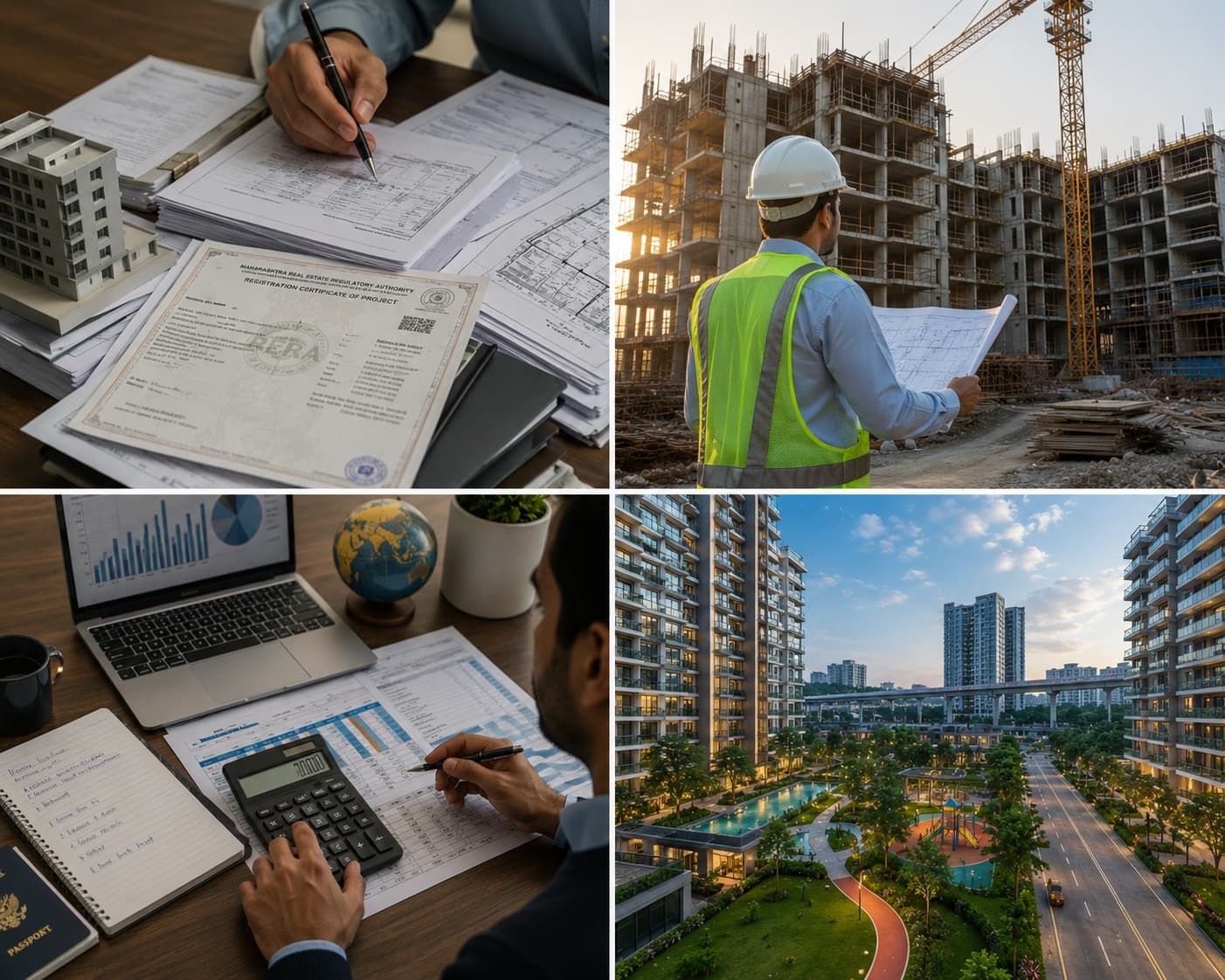
Power of attorney for NRI property purchase India needs to be specific in scope. A sweeping, open-ended POA can create its own risks. Define clearly what the holder can and cannot do on your behalf.
What Is the Builder's Track Record?
Before signing anything, look up how many projects this developer has completed, whether they were delivered on time, and whether past buyers in their societies report issues with maintenance or construction quality. Online forums and resident group feedback are imperfect but illuminating.
Questions NRI should ask before buying property must include asking the developer directly for possession certificates and occupation certificates from their last three completed projects.
Summary
Questions every NRI should ask before booking a home in India cover RERA registration, FEMA rules for NRI property, payment channels, NRI home loan eligibility, Power of Attorney arrangement, and builder credibility. NRI home buying India in 2026 is more transparent than ever, but the safeguards only work if you actively use them. Ask everything before the booking form is signed. Silence at that stage costs far more later.