
Things Every Buyer Should Quietly Check Before Booking a Corner Flat
Summary
Before booking a corner flat, buyers must carefully check wall orientation for heat and light, potential noise levels, and privacy risks. While offering good resale value and better light, assessing these hidden quirks ensures a wise and comfortable investment.

Introduction
Sales teams love pushing corner units first. They usually cost a touch more, and the pitch about extra light and ventilation is not entirely wrong. But a corner flat brings its own set of quirks that rarely make it into the brochure, and a buyer who skips the fine print often finds out about them only after moving in.
Extra Light Sounds Great, Until You Feel the Heat
Two external walls instead of one means more windows and cross ventilation, which genuinely helps with airflow. It also means more direct sun exposure through the day, particularly on west facing units. In cities with harsh summers, that translates into higher cooling costs every single month, something worth actually budgeting for rather than assuming away.
Check the Wall Facing Direction Before Anything Else
Not all corner units are created equal. A flat with its extra wall facing north or east stays comfortably lit without turning into an oven by afternoon. One facing west or southwest can become uncomfortably warm for several hours daily. Ask for the actual orientation on the layout plan rather than relying on a generic sales description.
Noise Levels Can Be Higher Than You Expect
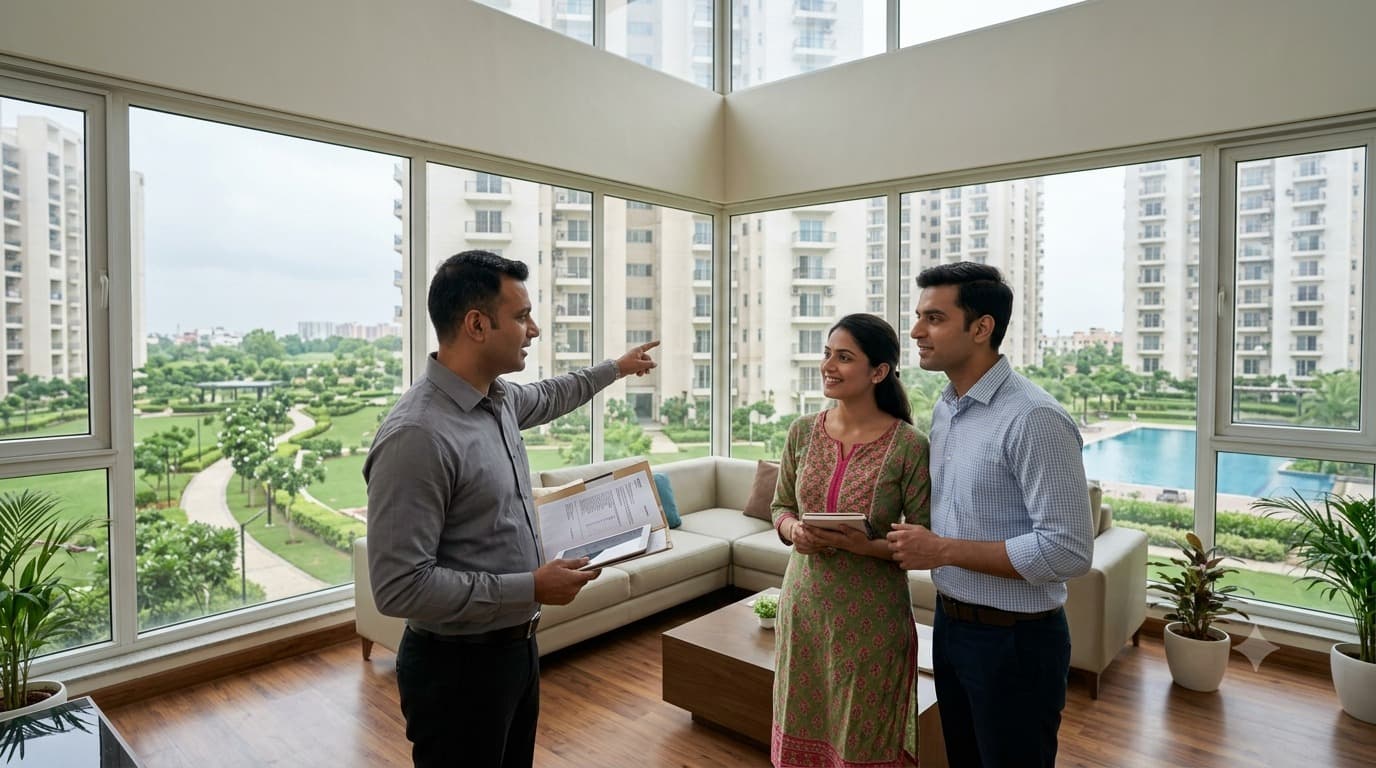
Corner units often sit closer to lift lobbies, staircases, or refuse chutes, depending on the building layout. That proximity brings convenience but also more footfall and noise passing by the front door through the day. Standing in the actual unit during a weekday evening, rather than a quiet weekend showing, gives a far more honest sense of this.
Wall Area Means More Than Just Aesthetics
More external wall area sounds like a bonus, but it also means more surface exposed to weather, seepage risk, and long term maintenance. Waterproofing quality on that additional wall matters more here than in an interior unit. It is worth asking the builder directly what waterproofing specifications were used on the exterior walls.
Privacy Can Take a Hit in Ground Floor Corner Units
Ground or lower floor corner flats often face a compound wall, a garden, or a walking path on two sides instead of one. That can mean less privacy than an equivalent interior unit at the same level. Checking what exactly lies outside both external walls, not just one, avoids an unpleasant surprise later.
Resale and Rental Value Actually Work in Your Favour
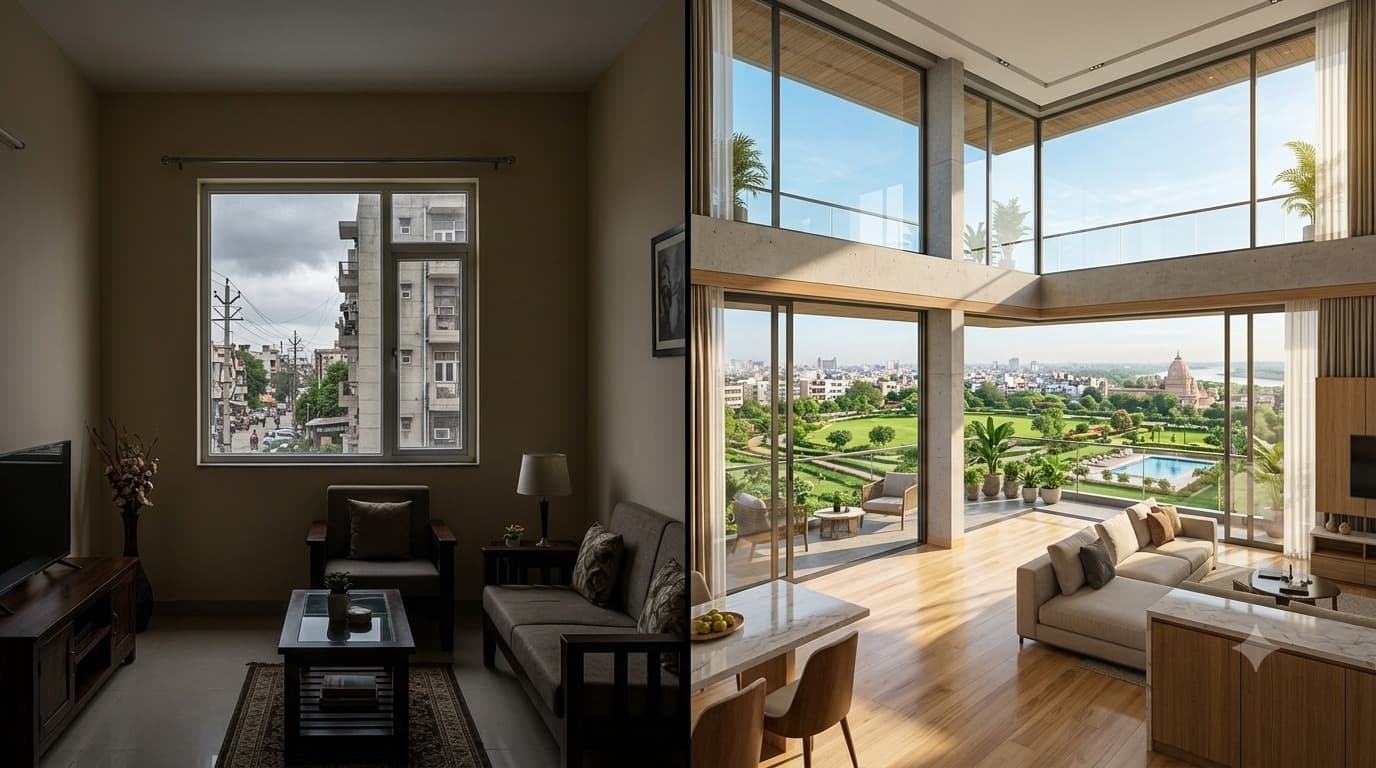
Here is the part sales teams get right. Corner units, especially with good orientation, tend to hold resale value better and rent out slightly faster because more buyers specifically look for them. The premium paid upfront is often recovered, sometimes with a small edge, when it eventually comes time to sell.
Ask About Pricing Logic, Not Just the Premium Itself
Developers usually charge two to five percent more for corner units, but that number is not always tied to genuine advantage. Sometimes it reflects a slightly larger carpet area, and sometimes it is pure positioning. Getting the exact carpet area comparison against a similar interior unit helps confirm whether the premium is fair.
Summary
Buying a corner flat can work well when the wall orientation, ventilation, noise exposure, and pricing logic are all checked carefully before booking. The extra light and better resale value are real advantages, but only when the unit does not face harsh west sun or sit next to a noisy lobby. A short visit at the right time of day, and a few direct questions to the builder, usually reveal everything a brochure will not.