
The Sample Flat Trap: What Savvy Homebuyers Check Before Signing Anything
Summary
Sample flats often mislead. Savvy homebuyers meticulously check actual unit specifications like ceiling height, finishes, fittings, and ventilation, verifying details against builder documents and RERA to avoid costly disappointments.

Introduction
Walking into a sample flat feels good. The lighting is warm, the furniture is perfectly placed, and everything smells faintly of fresh paint and possibility. Developers spend a lot of money making sure you feel something in that room. And honestly, it works.
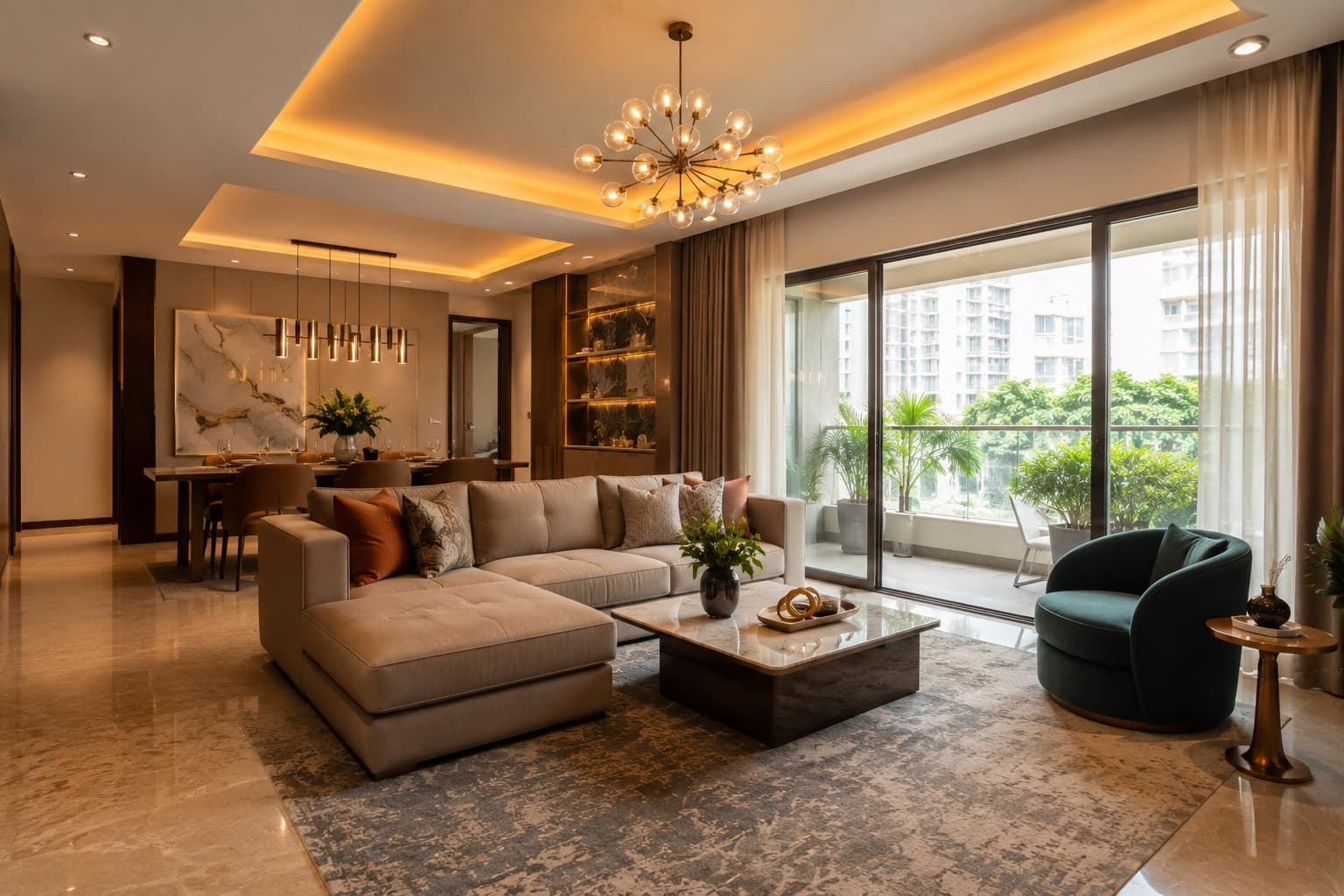
But here is the thing most first-time buyers do not fully appreciate. A sample flat is a sales tool, not a preview. The actual apartment you will receive may share the same floor plan, but almost nothing else will be identical. The finishes may differ. The fittings may be a grade lower. The view from your actual floor may look nothing like the one you saw. Knowing what to examine during a sample apartment visit can save you from some very expensive disappointments later.
Start With the Ceiling Height and Natural Light
Before you look at anything else, look up. Ceiling height directly affects how a home feels to live in every single day. Some developers keep sample flats at a slightly generous height that does not match the standard specification across other floors. Ask the sales representative to confirm the exact floor-to-floor height in writing, and then verify this against the approved building plan.
Natural light is the next thing to assess, and it requires some imagination during a sample flat inspection. The model unit is usually placed on a lower floor or corner position to maximise light. Your apartment, particularly if it is in the middle of the building or facing a neighbouring structure, may receive significantly less sunlight. Ask for the exact orientation and floor position of the unit you are actually booking, then mentally adjust what you saw.
Wall and Floor Finish Quality
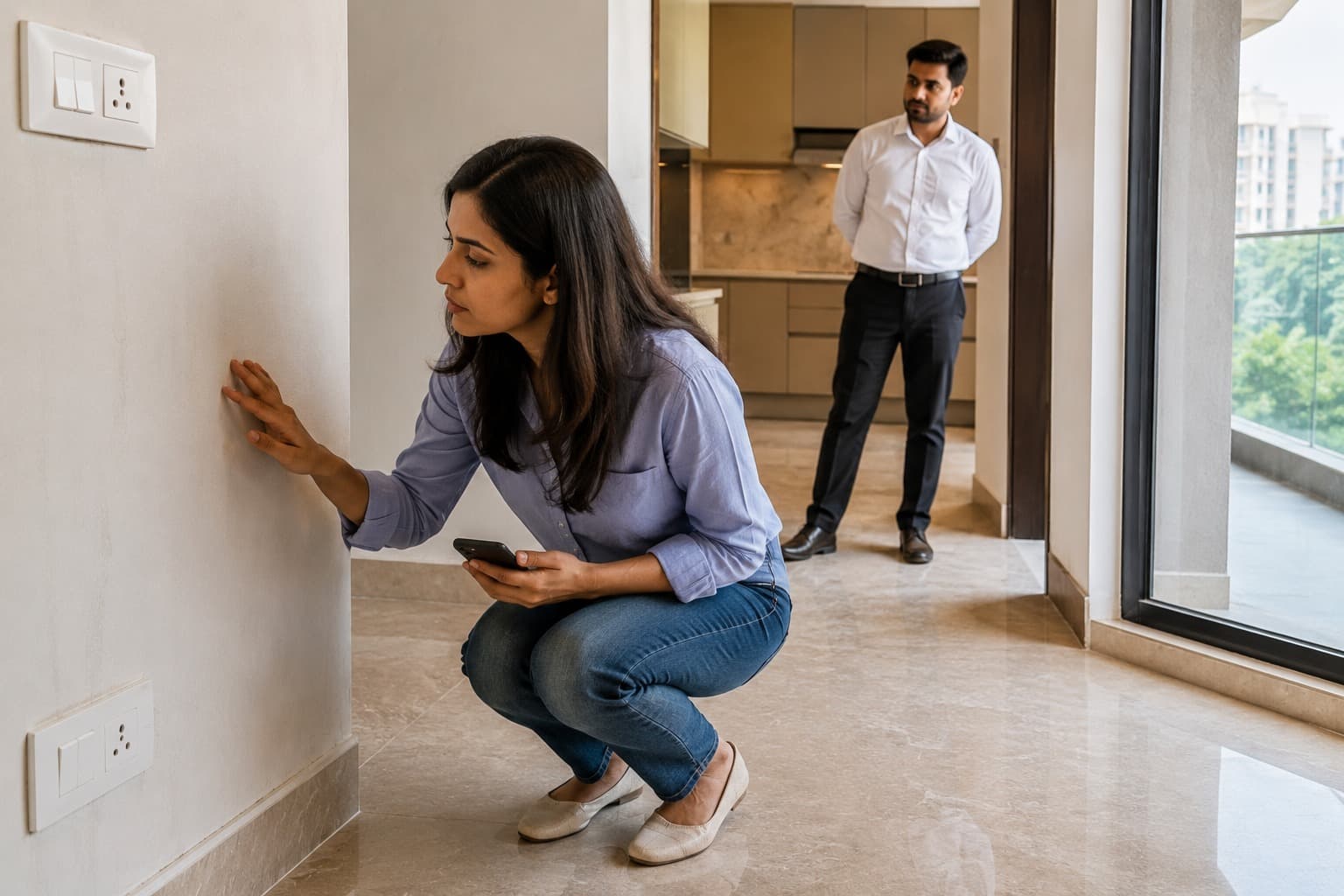
Run your palm slowly across the walls. You are feeling for unevenness, hollow spots, and the quality of the plaster underneath the paint. A clean coat of paint hides a lot. Tap the wall lightly in a few places. A dull, solid sound suggests dense plaster. A slightly hollow or papery echo can indicate thin application or poor bonding, which leads to cracks over time.
The floor is equally telling. Lay your eye flat at floor level and sight across the tiles. Any undulation, lippage between adjacent tiles, or uneven grout lines is a construction quality check you can do with your own eyes. Premium tiling looks smooth and level from every angle. Do not let the beautiful furniture distract you from examining what is underneath it.
Bathroom and Kitchen Fittings: Read the Grade
Most sample flats in India are dressed with fittings one or two grades above what buyers actually receive in the final apartment. The chrome faucets in the model unit may be from a premium brand. The actual specification might be something far more ordinary. Before your visit, ask for the fitting specifications document from the developer. This is a legal document they are required to provide. Compare the brand names and grades listed there against what you see in the showroom unit.
Inside the bathroom, check whether tiles run all the way to the ceiling or stop midway, as this affects waterproofing over time. Check for ventilation. A bathroom with no exhaust window and no ventilation shaft is going to cause serious humidity problems within a year of occupancy.
Check What the Sample Flat Deliberately Hides
There are things a sample apartment will never show you, and this is where the real homework begins. The sample unit almost never has a utility area that reflects the actual apartment's proportions. Storage space is either exaggerated through clever furniture choices or simply absent from the model altogether.
Balcony depth is another common issue. A balcony that looks generous in the sample flat may be quite narrow in reality. Ask for the carpet area breakup sheet and check balcony dimensions specifically. Under RERA regulations, carpet area must be disclosed clearly, and this number is your best protection against being misled by visual staging.
Ventilation and Cross Breeze
Good ventilation is something you cannot fake during a visit, but you can assess the possibility of it. Stand in each room and identify where windows are placed relative to each other. A room with windows only on one wall will trap heat and humidity. Apartments designed for natural cross ventilation have openings on opposing walls or at angles that allow air to move through.
This matters enormously in Indian climates. A poorly ventilated home drives up electricity bills, creates dampness, and feels oppressive during monsoon months. No amount of modular kitchen décor compensates for a home that cannot breathe.
Verify the Builder's Specification Document
At the end of your sample flat visit, ask for the builder's technical specification sheet. This document lists the exact brands, grades, and materials promised for every component of the actual flat. Compare it item by item against what you saw in the model unit. If the developer resists providing this document, that resistance itself is a signal worth taking seriously.
Cross-check the RERA project registration number on your state's RERA portal. The portal will show you the registered specifications, timelines, and any complaints filed against the developer. This is public information, and using it costs nothing.
Summary
A sample flat inspection is the most important step in your home buying journey, but only if you approach it with a plan. Check ceiling heights, wall quality, tile work, actual fitting specifications, ventilation design, and natural light for your specific unit and floor. Ask for the builder's specification document and verify every claim against the RERA project listing. The sample apartment is designed to make you feel confident quickly. Your job is to slow down, look past the staging, and make sure the home you are booking genuinely matches what you walked through.