
The Role of Property Appreciation in India's Commercial Hotspots
Summary
Infrastructure development systematically drives property appreciation in India's commercial hotspots. Metros, expressways, and airports boost accessibility and economic activity, reliably increasing property values. Timing investments during announcement or construction phases maximizes returns.

The One Rule That Never Changes
Twenty years of watching Indian cities grow and one principle holds without exception. Build a road, and the land beside it becomes more valuable. Open a metro line, and residential demand along the corridor jumps before the first train runs. Announce an airport, and farmland nearby begins attracting investors who have no idea when the terminal will open.
Infrastructure and property appreciation are not casually linked. They are structurally connected in a way that has played out across every major Indian city and is now beginning to reshape tier 2 markets in exactly the same pattern.
What Appreciation Actually Measures
Property appreciation in a commercial hotspot is not random. It is the market's way of pricing in accessibility, footfall, connectivity, and economic activity. A commercial unit in a well-connected zone generates higher rental income, attracts better-quality tenants, and transacts at a premium because everything that makes a business location productive is within reach.
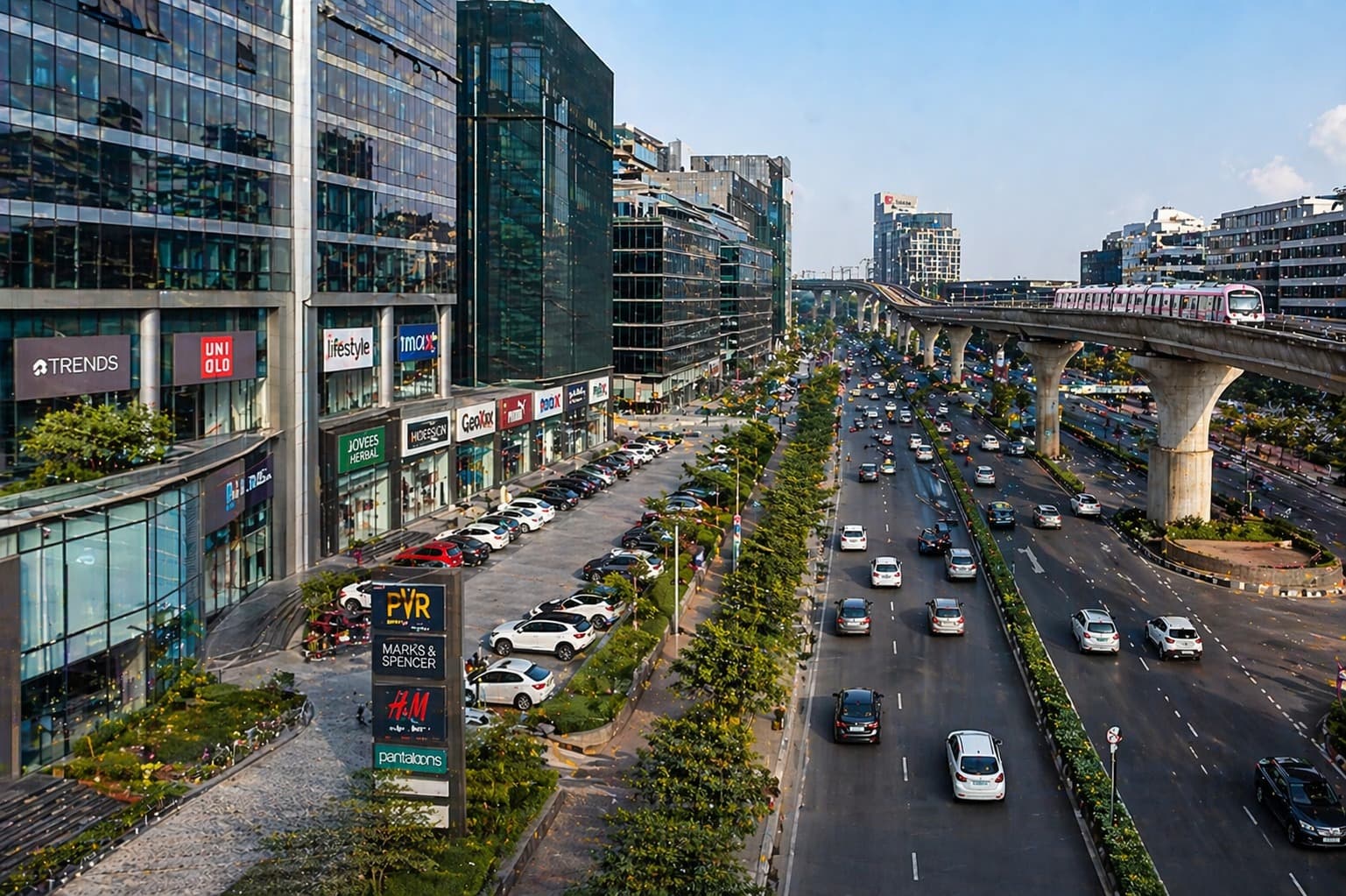
The data from India's top markets underlines this clearly. Areas along Bengaluru's Outer Ring Road, which transformed from peripheral zones into dense commercial corridors as IT campuses moved outward, saw property values climb close to 79 percent over five years. This was not speculation. It tracked the movement of 200,000 plus working professionals into those zones, which in turn created the retail, hospitality, and service demand that sustained commercial rents.
Infrastructure as the First Trigger
The National Infrastructure Pipeline has committed ₹111 lakh crore toward roads, railways, airports, and urban transit. Every rupee of that spending eventually lands somewhere on a map. And every location on that map becomes a more valuable address the moment construction begins, not when it ends.
Consider what happened along the Dwarka Expressway in Gurugram. For years the corridor sat half-built and underserved, with ambitious residential projects and almost no commercial activity. Once the expressway was completed and metro connectivity was extended, the belt transformed. Property prices in sectors along this route moved between 15 and 23 percent annually in the years following completion. Commercial space rents followed the same curve. Businesses moved in because their employees could reach them, which made the location commercially viable for the first time.
Metro Lines and the Appreciation Corridor
The relationship between metro infrastructure and property appreciation is among the most studied phenomena in Indian real estate. And the results are consistent.
Bengaluru's Namma Metro Phase 3, connecting Hebbal to Kempegowda International Airport, had already triggered a 30 percent price increase in North Bengaluru before the line was operational, according to CBRE India research. Buyers and investors priced in anticipated accessibility before a single train ran. That is how powerful the expectation of infrastructure can be.
In Pune, the upcoming metro extension into Hinjewadi has already begun influencing commercial lease negotiations in the corridor. Landlords are adjusting asking rents. Tenants are locking in agreements now at current rates rather than waiting for post-metro pricing.
Airports Open Entire New Geographies
The Mopa International Airport in North Goa restructured that region's entire real estate map. Land in the Pernem belt, which was agricultural and overlooked, absorbed a wave of investor interest as soon as the airport became operational. Luxury villa demand in North Goa's premium micro-markets reached 28 percent annual appreciation, a figure that would have been unimaginable before the airport changed the region's accessibility equation.
The Navi Mumbai International Airport is doing the same thing to areas in Panvel, Ulwe, and the emerging corridors of the Raigad belt. Projects that would have been considered too distant three years ago are now being pitched as airport-adjacent investments. Whether that narrative holds depends entirely on delivery timelines, but the directional movement in prices has already begun.
Tier 2 Cities Are Seeing the Same Pattern Earlier
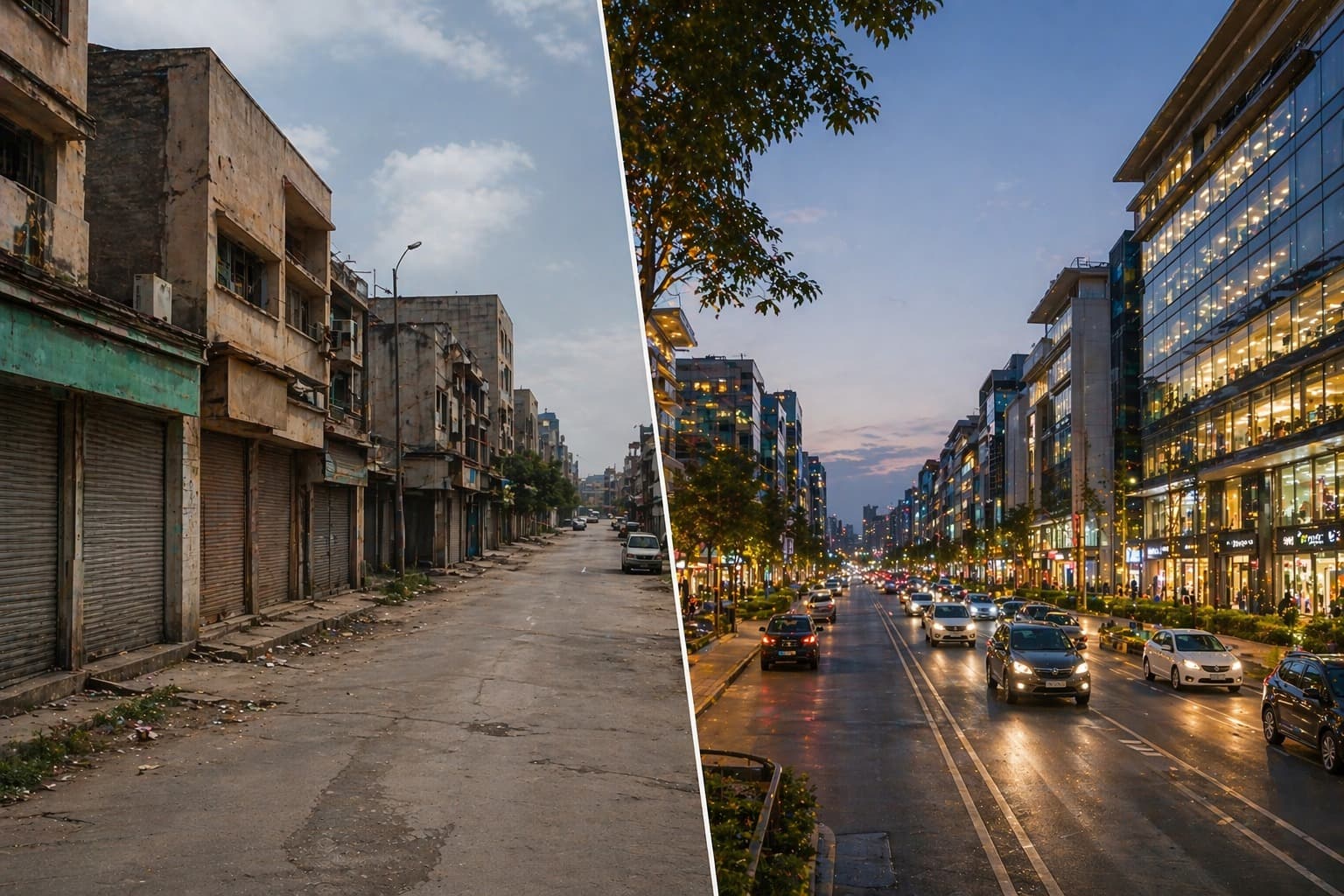
What took two decades in Bengaluru and Mumbai is happening faster in smaller cities because buyers have the benefit of watching the script play out before them.
In Indore, infrastructure spending on expressways and urban amenities under the Smart Cities Mission has helped sustain 8 to 12 percent annual property appreciation over five consecutive years. Nagpur's position inside the Delhi-Mumbai Industrial Corridor has made it a logistics and warehousing magnet, which in turn has pulled residential and commercial real estate values upward in surrounding zones. Investors who entered Nagpur commercial markets three years ago have already seen meaningful capital gains before the full industrial buildout is complete.
The Investor's Real Question
The question is never whether infrastructure causes appreciation. It does, reliably and measurably. The real question is timing. Entering a commercial hotspot after infrastructure is complete means paying for what the market has already priced in. Entering during the construction phase or, better still, during the announcement phase captures the full appreciation curve.
JLL India's research on infrastructure corridors suggests that well-connected zones are seeing price appreciation projections of 15 to 20 percent in active development belts. That is the window, and it does not stay open indefinitely.
Summary
Property appreciation in India's commercial hotspots is not accidental. It is driven systematically by infrastructure decisions including metros, expressways, airports, and industrial corridors that compress distance, raise accessibility, and attract economic activity. From Bengaluru's Outer Ring Road to Gurugram's Dwarka Expressway to emerging tier 2 corridors in Nagpur and Indore, the pattern repeats with reliable consistency. For investors, understanding infrastructure-led appreciation is not optional. It is the single most important variable in deciding where to put money and when.