
The Rise of Eco-Friendly Homes: Sustainable Residential Projects in Urban India
Summary
Eco-friendly homes are becoming mainstream in urban India, driven by cost savings and sustainability awareness. India ranks high globally in green building certifications, with projects demonstrating economic viability and government support.

Introduction
A decade ago, a developer describing their project as "green" was mostly a marketing exercise. Buyers nodded politely and moved on to asking about the parking. That calculation has changed. Today, eco-friendly homes India are not a niche segment anymore. They are becoming the default expectation among a growing section of urban buyers who are acutely aware of rising electricity bills, water scarcity, and air quality. The shift is real, it is measurable, and it is accelerating.
The Scale of What Is Already Here
India has crossed a milestone that few people talk about enough. The country now holds the second-highest share of LEED certified homes India and green buildings India globally, outside the United States, with over 16 million gross square metres of certified space spread across more than 7,500 projects. The Indian Green Building Council has facilitated a green footprint that has crossed 15 billion square feet across the country. These are not small numbers. They tell you that sustainable real estate India has already moved well past the experimental stage and into the mainstream construction pipeline.
What Green Certification Actually Means
When a developer advertises an IGBC or LEED-certified home, they are making a specific technical claim. IGBC certification evaluates a building on energy efficiency, water conservation, materials used, indoor air quality, and the impact on the surrounding environment. LEED applies a similar framework. GRIHA, which is India's own national rating system developed by TERI, focuses on similar parameters with a stronger orientation toward Indian climatic conditions. These are not self-declared labels. They require third-party audits, documentation, and scoring against defined benchmarks. A buyer asking for the certificate number and checking it on the official portal is doing exactly the right thing.
Projects That Set the Standard
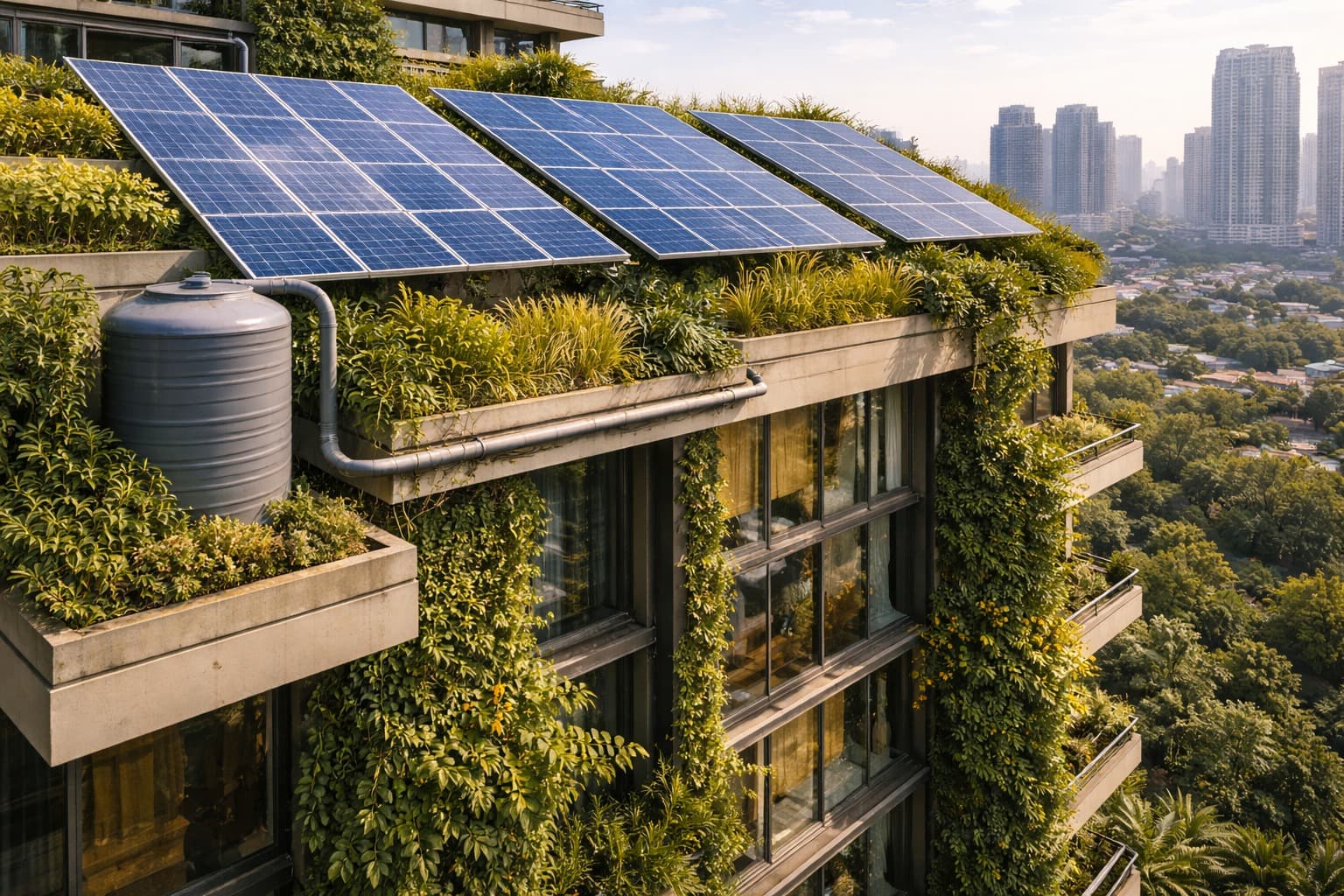
Several residential and mixed-use developments across Indian cities have already demonstrated what eco-friendly residential projects India can look like in practice. Godrej's Green Cove in Pune integrates rainwater harvesting and solar-powered common areas into its base design, not as add-ons. Tata Housing's Amantra in Mumbai carries a LEED Gold certification and incorporates green roofs that actively regulate indoor temperatures. Mahindra Happinest in Chennai brings sustainable housing India to the mid-income segment with IGBC-certified homes designed around natural ventilation. Brigade Orchards in Bengaluru has over 80 acres of green cover alongside smart energy meters and greywater recycling. These projects matter not because of their brochures but because they proved the economics work.
Why Buyers Are Genuinely Interested Now
The honest reason most urban buyers are warming to green real estate is financial. A well-designed green home can cut energy consumption by up to 30 percent and reduce water usage by a similar margin. Over the lifetime of a loan, that difference is meaningful. Electricity costs in Indian cities have risen sharply over the past five years and are unlikely to come down. An apartment with solar-powered common areas, LED systems, and efficient insulation simply costs less to live in month after month. That argument lands differently when someone is calculating EMI affordability than it did when sustainability was abstract.
The Government Push Behind the Movement
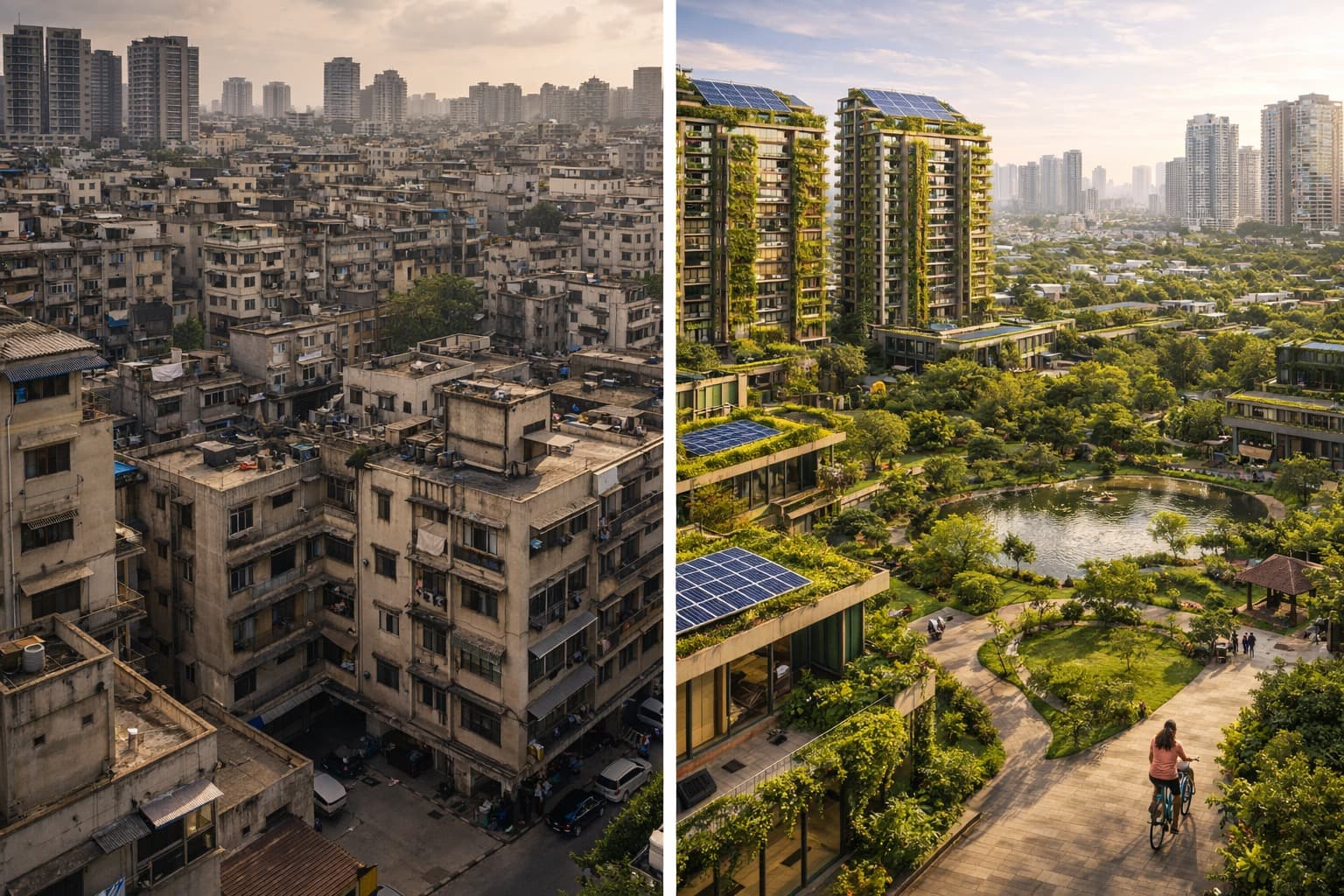
Sustainable housing trends in Indian cities 2025 have not emerged entirely from the private sector. Government policy has played a deliberate role. The Energy Conservation Building Code, now being made mandatory in several states, sets minimum energy performance standards for new constructions. The Smart Cities Mission rewards municipalities that integrate green infrastructure into urban planning. IGBC and GRIHA-rated projects qualify for faster approvals and tax incentives in many cities. Some states offer additional floor-area-ratio benefits to developers who build green. When the economics of compliance improve for developers, green features filter down into more affordable project tiers.
The Road Ahead for Urban India
The future of eco-friendly residential projects in urban India will be shaped by three forces working together. First, buyer awareness is rising faster than developers expected, particularly among the 30 to 45 age group in metro cities. Second, the cost gap between conventional and green construction is narrowing as materials like fly-ash bricks, double-glazed glass, and prefabricated green components become more widely available. Third, ESG commitments from institutional investors are pushing large developers to certify their entire portfolios, not just premium launches.
Summary
Green buildings India have crossed from aspiration into mainstream reality, with the country holding a top global position in LEED certified homes India and IGBC certification adoption. Eco-friendly residential projects India from developers like Godrej, Tata Housing, and Mahindra are proving that sustainable housing India works at multiple price points. How green buildings reduce costs for homeowners in India through lower electricity and water bills is the argument that is converting sceptical buyers. As policy support tightens and construction costs converge, green real estate in urban India is set to become not the exception but the expectation.