
The Psychology of Spacious Home Design
Summary
Spacious home design is rooted in psychology, not just square footage. Elements like ceiling height, natural light, and minimal clutter profoundly influence mood, focus, and stress levels, allowing even smaller homes to feel expansive and promote wellbeing.

Introduction
Ever walked into a flat and felt instantly lighter, before you even noticed the furniture or the paint? That's not accidental. There's real psychology behind why some homes feel like they're breathing and others feel like they're closing in on you, and it has surprisingly little to do with square footage alone.
Why Ceilings Do More to Your Mood Than You Realise
Researchers Meyers-Levy and Zhu ran a study back in 2007 that keeps getting cited for good reason. Rooms with ceilings around ten feet high nudged people toward more abstract, creative thinking, while lower ceilings pushed the same people toward narrower, detail focused thinking. Neither is wrong exactly, they just serve different moods, which is probably why a study room feels different from a living room even when both are equally tidy.
The Prospect and Refuge Idea Nobody Talks About
There's an older theory in environmental psychology called prospect and refuge, first proposed by Jay Appleton, that explains something most of us feel instinctively. Humans like spaces that let them see out while still feeling sheltered. A spacious home design that ignores this, all glass and no cosy corner, or all enclosure and no view, tends to feel oddly unsettling even when it looks impressive in photos.
Clutter Is Doing More Damage Than It Looks
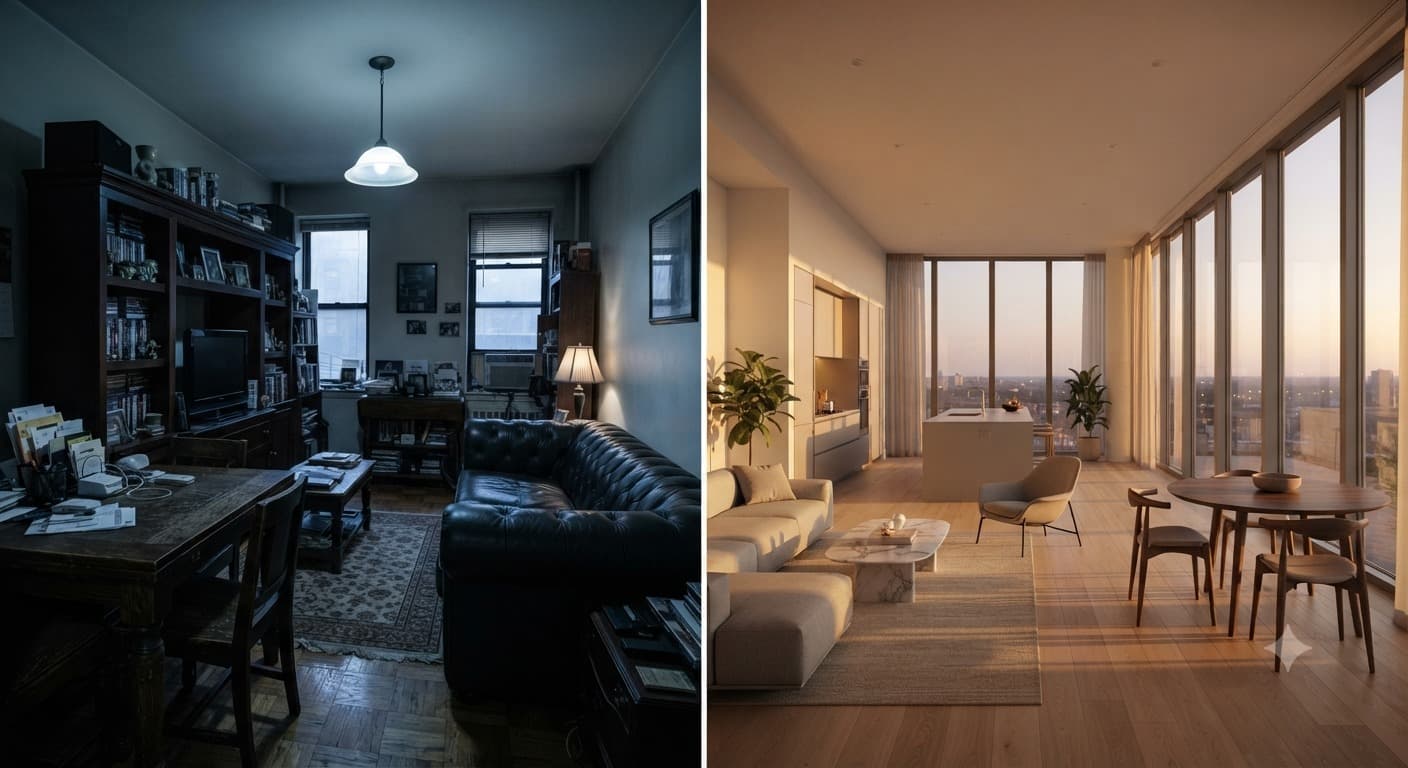
Here's the uncomfortable part. Cluttered environments don't just look messy, they measurably increase stress and error rates in people working or living inside them. It's not really about aesthetics at that point, it's about your brain quietly working overtime to filter out visual noise it never asked for. A home that looks calm is often a home that lets your mind actually rest.
Open Layouts and the Illusion of Freedom
Open plan living rooms feel expansive, and there's a reason architects lean on them so often. Wider layouts generally read as more open than long narrow ones, and open arrangements have been shown to help people communicate more easily within a shared space. But openness without any zoning starts to feel aimless fast, more on that shortly.
Light Changes How Big a Room Feels
A dim room, even a genuinely large one, tends to feel smaller than it is. Daylight extends a room visually in a way artificial lighting rarely manages, which is exactly why architects obsess over window placement almost as much as floor area. Two flats with identical dimensions can feel worlds apart in perceived size purely because of where the sun hits.
Where Spacious Design Actually Backfires
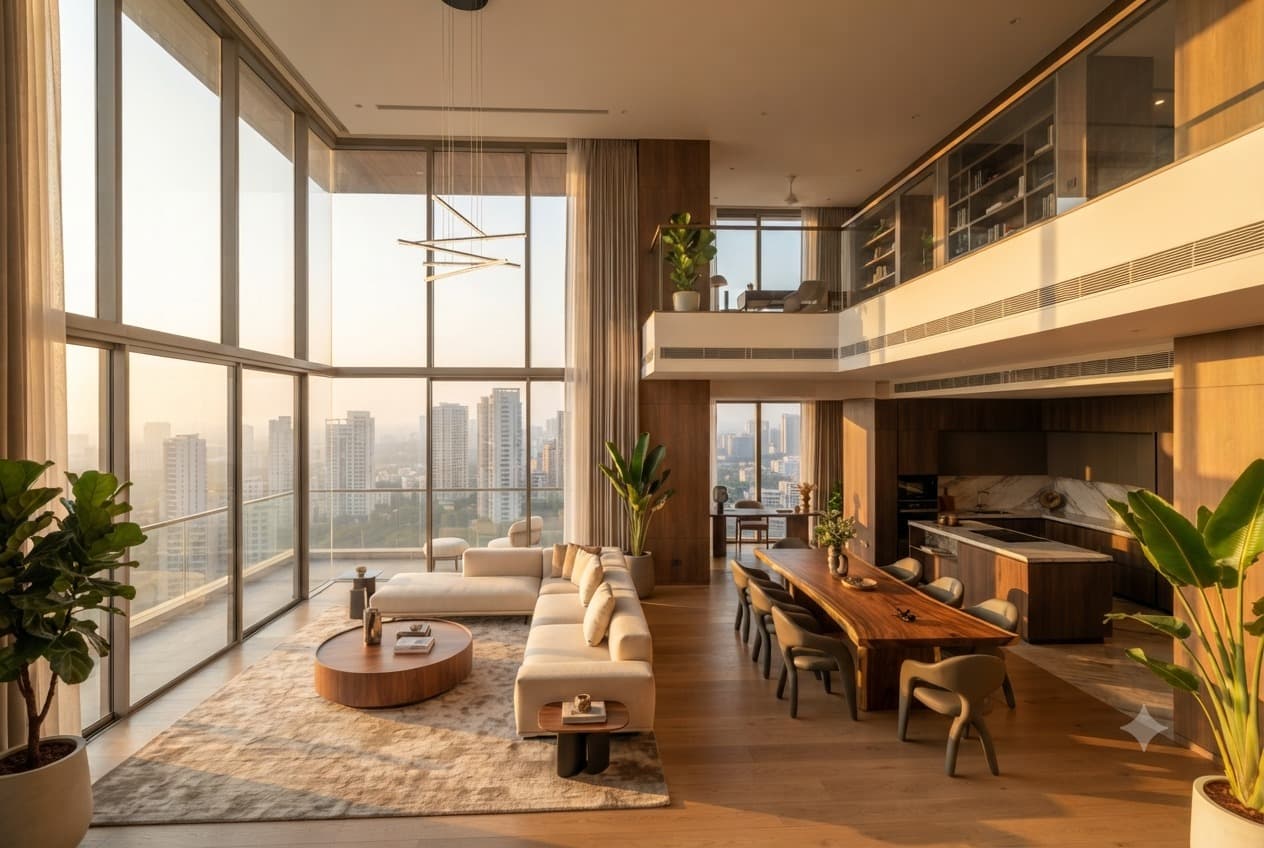
Interestingly, more height and openness isn't always better. Ceilings pushed past roughly ten feet can start to feel ungrounded rather than luxurious, and studies on crowding suggest the opposite extreme, small confined rooms, can raise stress markers by a notable margin. The sweet spot sits somewhere in the middle, and honestly, that middle is where most good architects quietly aim.
Small Homes Can Borrow This Psychology Too
You don't need a duplex to use any of this. Pale colours, uncluttered surfaces, a mirror positioned to catch daylight, these tricks borrow directly from the same psychological principles that make larger homes feel good. A well lit fifteen hundred square foot flat can genuinely feel calmer than a poorly lit three thousand square foot one, which says a lot about where the real value lies.
What This Means When You're Actually Flat Hunting
Next time you're touring a property, pay attention to how a room makes you feel before you start measuring walls. That instinctive reaction, calm, cramped, exposed, cosy, is your brain processing decades of environmental psychology in about four seconds flat. Trust it a little more than the brochure.
Summary
The psychology of spacious home design goes far beyond having more square feet to work with. Ceiling height, natural light, clutter and layout all quietly shape mood, focus and stress levels in ways most buyers never consciously register. Understanding this helps homebuyers choose spacious floor plans that genuinely support wellbeing rather than just looking impressive. Even a smaller home, designed with this psychology in mind, can feel calmer and more open than a larger one built without it.