
The Hidden Cost: How Utility Shafts Impact Your Apartment's Usable Space
Summary
Utility shafts in Indian apartments increase built-up area costs without adding usable space. Buyers should check floor plans and focus on RERA carpet area to avoid paying for unusable square footage. It's a hidden cost!

Introduction
There is a narrow vertical column running through almost every modern apartment building in India that most buyers have never thought about and developers rarely explain unprompted. It is called the utility shaft and it carries the building's electrical conduits, plumbing pipes, drainage lines, internet cables, and sometimes gas lines from the ground floor all the way to the top. Nobody lives in it. Nobody stores anything in it. And yet in many projects it shows up quietly inside the built-up area calculation that determines what you are paying for. Understanding the impact of utility shaft on built-up area is one of those unglamorous but genuinely useful pieces of knowledge that can change how you read a floor plan and compare two apartments side by side.
What a Utility Shaft Actually Is
A utility shaft is a dedicated vertical enclosure built into the structure of an apartment building to house all the essential service lines that need to run continuously from basement to terrace. Think of it as the building's spine for mechanical and electrical infrastructure. Every floor typically has a small access panel or door that opens into the shaft for maintenance purposes.
In most residential buildings, the utility shaft sits tucked into a corner of the kitchen or bathroom zone. It is walled off on all sides, inaccessible to residents for any practical purpose, and takes up anywhere from 4 to 15 square feet of physical floor space depending on the building's scale and service complexity.
How It Affects Built-Up Area
Here is where the financial relevance begins. Built-up area in Indian real estate includes the carpet area plus the area covered by the walls of the apartment itself. In most projects, the utility shaft that falls within or along the boundary of your specific flat gets included in the built-up area calculation for that unit. The developer counts the shaft's footprint as part of your flat's built-up area even though you cannot use that space for anything at all.
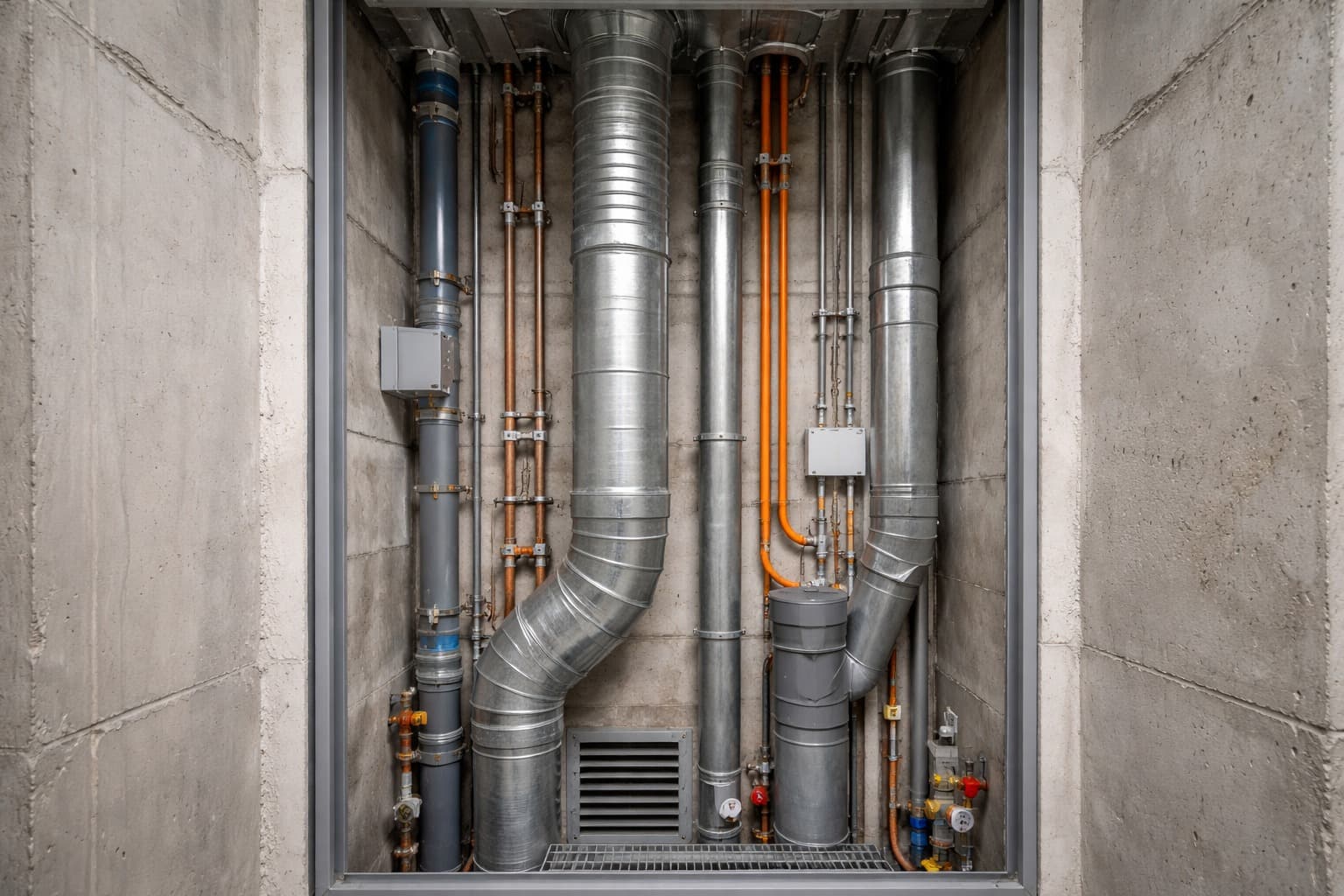
The utility shaft apartment India inclusion in built-up area means you are effectively paying for square footage that serves the entire building's infrastructure while being charged to your individual unit account. It is not an illegal practice. It follows standard construction measurement conventions. But it is a cost the buyer absorbs without receiving any proportionate usable space in return.
The Carpet Area Disconnect
The gap between built-up area and carpet area in an apartment is already significant because of wall thickness, loading factors, and common area allocations. The utility shaft adds another layer to that disconnect. A flat with a utility shaft of 8 square feet inside its boundary has those 8 square feet counted in the built-up area number and possibly in the saleable area figure but contributing zero to the RERA carpet area.
Over a 1,000 square foot apartment, 8 square feet may sound negligible. But at Rs 12,000 per square foot of built-up area, that shaft space costs the buyer nearly Rs 1 lakh for something with no usable value. In larger apartments or buildings with multiple shafts along unit boundaries, the figure grows proportionally.
Where Shafts Appear Most Commonly
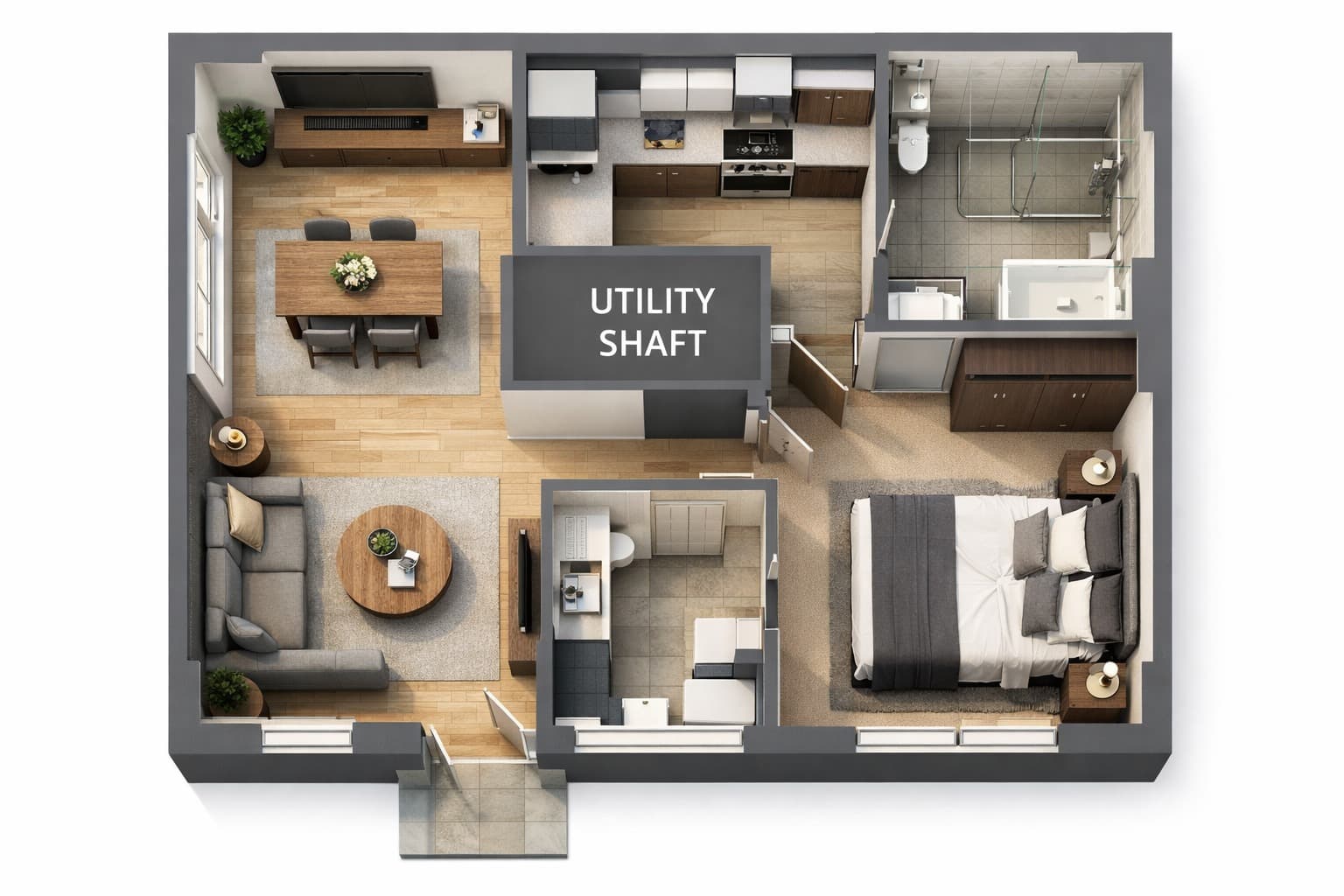
Utility shaft flat India placement varies by building design but certain locations recur consistently. The kitchen wall backing onto the building's service zone almost always carries a shaft, which is why kitchen dimensions in apartments frequently feel slightly tighter than the floor plan suggests. The bathroom and toilet walls are another common shaft location, particularly in buildings where plumbing stacks run in clusters.
Corner flats sometimes carry two shaft boundaries, one on each external service wall, which can measurably reduce usable kitchen and bathroom dimensions compared to middle-unit flats of nominally identical size. Buyers comparing corner and non-corner units in the same project should check floor plans carefully for shaft placement before assuming the configurations are equivalent.
What RERA Says and What Buyers Should Do
Under RERA, the carpet area definition explicitly excludes areas that are not usable for living purposes. A utility shaft that is fully enclosed and inaccessible should not appear in the RERA carpet area figure. But it may still appear in the super built-up area or saleable area that some developers use in pricing conversations outside the RERA disclosure framework.
Buyers should always request the RERA-registered floor plan with dimensions for each room and compare the stated RERA built-up area India against an actual measurement of usable internal space. If the shaft is clearly visible on the floor plan, identify its square footage and mentally subtract it from your assessment of what the flat truly delivers.
Summary
The impact of utility shaft on built-up area in Indian apartments is real, financially measurable, and consistently underexplained to buyers. Shafts running through or along your flat's boundary add to the built-up area calculation while contributing nothing to your carpet area or daily living space. At current property prices, even a small shaft means tens of thousands of rupees paid for unusable square footage. Checking floor plans for shaft placement, understanding how they affect room dimensions, and always comparing properties on a RERA carpet area basis rather than built-up or saleable area protects buyers from paying full price for space they will never actually use.