
The Future of Urban Living in India
Summary
Indian urban living is rapidly evolving, driven by population growth and changing needs. Future cities will feature integrated, mixed-use developments, smart homes, and designs tailored for Gen Z, with Tier 2 cities playing a vital role in this transformation.

Introduction
Every decade, Indian cities reveal a new version of themselves. The chawls gave way to apartment blocks. Apartment blocks gave way to gated townships. And now something more layered is taking shape. The future of urban living in India is not just about taller buildings or wider roads. It is about rethinking how an entire city block functions as a single, self-sufficient experience. That shift is already visible in the projects coming out of Bengaluru, Pune, Hyderabad, and a handful of Tier 2 cities quietly rewriting their own skylines.
The Population Pressure That Makes This Urgent
The numbers create the context. By 2030, over 600 million Indians will live in urban areas, roughly 40 percent of the total population. Indian cities will need approximately 144 million additional homes by 2070. Urban areas already generate 63 percent of national GDP, a figure projected to reach 75 percent within this decade.
The land available to absorb this growth has not expanded. What has changed is how planners, developers, and buyers are thinking about density, design, and daily life within the same square footage.
Mixed-Use: The Concept That Actually Fits Indian Life
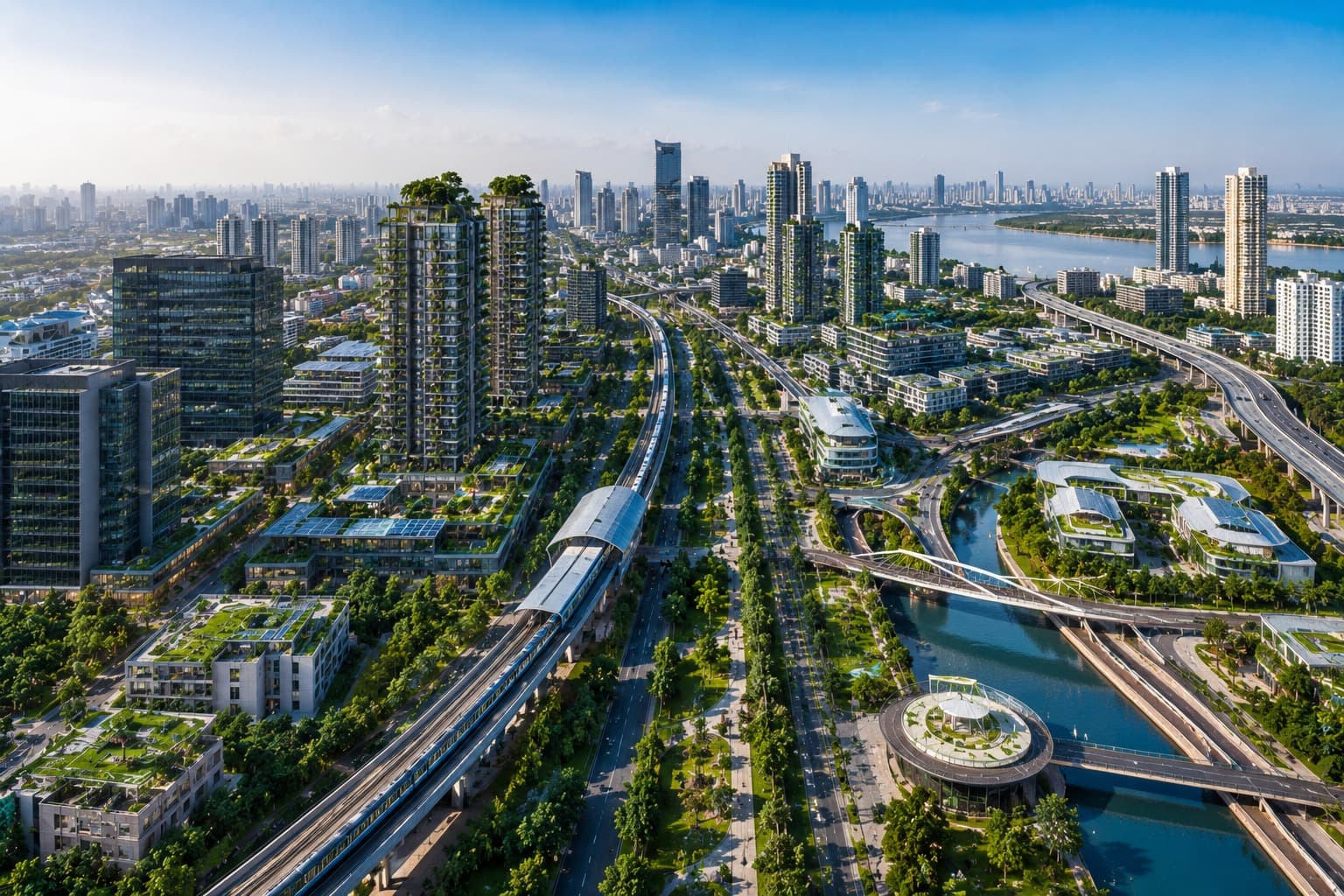
Mixed use developments India future are the clearest architectural response to the urban squeeze. These are projects that stack residential floors above commercial and retail zones, integrate co-working spaces beside apartments, and embed gyms, clinics, and grocery stores within the same gated perimeter.
For a generation that does not want to spend two hours commuting, a home that puts a coffee shop, a coworking desk, and a supermarket within a five-minute walk is not a luxury pitch. It is a practical proposition. Mixed-use developments captured nearly 25 percent of India's real estate investment in recent years, and that share is expected to grow as urban land prices make standalone residential projects increasingly difficult to justify financially.
Smart Homes Are Moving From Premium to Standard
Smart homes urban India 2030 will look quite different from the smart homes of 2020. What was once a Rs 2 crore apartment differentiator is now a mid-segment expectation. Motion-sensing lights, app-controlled air conditioning, biometric door locks, and solar energy monitoring are appearing in projects priced at Rs 70 lakh and below across Pune, Hyderabad, and Ahmedabad.
By 2030, analysts project that homes in Indian cities will automatically manage their own energy consumption, adjust lighting based on natural availability, and flag maintenance requirements before they become visible problems. The technology is not science fiction. It is already being installed in projects under construction today.
The Gen Z Imprint on Urban Design
How Gen Z and millennials are redefining urban living spaces in India is visible in what they reject as much as what they seek. This cohort does not want large living rooms for entertaining extended family. They want efficient layouts with a dedicated work-from-home corner, quality fittings, fast internet infrastructure built into the walls, and a building community that feels curated rather than accidental.
Developers have noticed. New launches in Bengaluru and Pune are routinely featuring co-working lounges on the ground floor, rooftop social spaces, and smaller unit configurations that trade square footage for design quality. The 1BHK is being reconceived not as an affordable compromise but as a deliberate lifestyle format.
The Tier 2 Opportunity Nobody Should Underestimate
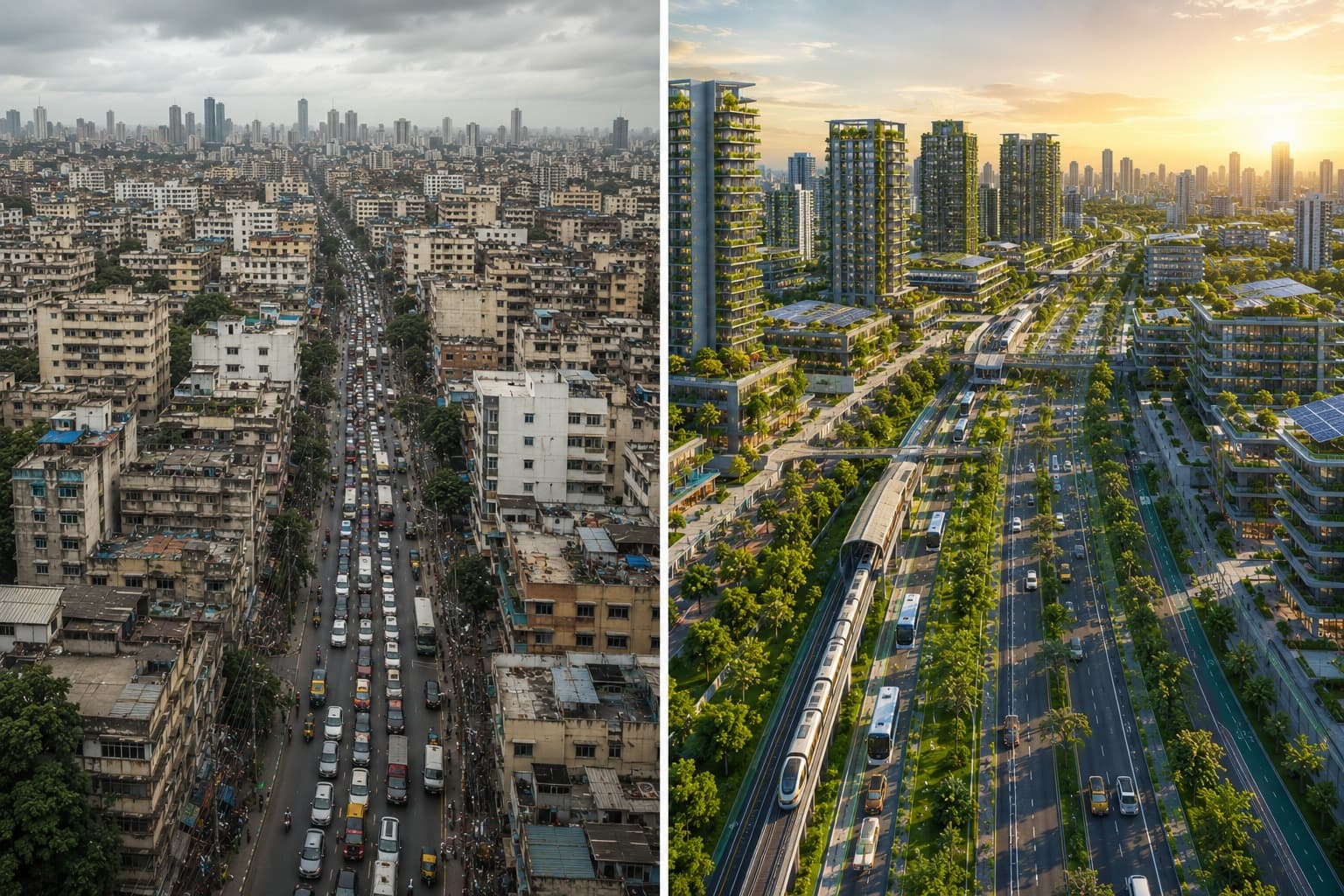
Urban housing challenges and solutions for Indian cities by 2030 will not be solved in Mumbai alone. More than 70 percent of India's urban population lives in cities smaller than one million people. Indore, Surat, Coimbatore, and Lucknow are already seeing the kind of demand-driven residential development that Bengaluru experienced fifteen years ago.
Infrastructure investment through AMRUT and the Smart Cities Mission is reaching these cities ahead of population pressure rather than behind it for the first time. That sequencing creates a development window where early-moving buyers and investors capture the most meaningful appreciation.
Summary
What does the future of urban living look like in India points toward denser, smarter, and more integrated communities where the boundary between living, working, and recreation dissolves. Mixed use developments shaping future cities in India are the dominant format for new urban supply. How smart technology is changing urban homes in India is accelerating as affordability improves and buyer expectations rise in tandem. Urban housing challenges and solutions for Indian cities by 2030 require both policy investment in smaller cities and design innovation in larger ones. The Indian city of 2030 will not resemble the one of 2015. It is being built right now, and buyers who understand the direction of that change are already positioning ahead of it.