
That 1,000 Sq Ft Flat May Not Be What You Think It Is
Summary
Many homebuyers misinterpret advertised flat sizes. Learn the critical differences between Carpet, Built-Up, & Super Built-Up Area, and RERA's role in standardizing definitions, to ensure you pay for actual usable space.

Introduction
Most people buying a home for the first time walk into a site office, hear a number like 950 square feet or 1,100 square feet, and assume that is what they will live in. They picture their furniture fitting in. They imagine the dining table by the window. What they do not realise, at least not until it is too late, is that the number on the brochure and the space they actually inhabit are two completely different things.
This confusion has cost Indian homebuyers money, comfort, and peace of mind for decades. Understanding the real difference between carpet area, usable space, and the more inflated metrics developers have historically preferred is not optional reading. It is the most important homework you can do before signing anything.
What Carpet Area Actually Means
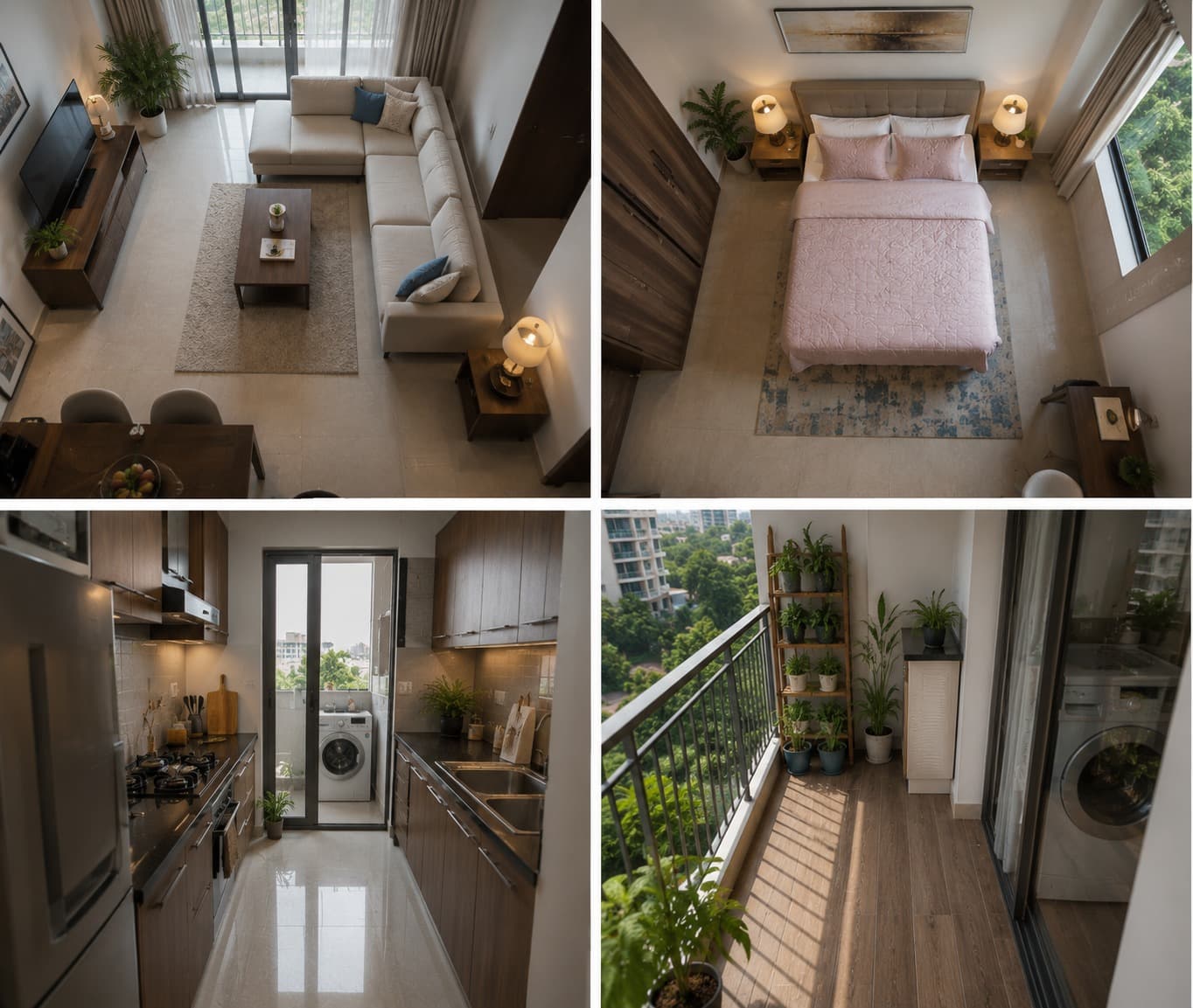
The simplest way to think about carpet area is this: it is the floor you can walk on inside your home. Every bedroom, the living room, kitchen, bathrooms, and internal corridors — all of that together forms your carpet area calculation. The name itself is literal. It is the portion of the flat where you can theoretically roll out a carpet.
What it does not include is anything beyond the inner walls. External walls, shared lobbies, staircases, the lift shaft, the building terrace — none of that enters this figure. It is yours and only yours.
How RERA Changed the Definition
Before the Real Estate Regulation and Development Act came into force in 2016, builders used different definitions interchangeably, and buyers had almost no way to verify what they were actually purchasing. The same flat could be described very differently by two different developers.
The RERA carpet area definition brought one important shift. Under this law, the area occupied by internal partition walls — those thin walls separating your rooms from each other — is counted within the RERA carpet area. Traditional carpet area excluded them. That small inclusion means the RERA figure is typically about five percent higher than what the old calculation would show.
More critically, RERA made it mandatory for all builders to price and sell apartments based on this standardised carpet area, not on inflated composite numbers. That single mandate changed how transactions work in India's new housing market.
Built-Up Area: Adding the Walls
Move one level up and you reach built-up area. This adds the thickness of external walls, the balcony space, and in some calculations, small flower beds or private terraces attached to the unit. Since walls and balconies together can account for a meaningful slice of the total area, built-up area typically runs ten to twenty percent higher than the carpet area of the same flat.
A flat with 700 square feet of carpet area, for instance, may have a built-up area closer to 820 to 840 square feet. That balcony you enjoy every evening is real space, but the wall thickness certainly is not something you live inside.
Super Built-Up Area: Where Things Get Complicated
This is the metric that confused the most buyers before RERA brought accountability into the picture. Super built-up area takes your unit's built-up area and adds to it a proportionate share of the entire building's common spaces — the lobby at the entrance, every staircase, all elevator shafts, the corridor on your floor, and sometimes even parts of the clubhouse or amenity block.
Developers divide the total of these shared spaces proportionately among all apartments in the project. Your flat's super built-up area is the result. It can be anywhere from 25 to 40 percent larger than your actual carpet area. So a flat sold as 1,000 square feet in super built-up area terms could have only 650 to 700 square feet of space you actually occupy.
Usable Space: The Most Honest Metric
Here is something even RERA carpet area does not tell you completely. An enclosed balcony, under the RERA definition, is technically excluded from carpet area even though it is sealed, climate-controlled space you use daily. Usable space, as a concept, adds that back in. It represents every square foot inside your four walls that serves a living function.
When comparing two projects, checking usable space alongside the RERA figure gives you a far more accurate picture of what daily life inside the flat will actually feel like.
What the Loading Factor Tells You
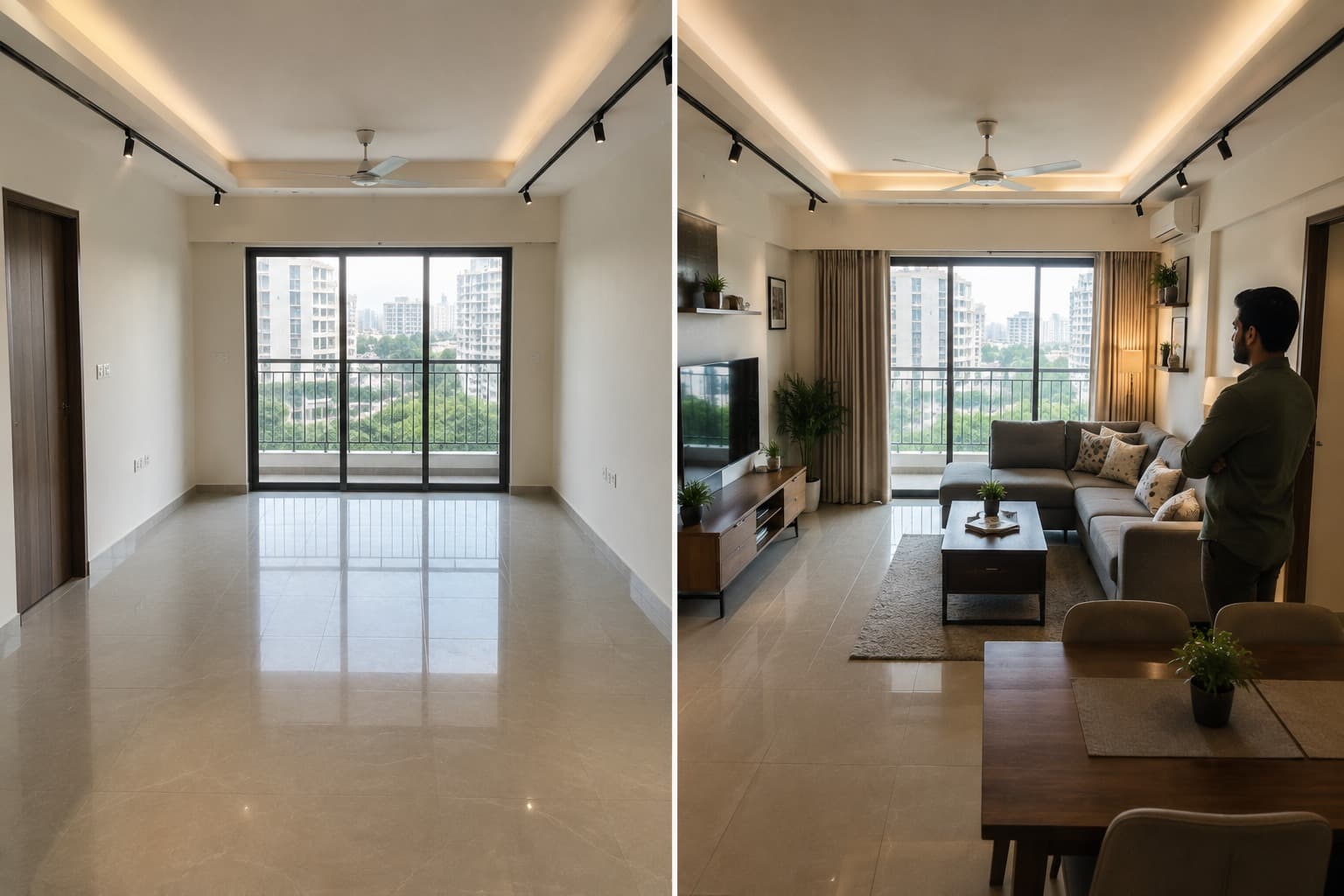
The difference between super built-up area and carpet area expressed as a percentage is called the loading factor. Projects with a loading factor above 35 percent deserve a hard look. It means a significant portion of what you are paying for lives outside your front door. Lower loading factors generally indicate better space efficiency in the project's design.
What You Should Do Before Booking
Always ask the sales team to share the RERA-registered carpet area in writing. Then visit the actual RERA portal for that project and cross-check the number yourself. Do not make a purchase decision based on the super built-up figure alone.
Compare projects using carpet area as the common denominator. A flat that looks cheaper per square foot on super built-up area terms may actually cost more per square foot of usable space than a project priced slightly higher but with a better layout.
Summary
The gap between carpet area and super built-up area can be as wide as 30 to 40 percent in some projects, meaning buyers routinely pay for space they never use. Under RERA carpet area rules, builders must now price homes transparently on actual usable figures, giving Indian homebuyers a standardised tool for fair comparison. Always verify carpet area calculation on the RERA portal before booking, compare usable space across shortlisted projects, and treat the built-up area vs carpet area difference as your first clue about a project's space efficiency. Knowing this distinction is genuinely the difference between a good deal and a regrettable one.