
Suburban vs. Central Commercial Hotspots in India: A Comprehensive Comparison
Summary
Indian suburban commercial hotspots are outpacing CBDs in leasing due to affordability, scalability, and GCC demand. While CBDs maintain prestige and regulatory proximity advantages, suburban parks offer better yields and longer leases, reshaping investment strategies.

Introduction
Every growing company eventually faces the same question. Do you pay the premium for a central address everyone recognises, or do you go suburban where the floor plates are larger, the rents are kinder, and the parking is actually manageable?
It sounds like a simple trade-off. But suburban vs central commercial hotspots in Indian cities involves a far more layered decision than it did even five years ago. The gap between what a central business district address offers versus what a suburban office park delivers has narrowed considerably on quality, while the gap in cost has stayed wide. Understanding that shift is essential for any company, investor, or developer making real estate decisions right now.
What a Central Business District Actually Offers
The CBD office space in Indian cities, whether it is Nariman Point in Mumbai, Connaught Place in Delhi, MG Road in Bengaluru, or Banjara Hills in Hyderabad, carries something intangible that suburban locations have always struggled to replicate. Prestige. The kind of address that signals seriousness to clients, investors, and senior hires before a single meeting happens.
Beyond perception, CBDs offer genuine density advantages. Banks, law firms, government offices, registrars, and financial institutions are clustered nearby. For businesses that deal with regulatory filings, client walkthroughs, or frequent face-to-face meetings with multiple service providers in a single day, the CBD still makes operational sense in a way that a suburban park 25 kilometres out simply cannot match. Senior professionals, particularly those in the 45-plus age bracket who drive to work and value proximity to their homes in older city neighbourhoods, also tend to prefer central locations.
The Case for Suburban Business Parks
And yet the data tells a different story about where actual leasing is happening.
Suburban commercial hotspots like Whitefield and Outer Ring Road in Bengaluru, HITEC City and the Financial District in Hyderabad, Hinjewadi and Kharadi in Pune, and Navi Mumbai's Airoli corridor are absorbing the lion's share of net office space take-up across India year after year. The reasons stack up quickly.
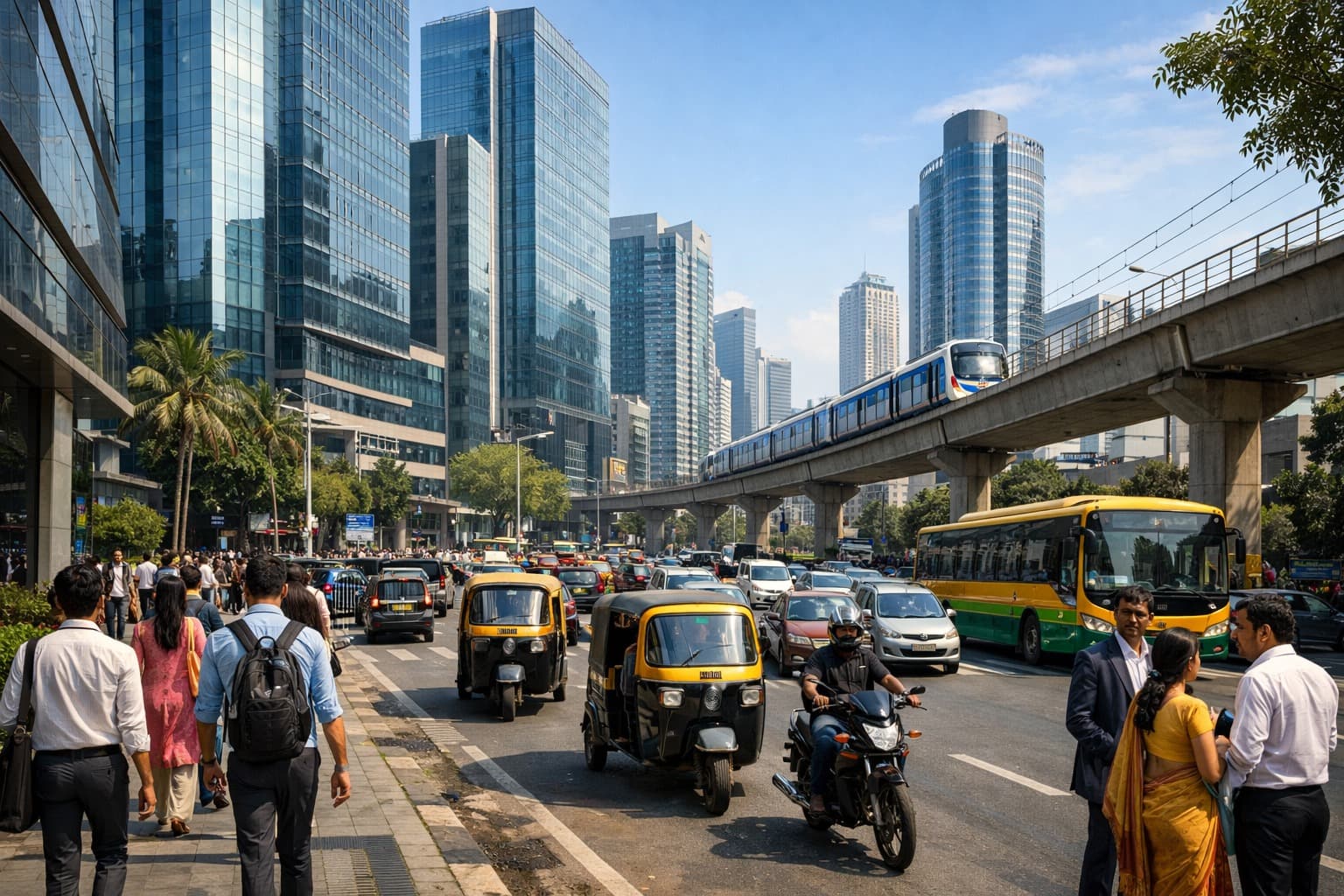
Floor plate availability is the first one. A large technology company or Global Capability Centre that needs 50,000 square feet on a single contiguous floor simply cannot find that in most Indian CBDs, where buildings are older, floor plates smaller, and available supply essentially nonexistent. Suburban business parks were purpose-built for exactly this kind of occupier and deliver it consistently.
Rent is the second. The rental rate difference between central business district and suburban office parks India can be enormous. Grade A space in Nariman Point or Bandra Kurla Complex in Mumbai can go anywhere from Rs 200 to Rs 350 per square foot per month. Comparable quality space in Navi Mumbai's Airoli or Thane's Wagle Estate comes in at Rs 80 to Rs 130. For a company taking 1 lakh square feet, that gap is the difference between paying Rs 2 crore a month and paying Rs 80 lakh. Over a five-year lease, the saving is measured in hundreds of crore.
How GCCs Have Reshuffled the Preference Map
The GCC office location India story has been the dominant force behind suburban absorption over the past three years, and it has permanently changed how people think about the CBD vs suburban office India debate.
Global Capability Centres are not walk-in businesses. They do not need to be near the registrar or the stock exchange. They need to be near talent, near transport nodes that their workforce can actually use, and in buildings that their global parent company's facilities standards team will approve. Suburban tech parks in Bengaluru, Hyderabad, and Pune tick all three consistently. CBDs in these cities often cannot.
Why GCC companies choose suburban office locations also comes down to something simple: room to grow. A company setting up a 500-seat GCC today that expects to be at 2,000 seats in three years needs scalability built into its lease. Suburban parks offer expansion options within the same campus or the adjacent building. In a CBD, adding 500 seats usually means finding a new building entirely.
Where CBDs Still Win
None of this means central business districts are finished. Far from it.
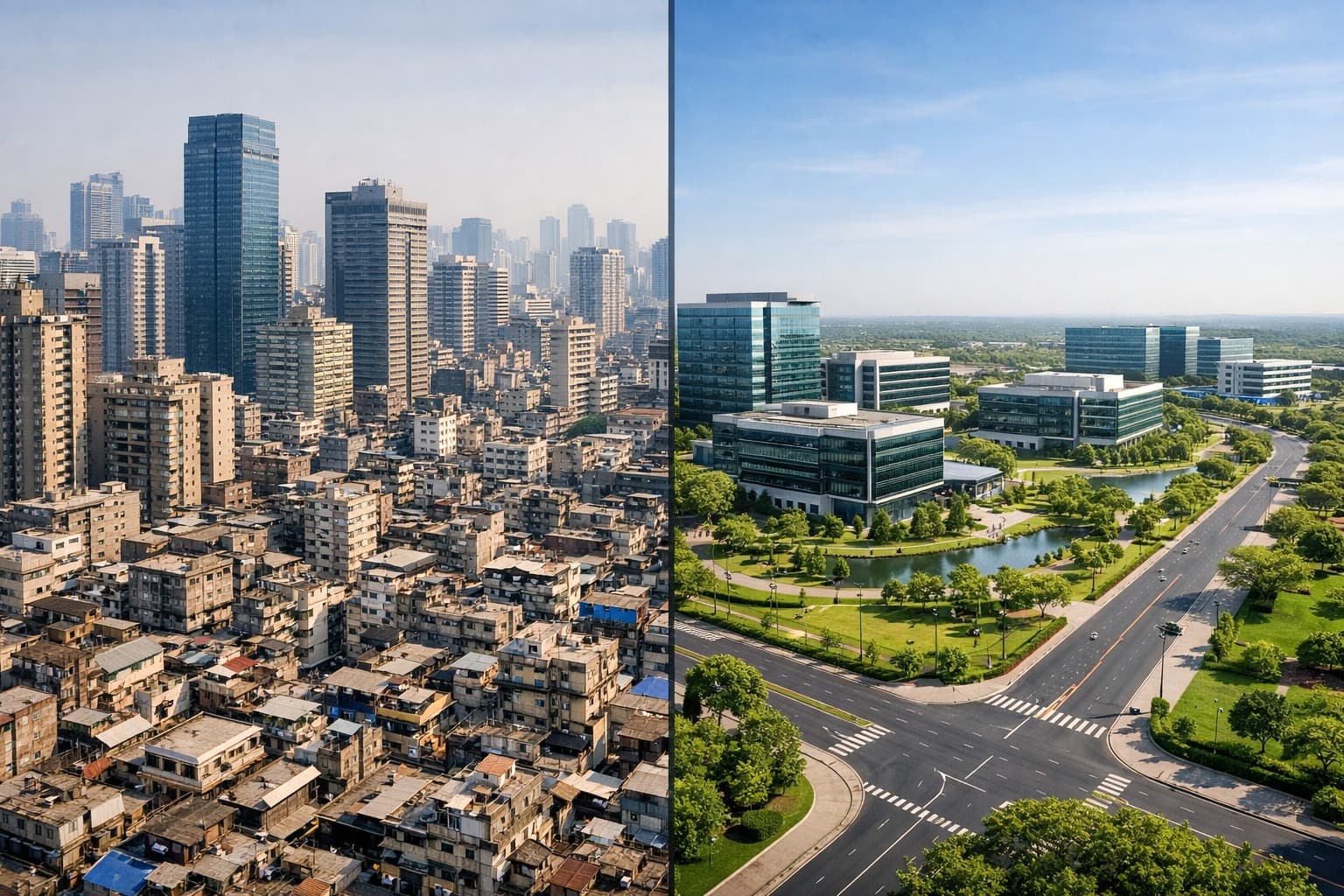
For financial services, legal firms, and boutique consulting practices, the central business district real estate Mumbai Delhi market remains the right answer. A private equity fund in Mumbai BKC or a wealth management firm on Delhi's Barakhamba Road is not choosing location out of sentiment. Their clients, counterparties, and regulatory interactions genuinely require the proximity and the address.
Startups in early stages also often gravitate toward CBDs or near-CBD locations because talent discovery, investor meetings, and partnership conversations tend to cluster in those zones. The density of interesting people and conversations in a central location has real value for a company trying to build something quickly.
The Rental Yield Angle for Investors
From a pure commercial real estate investment India 2026 perspective, suburban Grade A office parks are currently delivering better yields than CBDs in most Indian cities. Vacancy rates in prime suburban corridors have been tightening meaningfully while CBD vacancy, where buildings do come available, has historically been harder to fill at premium rents given the product quality constraints.
Suburban parks also tend to have longer lease tenures, often 9 to 15 years for anchor GCC tenants, which creates the kind of stable cash flow that makes commercial property worth holding through market cycles.
Summary
The suburban vs central commercial hotspots debate in India has shifted decisively over the past five years, with suburban business parks in Bengaluru, Hyderabad, Pune, and Navi Mumbai pulling ahead on leasing volume, floor plate availability, and rental affordability. CBD office space retains its edge for financial services, legal firms, and businesses requiring regulatory proximity. But for GCC companies, technology occupiers, and investors seeking strong yields and long-tenure leases, suburban commercial hotspots India 2026 offer a combination of quality, scalability, and cost efficiency that central locations increasingly struggle to match.