
Suburban Commercial Hotspots in India: Smart Money Flows in 2026
Summary
Suburban commercial hotspots in India, like Whitefield (Bengaluru) and Hinjewadi (Pune), are outperforming city centers. High yields, strong appreciation, and quality tenants make them prime investment opportunities for 2026.

Introduction
For years, investors chased commercial property in city centres. BKC in Mumbai, Connaught Place in Delhi, MG Road in Bengaluru. But the game has quietly shifted. Suburban commercial hotspots across India are now delivering rental yields, capital appreciation and tenant quality that core city assets cannot match on price. The reason is simple. As office rents in prime central districts climbed to levels that even large corporates found difficult to justify, Grade A occupiers moved outward. And smart investors followed.
Why Suburbs Are Winning
Central business districts offer prestige. But suburbs offer value, scale and infrastructure that has matured faster than most predicted.
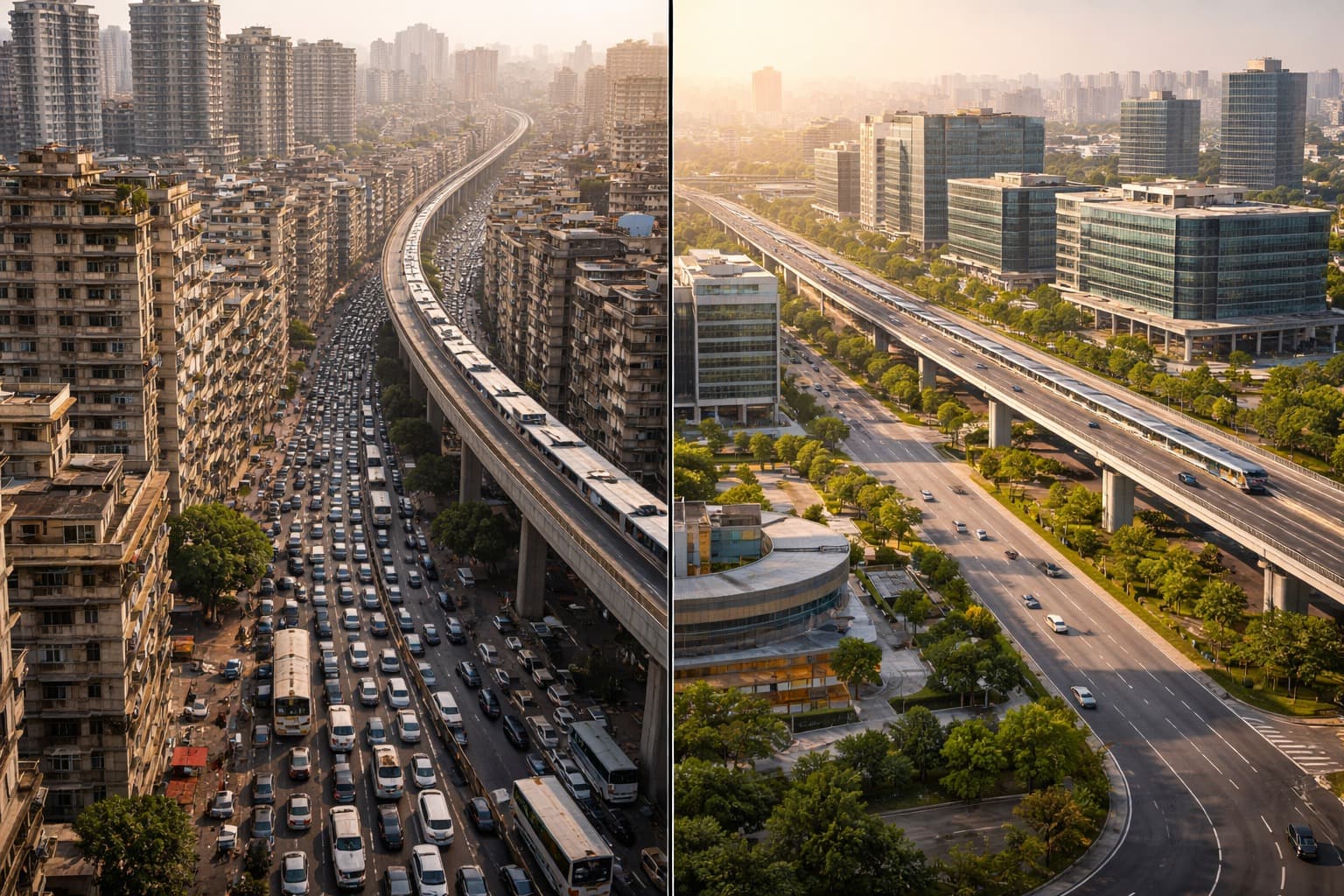
Metro rail extensions, expressway upgrades and new airports have collapsed commute times in corridors that were genuinely difficult a decade ago. Global Capability Centres, IT companies and financial services firms have anchored themselves in suburban tech parks where they can get large floor plates, parking, campus-style environments and rents that are 40 to 60 percent below prime CBD rates.
Vacancy in established suburban office market corridors like Whitefield in Bengaluru sits at around 10 percent, keeping rental income predictable. Yields in these pockets average 7.5 to 8 percent annually, outperforming most fixed income options available to the same investor class.
Whitefield and Outer Ring Road, Bengaluru
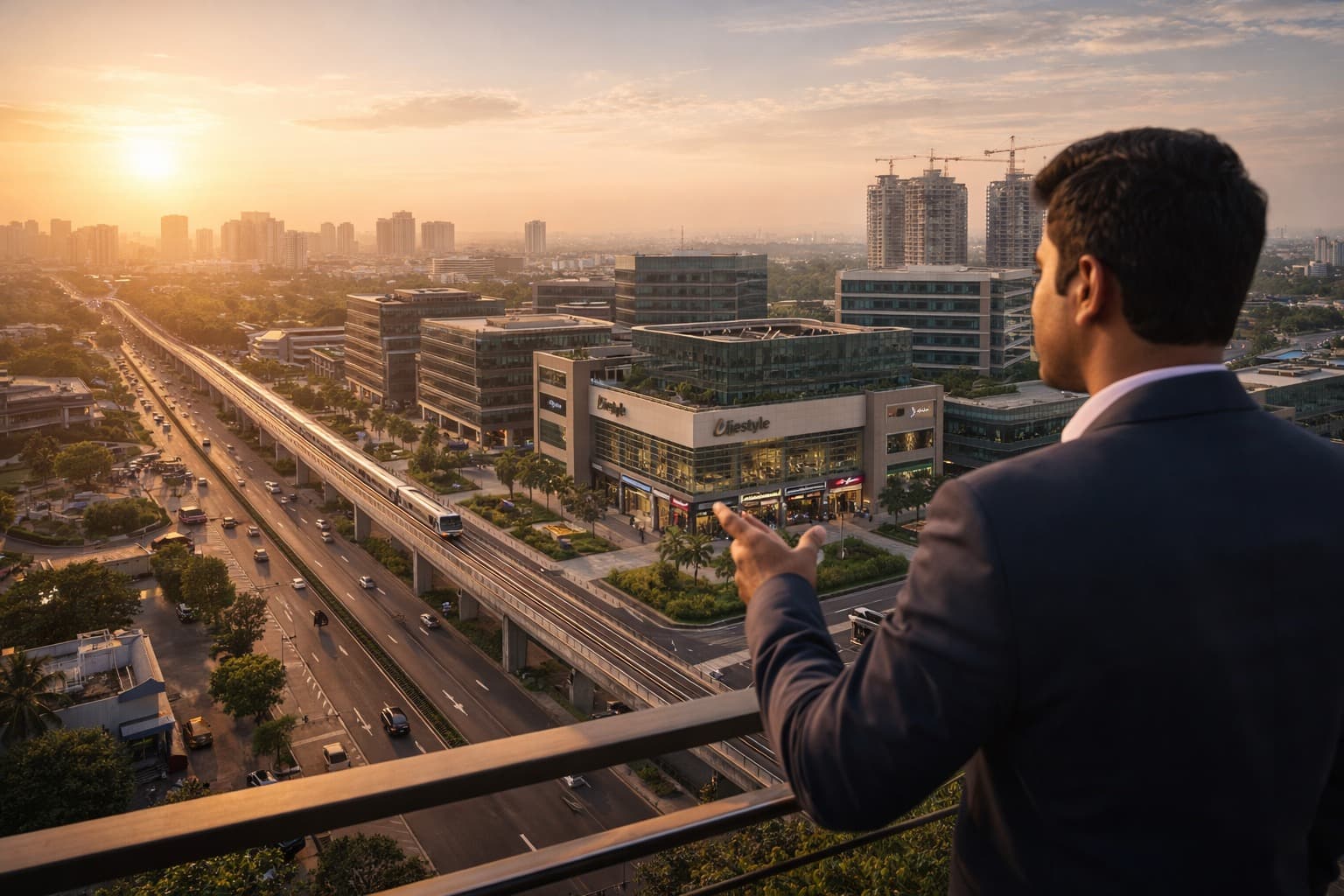
Whitefield commercial real estate investment has been the headline story in Indian commercial property for several years and it has not lost steam. Prime Grade A spaces in Whitefield and the Outer Ring Road corridor command rents between Rs 80 and Rs 120 per sq ft per month. Annual appreciation runs around 12 percent.
The IT and GCC absorption here is structural, not cyclical. Bengaluru absorbed 20 million sq ft of office space in a recent quarter alone, with tech and GCC occupiers driving the bulk of it. Metro expansions have addressed the traffic concern that was previously the corridor's main weakness.
For investors, entry typically starts at Rs 5 to 10 crore for meaningful floor areas, with fractional ownership platforms now making smaller ticket sizes accessible.
Hinjewadi and Kharadi, Pune
Pune's suburban commercial story runs along two axes. Hinjewadi Kharadi Pune commercial property caters to different buyer profiles but both deliver strong fundamentals.
Hinjewadi anchors the IT and engineering services ecosystem in the west, while Kharadi hosts the EON IT Park corridor in the east. Rental yields in active pockets like Baner and Balewadi average 7.5 percent. New completions in Pune have been robust, making up a significant share of national supply.
The Mumbai-Pune Expressway, Phase 3 metro work and planned ring road infrastructure reinforce connectivity. Annual appreciation in Hinjewadi and Kharadi has run 8 to 12 percent, making them reliable medium-term commercial bets.
Vashi and Belapur, Navi Mumbai
Navi Mumbai commercial property investment is being reshaped by two catalysts happening simultaneously. The Navi Mumbai International Airport, which is now operational, has brought global connectivity to a market that was already India's most planned satellite city. The Mumbai Trans Harbour Link has further compressed travel time from South Mumbai and the eastern suburbs.
Vashi functions as the commercial heart of Navi Mumbai, housing established IT parks, corporate offices and retail anchors. Belapur serves as the Central Business District, home to government offices, financial institutions and corporate headquarters.
Logistics and warehousing firms are choosing Navi Mumbai specifically because of JNPT port proximity. For office investors, rents remain competitive while occupier quality is high and improving.
Dwarka Expressway, Gurugram
The Dwarka Expressway office space investment story has moved from potential to delivery. The expressway connecting Gurugram to Delhi's Dwarka sub-city and IGI Airport has matured into a genuine commercial corridor with mixed-use developments, corporate campuses and improving social infrastructure.
Delhi NCR's overall rental supply grew 81 percent recently, with Gurugram contributing 84 percent of that figure. Appreciation potential on Dwarka Expressway runs 10 to 15 percent annually. Proximity to the airport is the defining advantage for tenants whose businesses depend on frequent international travel.
What These Markets Have in Common
Every suburban commercial hotspot India 2026 on this list shares a common DNA. Each sits adjacent to a major IT or financial employer base. Each benefits from an infrastructure upgrade that fundamentally changed commute economics. Each offers Grade A supply at rents that make business sense for tenants. And each delivers yield visibility that core city assets, despite their prestige, increasingly cannot match.
Summary
Suburban commercial hotspots including Whitefield commercial real estate investment in Bengaluru, Hinjewadi Kharadi Pune commercial property, Navi Mumbai commercial property investment across Vashi and Belapur, and Dwarka Expressway office space investment in Gurugram represent India's strongest commercial real estate India plays for 2026. Rental yields average 7.5 to 8 percent. Annual appreciation runs 8 to 15 percent across corridors. Occupier quality from GCCs, IT firms and financial services companies keeps vacancy low and income predictable, making these markets the most compelling commercial property investment opportunity in the country today.