
Studio Flat Carpet Area Guide: What Every Buyer Must Know
Summary
Understanding carpet area is crucial when buying a studio flat in India. Learn the difference between carpet, built-up, and super built-up areas, RERA regulations, and how to calculate usable space to ensure you get the space you pay for.

Introduction
You spotted a studio flat advertised at 450 square feet and thought it sounded decent. Then you walked in and wondered where the rest of the space went. This is one of the most common disappointments in Indian real estate, and it almost always traces back to one misunderstood concept: carpet area. When a builder advertises size, they are almost never quoting the space you will actually live in. Understanding carpet area studio flat measurements before you sign anything is not optional. It is the single most important number you need to check.
Three Numbers, Three Very Different Meanings
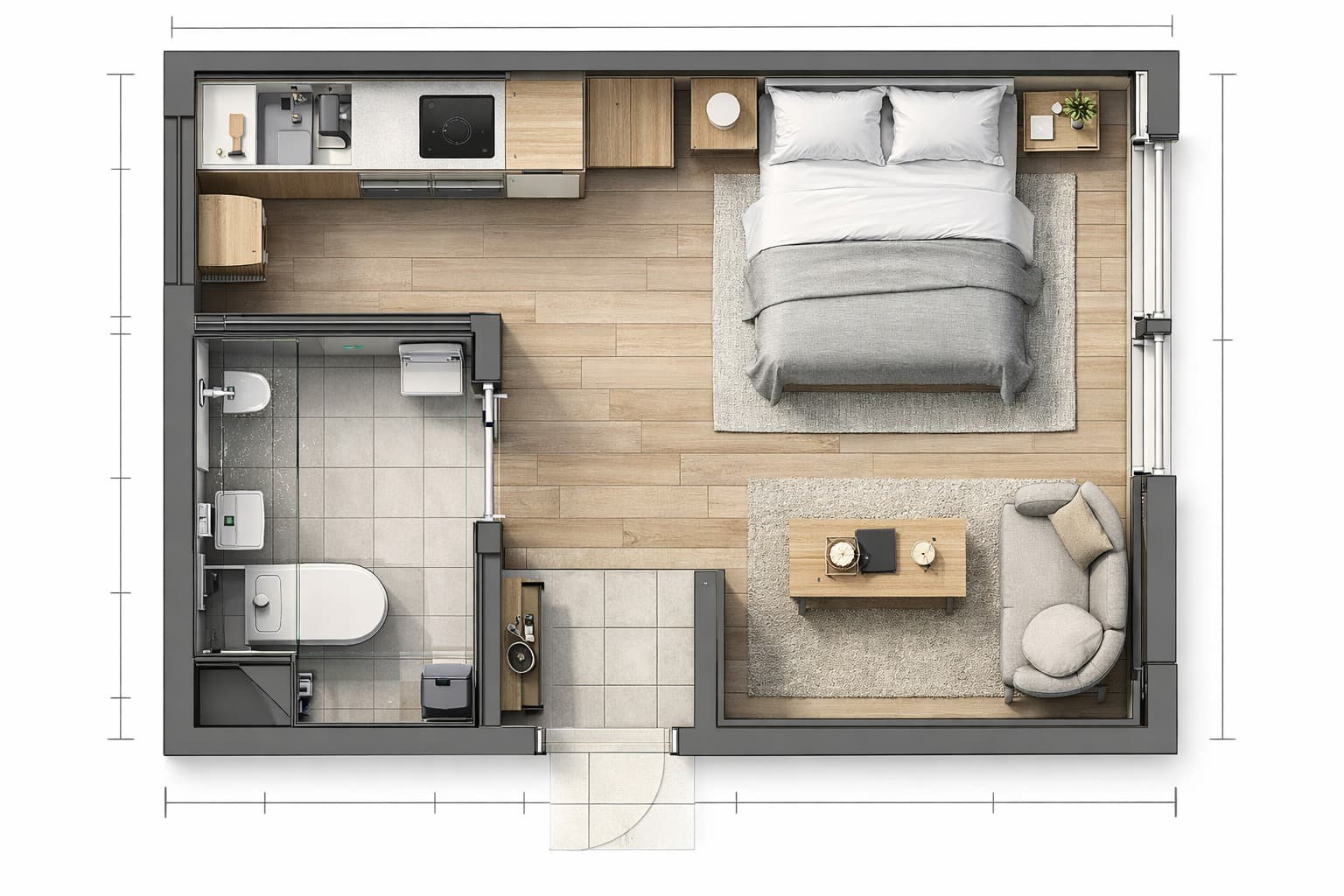
Every flat in India comes with three area figures, each meaning something entirely different. Flat carpet area is the actual usable floor space inside your apartment, measured wall to wall across all rooms including internal walls, but excluding external walls, balconies, terraces, and shared building spaces like staircases and lift shafts. This is where you put furniture, cook, sleep, and live.
Built-up area is the next level out. It includes your carpet area plus the thickness of external walls and balconies attached to your unit. The built-up area is typically 10 to 20 percent larger than the carpet area calculator figure for any given flat.
Super built-up area, often called saleable area, goes furthest of all. It adds your proportionate share of common spaces like lobbies, corridors, gym, clubhouse, and parking infrastructure to the built-up area. Super built-up area in Indian cities routinely runs 25 to 40 percent above the actual carpet area. In Mumbai the average loading factor, which is the gap between what you pay for and what you actually live in, sits at around 43 percent. In Delhi NCR it is approximately 41 percent. A studio flat advertised at 450 square feet super built-up in Mumbai may deliver just 255 to 280 square feet of usable living space.
What RERA Changed for Buyers
Before the Real Estate Regulation and Development Act came into force in 2016, developers used area terminology interchangeably and inconsistently, which meant buyers frequently received less space than they believed they were purchasing. RERA carpet area rules changed this with a mandatory, legally defined standard. Under Section 2(k) of the RERA Act, carpet area is defined as the net usable floor area of an apartment including internal partition walls but excluding external walls, service shafts, exclusive balcony and verandah areas, and open terraces.
Post-RERA, all developers must quote prices based on this carpet area definition and not on super built-up area. The RERA carpet area is typically around 5 percent larger than the traditional carpet area because it includes the thickness of internal partition walls. If RERA shows a studio flat size India at 280 square feet, the actual walkable floor you live on is marginally less, around 265 to 270 square feet once you mentally subtract the wall thickness.
RERA also protects buyers after possession. If the delivered carpet area is less than promised, the developer must refund the proportionate amount with interest within 45 days. And if the carpet area increases, the developer can charge extra but the increase is capped at 3 percent of the promised figure.
How to Actually Calculate Carpet Area
The formula from the source property is clean and worth committing to memory. How to calculate carpet area flat India starts with the built-up area figure and works backward. Subtract wall thickness and balcony area from the built-up area to arrive at the net carpet area. If a flat has a built-up area of 500 square feet, walls occupying 60 square feet, and a balcony of 50 square feet, the carpet area works out to 390 square feet. That is what you actually live in.
When a builder only provides the super built-up figure, a reliable working estimate is that RERA carpet area studio apartment will be approximately 60 to 70 percent of the super built-up number. A studio listed at 400 square feet super built-up should yield a carpet area somewhere between 240 and 280 square feet depending on the project's loading factor.

What a Good Studio Flat Carpet Area Looks Like
For a studio flat size India to be genuinely livable, most interior designers and property advisors consider 300 to 350 square feet of carpet area the minimum comfortable threshold for a single occupant. Below 250 square feet, fitting a full bed, a study table, a wardrobe, and a basic kitchen layout without the space feeling oppressive is genuinely difficult.
Summary
What is the ideal carpet area for a studio flat in India comes down to livability: 300 square feet and above in carpet area terms makes for a functional, comfortable space. Difference between carpet area built-up area super built-up area for studio flats is not cosmetic, it directly determines how much actual space your money buys. How loading factor affects studio flat carpet area in Indian cities like Mumbai and Delhi, where loading can exceed 40 percent, means buyers comparing properties purely on advertised size are making systematically flawed decisions. Always ask for the RERA carpet area figure, verify it on your state RERA portal, and calculate price per usable square foot before you commit.