
Spotting Inflated Super Built-Up Area: A Homebuyer's Guide
Summary
Don't overpay for your home! Learn how developers inflate super built-up area by examining carpet area, loading percentages, and approved plans. Make informed property decisions and protect your investment.

Introduction
Many homebuyers focus on price, location, and amenities but overlook how flat size is calculated. This often leads to confusion and overpayment. One common issue is the inflated super built up area mentioned by developers. Buyers assume they are getting more space, but the actual usable area may be much less. Learning how to spot an inflated super built up area helps buyers understand true value, avoid hidden costs, and make informed property decisions.
What Is Super Built‑Up Area
Super built up area includes the carpet area, wall thickness, balconies, and a share of common areas like lobbies, lifts, staircases, and amenities. Builders use this figure to calculate pricing. While this method is legal, lack of transparency can lead to apartment cost inflation. Understanding super built up area basics is the first step toward identifying manipulation.
Difference Between Carpet and Super Built‑Up Area
The difference between super built up and carpet area is often significant. Carpet area is the actual usable space inside the flat. Super built up area adds common spaces that buyers do not exclusively use. When this gap is unusually large, it signals possible inflation. Comparing these two figures helps identify real estate area confusion and unrealistic size claims.
How Inflation Happens in Apartment Sizes
Builders may inflate apartment size by increasing the share of common areas allocated to each flat. Luxury lobbies, oversized clubhouses, and multiple amenities are added to calculations. This raises the super built up area without improving living space. Such flat area calculation practices increase price per square foot and reduce buyer value.
Warning Signs of Inflated Super Built‑Up Area
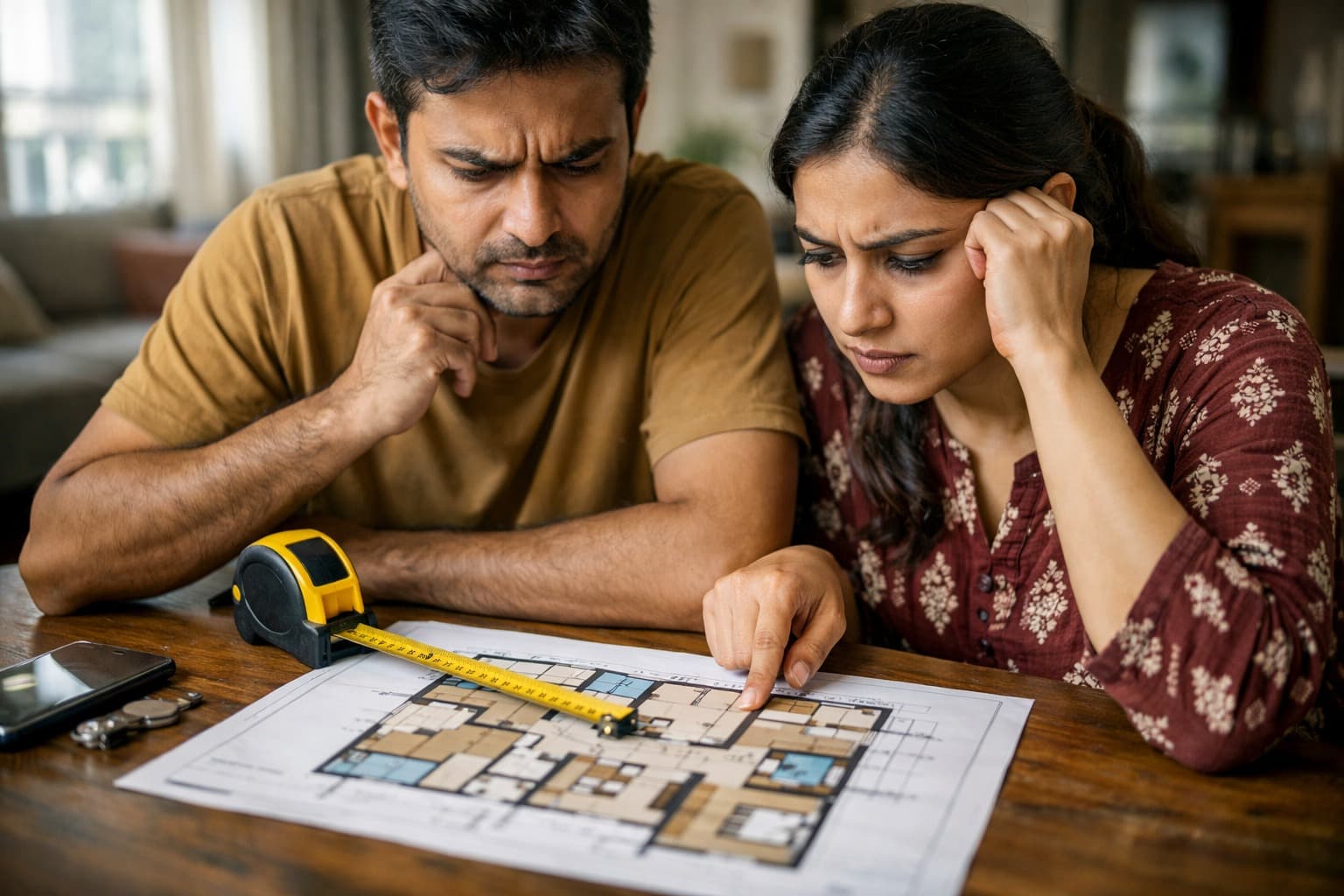
One clear sign is when carpet area is below sixty percent of the super built up area. Another sign is vague explanations from sales teams. If floor plans lack clear carpet measurements, buyers should be cautious. Inflated super built up area signs often include inconsistent area figures across brochures, agreements, and approvals.
Impact on Property Pricing
Inflated sizes directly affect pricing. Buyers pay for space they cannot use. Apartment cost inflation occurs when per square foot rates are applied to exaggerated areas. Over time, resale value may suffer as informed buyers focus on carpet area. Understanding the impact of inflated super built up area on property price protects long‑term investment value.
Role of Amenities in Area Inflation
Amenities increase lifestyle value but also increase area loading. Some projects allocate large portions of gyms, pools, and landscaped zones to each flat. While amenities matter, buyers must check whether the loading percentage is reasonable. Apartment area manipulation often hides behind premium facility branding.
Documents Buyers Must Check Carefully
To avoid real estate area confusion, buyers should examine approved plans, RERA details, and agreement clauses. Carpet area must be clearly mentioned. Comparing sanction plans with brochures reveals inconsistencies. Property size check should never rely only on marketing material.
Questions Buyers Should Ask Developers
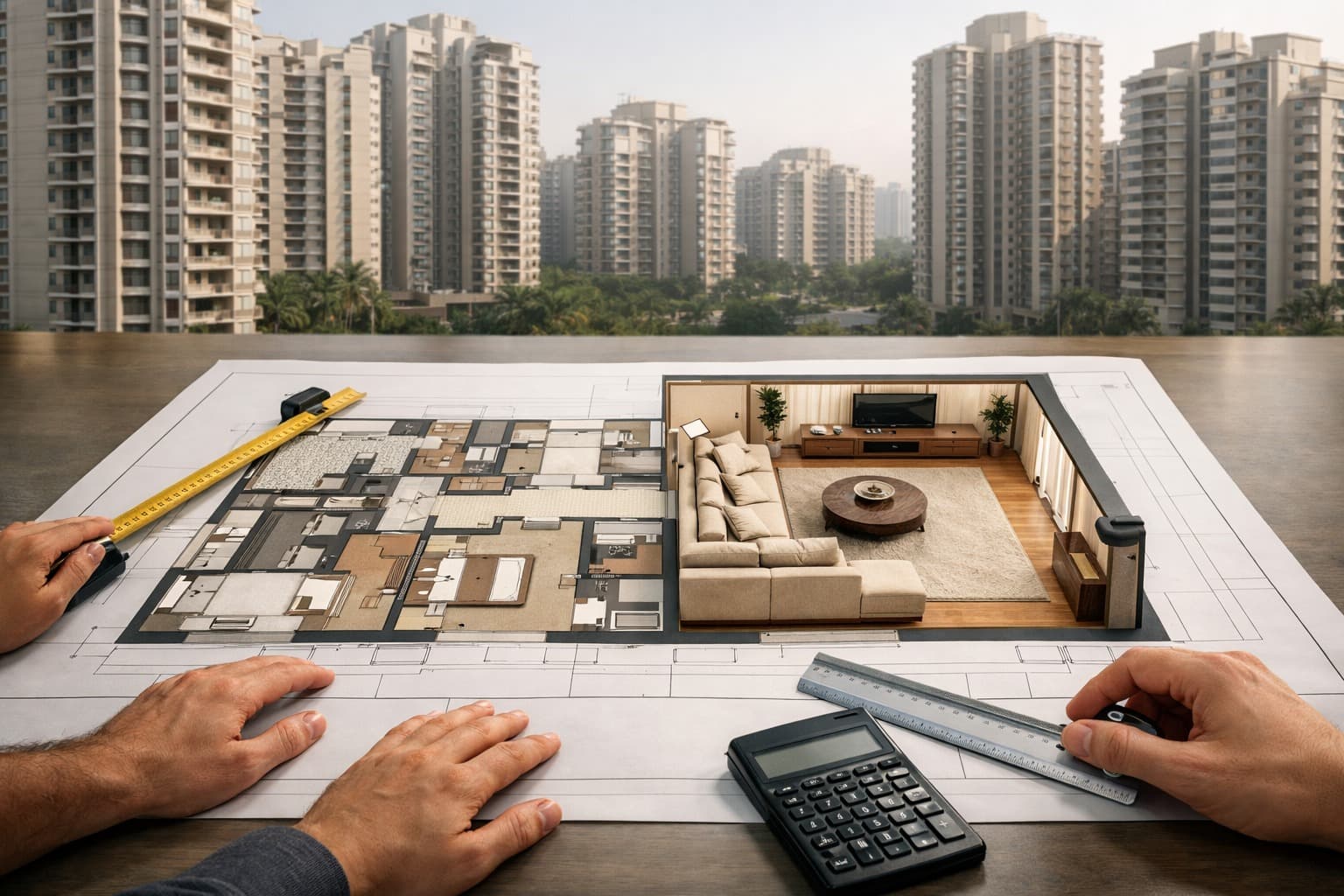
Buyers must ask how super built up area is calculated and what percentage is loading. Request written clarification and sample calculations. Asking these questions helps uncover how builders inflate apartment super built up area and discourages misleading practices.
How RERA Has Improved Transparency
RERA mandates carpet area disclosure, improving clarity. However, many buyers still compare projects using super built up area pricing. Knowing how super built up vs carpet area works under RERA helps buyers compare projects fairly and avoid confusion.
Practical Tips for Smart Buyers
Buyers should calculate price based on carpet area, not super built up area. Visiting the site, measuring rooms, and reviewing legal documents reduce risk. Things to check before buying flat super built up area include loading percentage, amenity size, and resale demand.
Conclusion
An inflated super built up area can quietly increase property cost without adding real value. Buyers who understand calculations, verify documents, and focus on carpet area make smarter choices. Awareness is the strongest protection against misleading size claims.
Summary
Inflated super built up area increases apartment prices without improving usable space. Builders may add large common areas and amenities to raise quoted sizes. Buyers must compare carpet and super built up areas, check loading percentages, and review approved plans carefully. Asking the right questions and focusing on carpet area pricing helps avoid overpayment. Understanding these aspects ensures transparency, protects investment value, and helps homebuyers make confident and informed property decisions.