
Space-Saving Entryway Furniture: Smart Ideas for the Space You Always Ignore
Summary
Apartment Vastu defects are common but largely fixable without demolition. This guide offers practical, low-cost remedies from entrance corrections and kitchen adjustments to ideal sleeping positions and northeast zone management, ensuring energetic balance.

The Most Underestimated Corner of Your Home
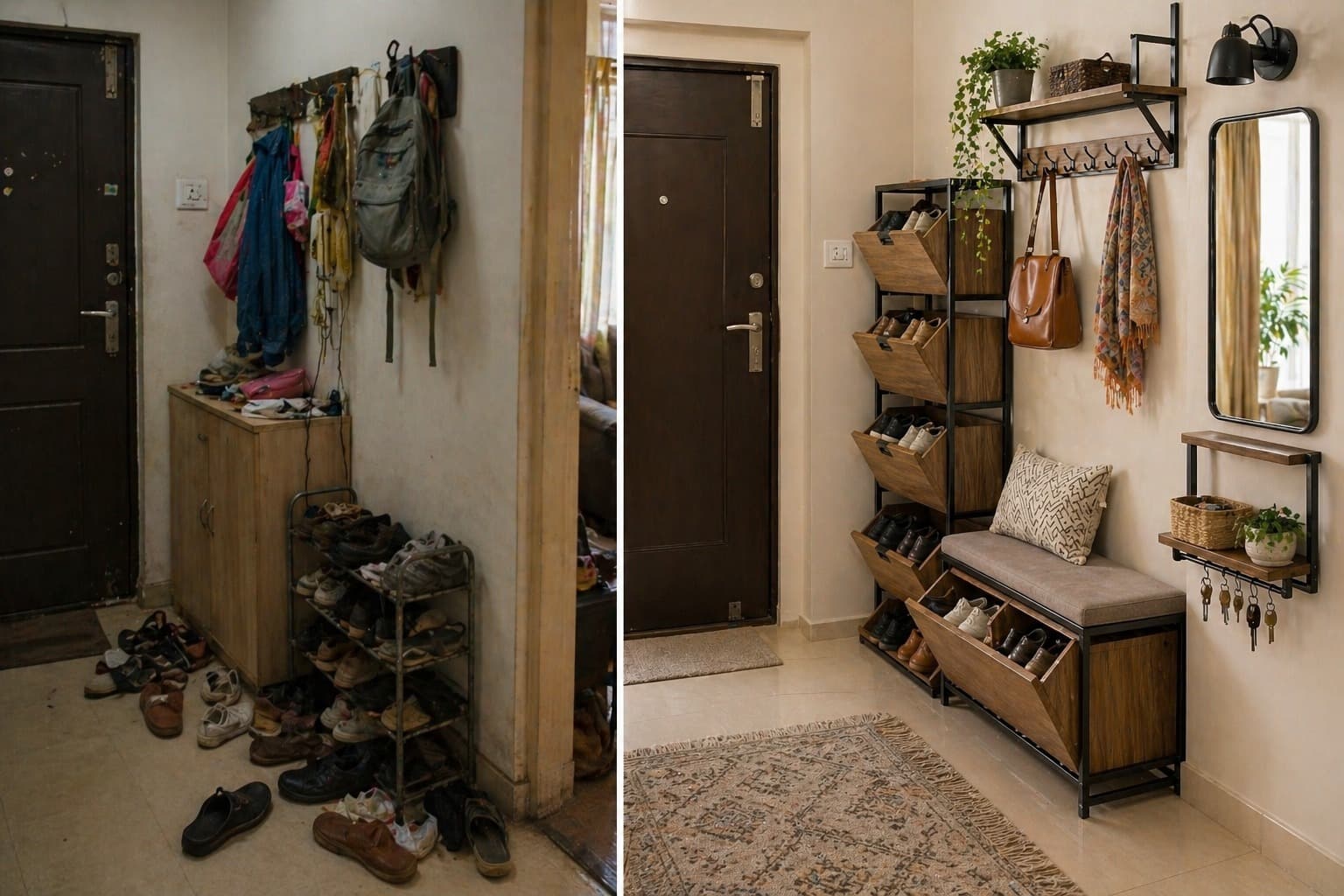
Ask anyone to describe their dream home and they will talk about the kitchen, the bedroom, the balcony. Nobody ever mentions the entryway. And that is precisely why most Indian apartment entryways are a disaster. Shoes everywhere, bags dropped on the floor, keys missing, umbrellas leaning against the wall at odd angles.
The entry of your home is the first thing you see when you walk in after a long day. It either sets the tone for the rest of the space or it quietly chips away at your sense of calm. Getting it right does not require a large budget or a large footprint. It just requires the right thinking.
The Fundamental Rule: Every Piece Must Earn Its Place
In a small entryway, there is simply no room for furniture that does one job. Every piece you bring in must solve at least two problems simultaneously. A bench that only provides seating is a waste of space. A shelf that only holds decorative items is a missed opportunity.
This principle of multifunctionality is the starting point for every well-designed compact entry.
The Storage Bench: One Piece, Three Functions
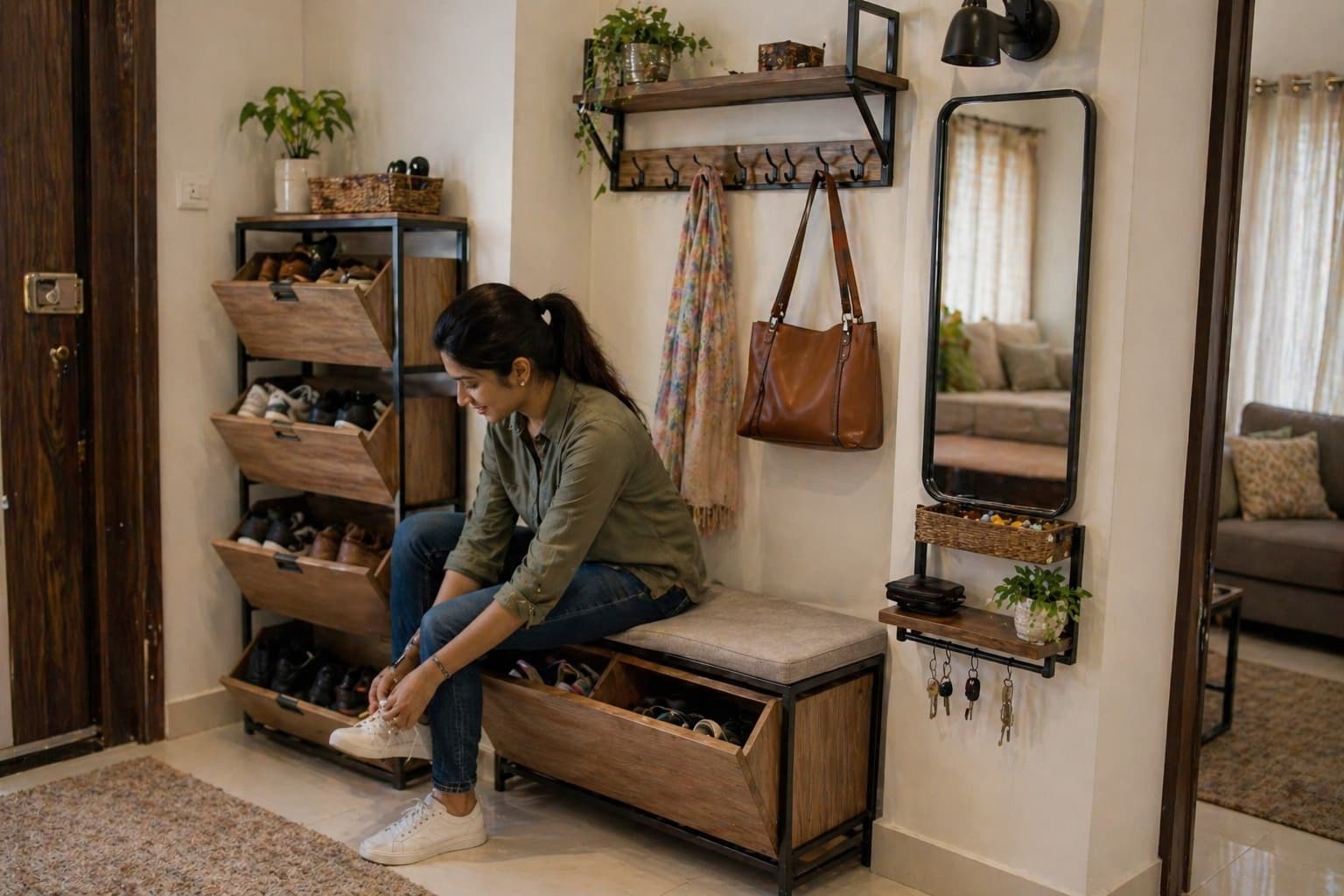
If you can only add one piece of furniture to a small entry, make it a storage bench with lift-up seating or pull-out drawers. It gives you a surface to sit while putting on shoes. It hides footwear and seasonal items inside. And it provides a visual anchor that makes the space feel intentional rather than abandoned.
Choose a bench that sits no deeper than 35 to 40 centimetres. Anything wider starts to cut into the walking path and makes the entry feel cramped. A cushioned top makes it genuinely comfortable. A plain wooden top is easier to keep clean.
The Wall Is Your Biggest Asset
Most people think horizontally when they plan an entryway. They look at floor space and feel defeated immediately. The better instinct is to look up.
Wall-mounted hooks installed at different heights handle coats, bags, keys, and even scarves without consuming a centimetre of floor space. A row of five or six sturdy hooks in a clean line above a bench is one of the most functional combinations in any compact entryway. Pair it with a narrow floating shelf above the hooks for items you need daily but do not want to dig for.
Wall-mounted shoe racks are particularly useful in Indian homes where footwear at the door is standard practice rather than an afterthought. A tilted wall-mounted rack that holds eight to ten pairs of shoes takes up far less visual and physical space than a floor rack doing the same job.
The Console Table Trick
A slim console table no more than 25 to 30 centimetres deep can transform the feel of an entryway without blocking movement. Place one against the wall near the door and it instantly becomes a drop zone for keys, wallets, and the miscellaneous items that pile up when there is no designated surface.
Add a small tray on top to corral the daily chaos. A plant or a lamp on one end of the table brings warmth to what would otherwise feel like a transitional non-space.
Under the console, use wicker baskets or fabric bins to manage shoes. This keeps the floor visible, which is one of the fastest ways to make a small area feel larger.
Mirrors Do More Than Reflect
A mirror in the entryway serves two purposes simultaneously. It gives you a final check before stepping out. And it reflects light and depth back into the space, making a narrow corridor feel wider and brighter than it actually is.
Choose a vertically oriented mirror for a narrow hallway. Floor-length mirrors lean against the wall and add a casual, contemporary feel in tight spaces where wall fixing is not an option.
Fold-Down and Floating Alternatives
For entries so narrow that even a bench feels excessive, a fold-down wall seat is worth considering. It mounts flat to the wall and flips down when you need it, disappearing completely when you do not. It is particularly useful in apartment entries that measure less than a metre in width.
A floating ledge shelf at waist height, no wider than 20 centimetres, gives you the functionality of a console table without the visual weight of legs on the floor.
Summary
The best space-saving entryway furniture works hardest in the smallest spaces. A storage bench, a wall-mounted hook rail, a slim console table, and a well-placed mirror are the four essentials that can turn a chaotic apartment entry into a calm, functional first impression. Think vertically, choose pieces that serve multiple purposes, and treat the entryway as the room it deserves to be. The rest of your home will feel better for it.