
Solar Homes in India: Cost, Savings, and the PM Surya Ghar Yojana
Summary
Explore the cost, savings, and benefits of solar homes in India, including the PM Surya Ghar Yojana subsidy. Discover how rooftop solar can offer significant financial returns and increase property value.

Introduction
Every second person with a terrace in India is thinking about solar homes India right now. Power bills climbing every cycle, a generous central subsidy suddenly making headlines, and a whole industry of installers knocking at the door with glossy ROI charts. But the real picture is messier and more interesting than any sales brochure will admit. So here is the actual math on what going solar costs, what it saves, and when it starts making financial sense.
What a Residential Solar System Typically Costs
The solar panels cost for a standard Indian home varies sharply with system size. A 1 kW rooftop installation runs between Rs 60,000 and Rs 80,000 after basic components, mounting structure, inverter, and installation. Most urban households in the 2–4 BHK range need a 3 kW to 5 kW system to meaningfully offset their monthly consumption. That puts the baseline spend, before subsidies, somewhere between Rs 1.8 lakh and Rs 4 lakh depending on panel brand, inverter quality, and installer margin.
Premium systems with lithium battery backup for storing surplus daytime power add another Rs 80,000 to Rs 1.5 lakh on top. Not everyone needs that component, but households in areas with frequent outages often find it worth every rupee.
The PM Surya Ghar Yojana Subsidy Changes Everything
The solar rooftop subsidy India PM Surya Ghar Yojana 2026 scheme is arguably the most impactful residential energy programme the central government has run in years. Under its current structure, households installing up to 2 kW capacity receive Rs 30,000 per kW as direct subsidy. Systems between 2 kW and 3 kW get Rs 18,000 per kW for the incremental capacity above 2 kW. Beyond 3 kW, the subsidy does not extend further.
For a 3 kW system, that works out to Rs 78,000 in central subsidy credited directly after DISCOM approval. Several states stack their own incentives on top of this, so the effective out-of-pocket cost for a qualifying household can fall to Rs 1 lakh to Rs 1.5 lakh for a 3 kW setup. That changes the payback math considerably.

Breaking Down the Monthly Savings
A solar home system generating 3 kW of peak capacity produces roughly 360 to 420 units of electricity per month in most Indian cities across the year's average. At a residential tariff of Rs 7 to Rs 9 per unit, that translates to a monthly bill reduction of Rs 2,500 to Rs 3,800 depending on city, consumption pattern, and how much of the generated power is used directly versus exported. Homes with daytime occupancy, those running air conditioning during daylight hours, capture the maximum benefit. Offices-only households that draw power heavily in evenings gain less.
The Payback Period: When the Math Turns
Understanding how long it takes to recover solar panel investment in India is really the crux of the decision. Post-subsidy system cost in the Rs 1 lakh to Rs 1.5 lakh range, with monthly savings of Rs 2,500 to Rs 3,500, produces a payback period of around 3.5 to 5 years. Without subsidy, on a Rs 2.5 lakh to Rs 3 lakh outlay, that stretches to 7 to 9 years. Panel life is typically 25 years, inverter warranty around 5 to 10 years. So the post-payback surplus savings are substantial either way, but the subsidy route is clearly superior for anyone who qualifies.
Net Metering: Getting Paid for Surplus Power
Most states now allow solar panel for home India installations under net metering frameworks, where excess units exported to the grid are credited against future bills. A household generating more than it consumes during peak solar hours effectively runs the meter backwards. The credits do not usually translate to cash payouts but can eliminate bills during low-consumption months entirely. State DISCOMs vary significantly in how smoothly they process net metering applications, and that bureaucratic friction is the single biggest practical complaint from new solar adopters.
The Property Value Angle
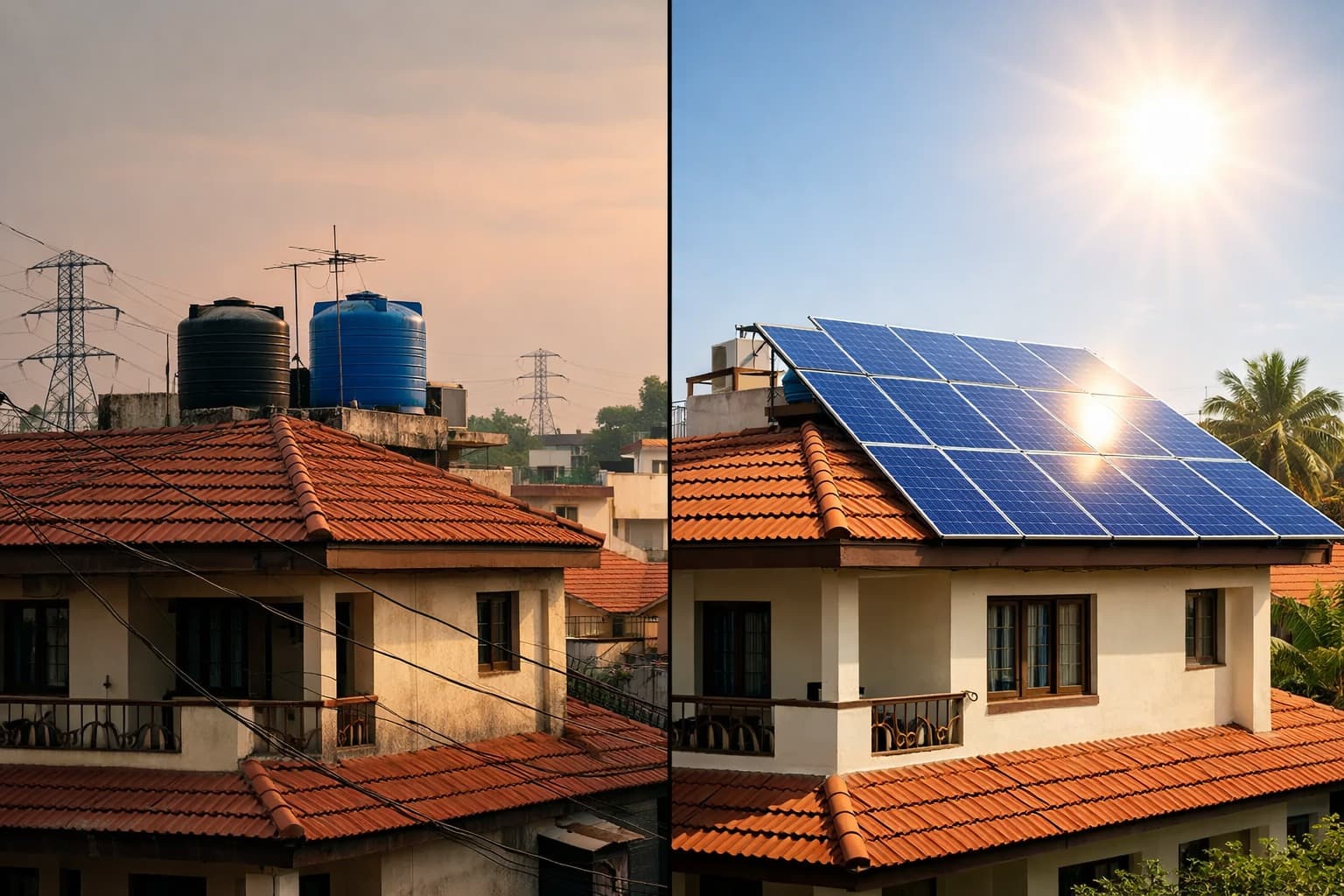
This part is underappreciated. How solar panels increase property resale value in India is still an emerging conversation, but in Tier 1 cities buyers increasingly ask whether a home has solar already installed. A functional rooftop system reduces running costs visibly and immediately. Premium builders have started including solar as a standard feature in luxury launches precisely because it is a tangible amenity rather than a vague green credential.
Is the Timing Right
Is installing solar panels worth it for Indian homeowners in 2026? The honest answer is yes, for most who own their roof and have clear southern exposure. The subsidy window may narrow over time, electricity tariffs are only moving upward, and cost of solar panels India 2026 is near a multi-year low due to Chinese panel import dynamics. The window is genuinely favourable right now.
Summary
Rooftop solar savings India are real, measurable, and growing. The solar panel installation cost India after PM Surya Ghar Yojana subsidy can fall to Rs 1 lakh to Rs 1.5 lakh for a 3 kW setup, with payback in under 5 years and free solar power savings for two decades beyond that. Combined with net metering credits and rising solar home system benefits for resale value, solar homes India are shifting from aspiration to straightforward financial logic for any homeowner with roof access and stable occupation.