
Solar Homes and Net Metering Explained: A Comprehensive Guide for Indian Homeowners
Summary
Unlock solar savings with net metering! This guide explains how Indian homeowners can reduce electricity bills by exporting excess solar power to the grid, focusing on policies, costs, and application.

Introduction
With the rise of rooftop solar adoption, understanding solar homes and net metering explained in India has become important for homeowners. Installing solar panels is only one part of the journey. The real savings come from how electricity is measured and billed. This is where solar net metering India plays a key role. It ensures that households pay only for the net electricity they consume from the grid, making solar investment more practical and financially rewarding.
What Is Solar Net Metering?
In simple words, solar net metering India is a billing system where a bidirectional meter records both electricity imported from and exported to the grid. When your solar panels produce extra power, it is sent to the grid. When solar production is low, electricity is drawn from the grid. The final bill reflects only the net difference. This system forms the foundation of net metering policy homes across different states.
How Solar Net Metering Works
Understanding how solar net metering works is straightforward. During sunny hours, solar panels generate electricity. Your home uses this power first. If there is surplus energy, it flows to the grid through a smart or net meter. At night or during cloudy days, the meter records imports from the grid. At the end of the billing cycle, imports minus exports determine your payable amount. This system supports efficient use of an on grid solar system.
Role of the Solar Smart Meter
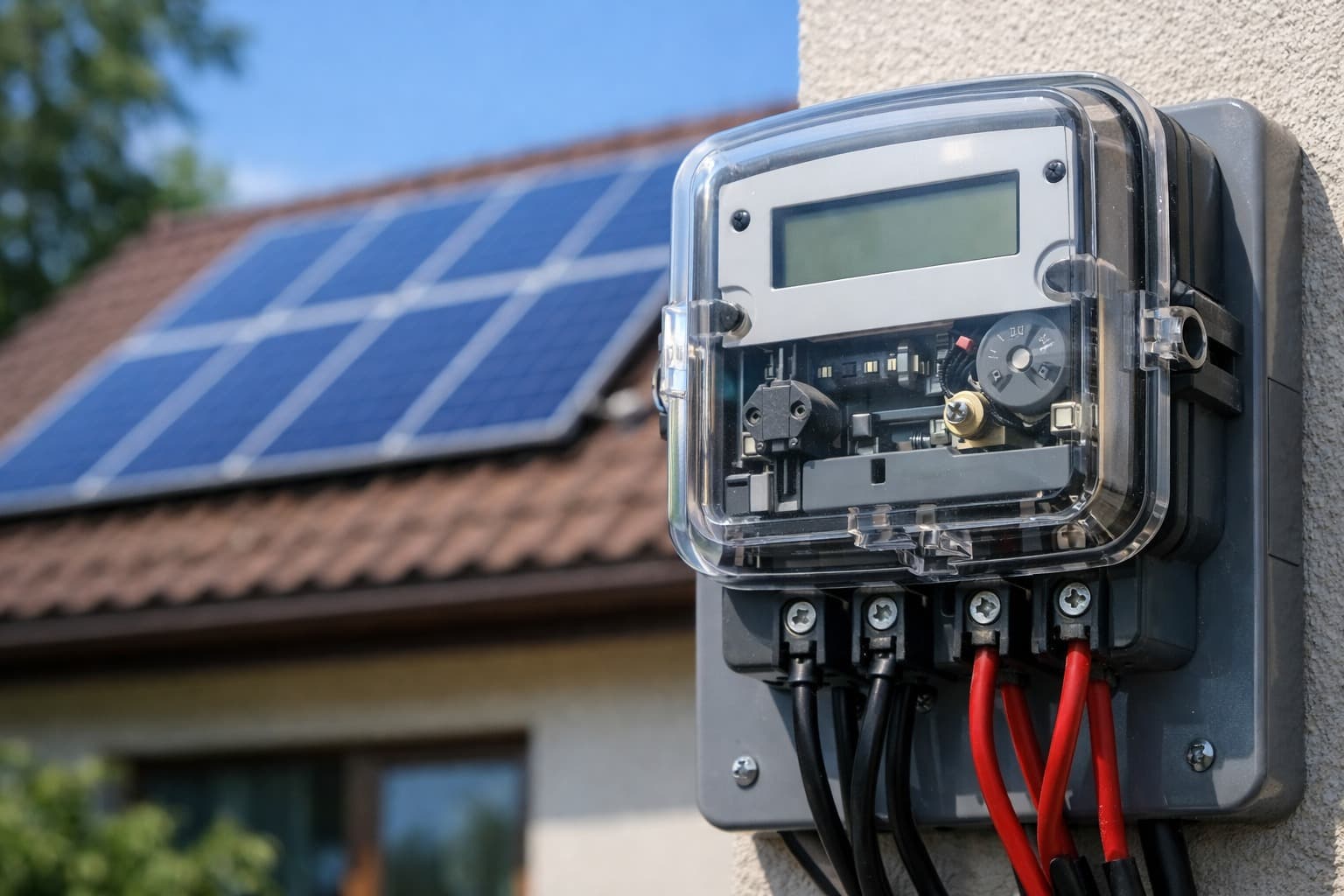
A bidirectional meter, often called a smart or net meter, is the core component. It records both import and export units accurately. The solar smart meter benefits include transparent billing and accurate energy tracking. In many cases, existing smart meters can be configured to measure exports. This technology ensures reliable settlement under state regulations.
Net Metering Policy Under PM Surya Ghar Yojana
The net metering policy under PM Surya Ghar Yojana varies by state because each state electricity regulatory commission sets its own rules. Most states allow systems between 1 kW and 1,000 kW, while some restrict eligibility to 500 kW depending on sanctioned load. Residential homes usually install 4 to 5 kW systems. For housing societies, capacity ranges from 100 to 200 kW. The scheme simplifies approval and subsidy processes for rooftop solar systems.
Step-by-Step Process to Apply
The step by step process to apply for solar net metering begins with registering on the PM Surya Ghar National Portal. After submitting the rooftop solar application, systems up to 10 kW receive deemed feasibility approval. For systems above 10 kW, DISCOM conducts a technical feasibility check. Once approved, the installer completes installation and uploads documents. The DISCOM inspects the site and installs or activates the net meter. Finally, commissioning details appear online.
Eligibility for Net Metering
To qualify under net metering policy homes, consumers must have a valid electricity connection in their name. The rooftop must be legally owned by the applicant. The system must follow MNRE and DISCOM technical standards. Most importantly, it must be a grid tied solar system for home. Off-grid systems are not eligible because they operate independently from the utility grid.
Cost of Solar Net Meter in India
The cost of solar net meter in different states of India varies widely. In Maharashtra, DISCOM often supplies the meter at minimal cost. In Gujarat, single-phase meters may cost around ₹2,000 and three-phase around ₹4,000. In Madhya Pradesh, costs may range from ₹4,000 to ₹7,000 depending on phase type. These figures are indicative and subject to change based on DISCOM policies and sanctioned load.
Benefits of Solar Net Metering
Net metering reduces electricity bills significantly by prioritizing solar consumption. It eliminates the need for expensive battery storage because the grid acts as a virtual battery. This makes an on grid solar system more economical than off-grid or hybrid setups. Consumers can export unlimited surplus energy, earning credits that offset future usage. These advantages make solar financially viable for homes and housing societies.
Net Metering vs Gross Metering
Understanding the difference between net metering and gross metering helps homeowners choose wisely. In net metering, solar power first reduces grid imports, and only excess electricity is exported. Billing applies to net imports. In gross metering, all solar electricity is exported to the grid at a feed-in tariff, while all consumption is imported at retail tariff. Under net vs gross metering, net metering generally offers better savings for residential users.
Settlement Rules and State Variations
Some states settle export credits monthly, while others carry forward surplus until the financial year ends. For example, Gujarat and Karnataka often settle monthly. States like Delhi and Haryana may adjust credits annually. These differences highlight the importance of understanding apply for net metering online guidelines and state-specific regulations before installation.
Why On-Grid Solar Is More Practical
Compared to battery-based systems, grid-connected systems are simpler and more affordable. Batteries increase system cost and maintenance requirements. With net metering, surplus electricity is safely transferred to the grid without storage equipment. This strengthens the financial case for solar homes and net metering explained in India as the most practical solution for households.
Common Limitation of Net Metering
One limitation is that grid-tied systems shut down during power outages for safety reasons. This prevents electricity backflow that could endanger maintenance workers. Despite this, the overall savings and simplicity make net metering highly attractive for residential use.
Conclusion
Solar net metering makes rooftop solar more affordable and efficient for Indian households. By measuring the net difference between imports and exports, it ensures fair billing and maximized savings. While rules vary by state, government initiatives like PM Surya Ghar have simplified approvals and subsidies. Understanding policy details, meter costs, and billing mechanisms helps homeowners make informed decisions and move confidently toward cleaner, cost-effective energy solutions.
Summary
Solar net metering allows homeowners to export excess solar electricity to the grid and pay only for net imports. A bidirectional smart meter records energy exchange, ensuring transparent billing. Policies differ by state under PM Surya Ghar Yojana, but most residential systems between 1 and 5 kW qualify easily. Net metering reduces bills, removes the need for batteries, and makes on-grid systems more affordable than off-grid options. Understanding rules, costs, and procedures ensures better long-term solar savings.