
Should You Buy a Road-Facing Flat? Here Is the Honest Answer
Summary
Deciding on a road-facing flat involves weighing benefits like connectivity, openness, and potential cost savings against drawbacks such as noise, air pollution, and higher maintenance. This guide provides an honest assessment, urging individual evaluation based on road type, floor level, and personal priorities.

Every property hunt in an Indian city eventually arrives at this exact fork in the road. Literally. You walk into a flat, the broker swings open the balcony door, and there it is. A wide arterial road right below, sometimes a flyover in the distance, traffic humming away at all hours.
Some buyers love the view and the sense of openness. Others wince at the thought of honking till midnight. So which instinct should you trust?
The Case Genuinely Made For Road-Facing Flats
There is a reason these flats keep selling despite the noise complaints. Visibility and openness top that list. A flat facing an open road usually skips the claustrophobic, wall to wall view that many inward facing apartments suffer from in dense Indian housing societies. You get sunlight pouring in for longer hours and a sense of space that interior facing units rarely offer.
Connectivity is the second real advantage. Roads that carry heavy traffic usually exist because they connect to something important, a metro station, a commercial hub, a market, or a highway. Daily commuting becomes noticeably easier when your building entrance practically opens onto a main artery.
Then there is price. Road facing flats in most Indian residential projects are priced marginally lower than interior facing units in the very same building, sometimes by 3 to 8 percent depending on the city and the road's traffic intensity. For a budget conscious buyer, that gap can matter quite a bit.
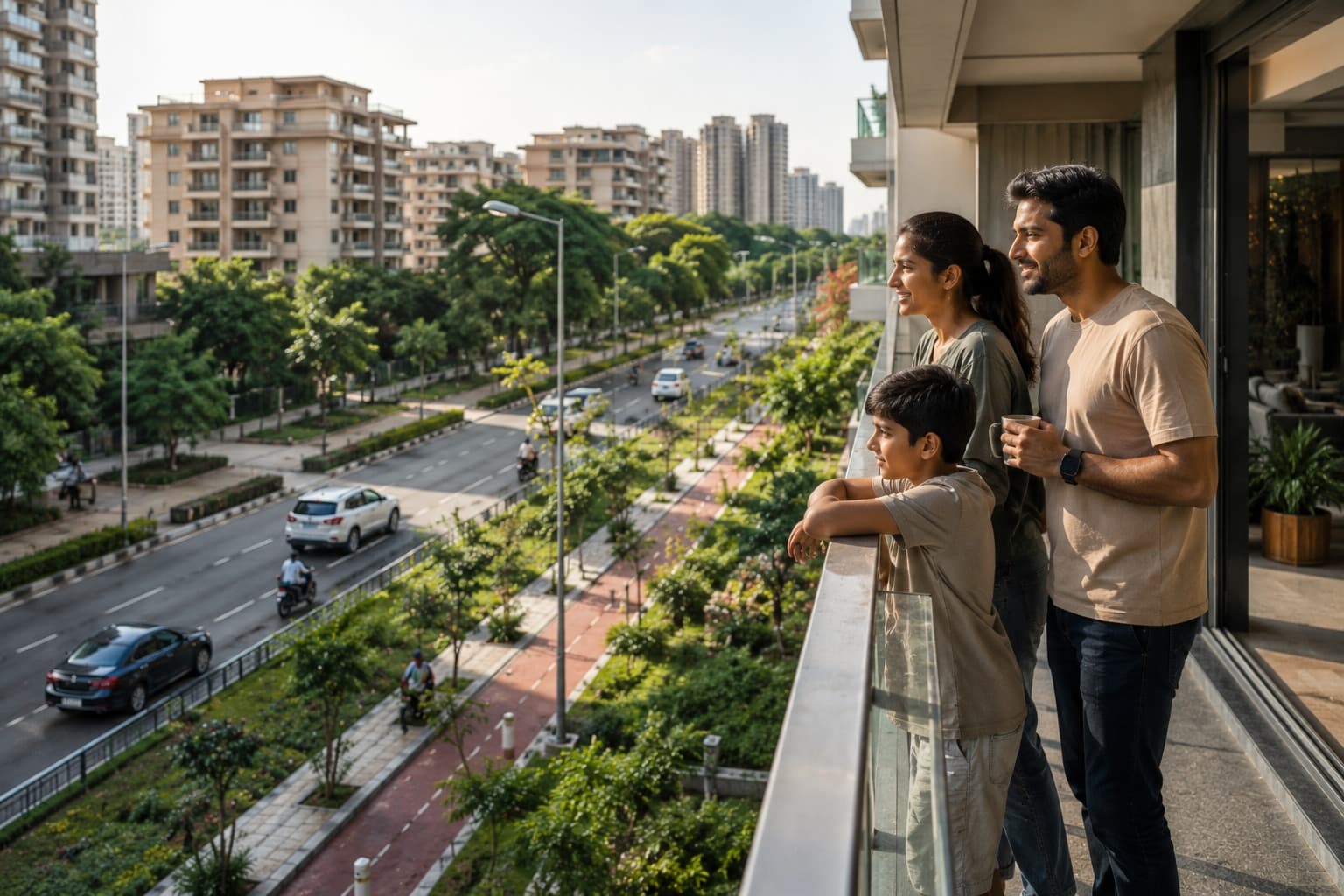
Now the Part Brokers Rarely Volunteer
Noise is the obvious concern, but it is more layered than most buyers assume. Research across multiple cities globally has consistently shown that road traffic noise drags down both resale value and rental yield, sometimes by a noticeable margin once decibel levels cross a certain threshold. Continuous low frequency engine sound, sudden honking, and braking near signals tend to bother residents far more than the steady hum of free flowing traffic.
Air quality is the quieter, more serious problem. Flats facing busy roads in Indian metros routinely register higher particulate matter readings on their balconies compared to interior units in the same complex. This is not a minor lifestyle inconvenience. It has real implications for respiratory health, particularly for children and elderly residents who spend more time at home.
Then there is dust, grime, and the simple wear and tear that comes with constant vehicular movement just metres away. Window frames need cleaning far more often. Exterior paint fades quicker. None of this is catastrophic, but it adds up in maintenance costs over the years.
What Actually Determines Whether It Is Worth It
The honest answer depends less on whether the flat faces a road and more on which kind of road it faces. A two lane internal society road sees almost none of these drawbacks. A six lane arterial corridor with heavy truck movement is an entirely different story.
Floor level matters enormously too. Noise and pollution both drop sharply as you go higher. A road facing flat on the third floor of a low rise building will feel the traffic far more intensely than an identical flat on the eighteenth floor of a tower set back from the road with a buffer of trees or a service lane in between.
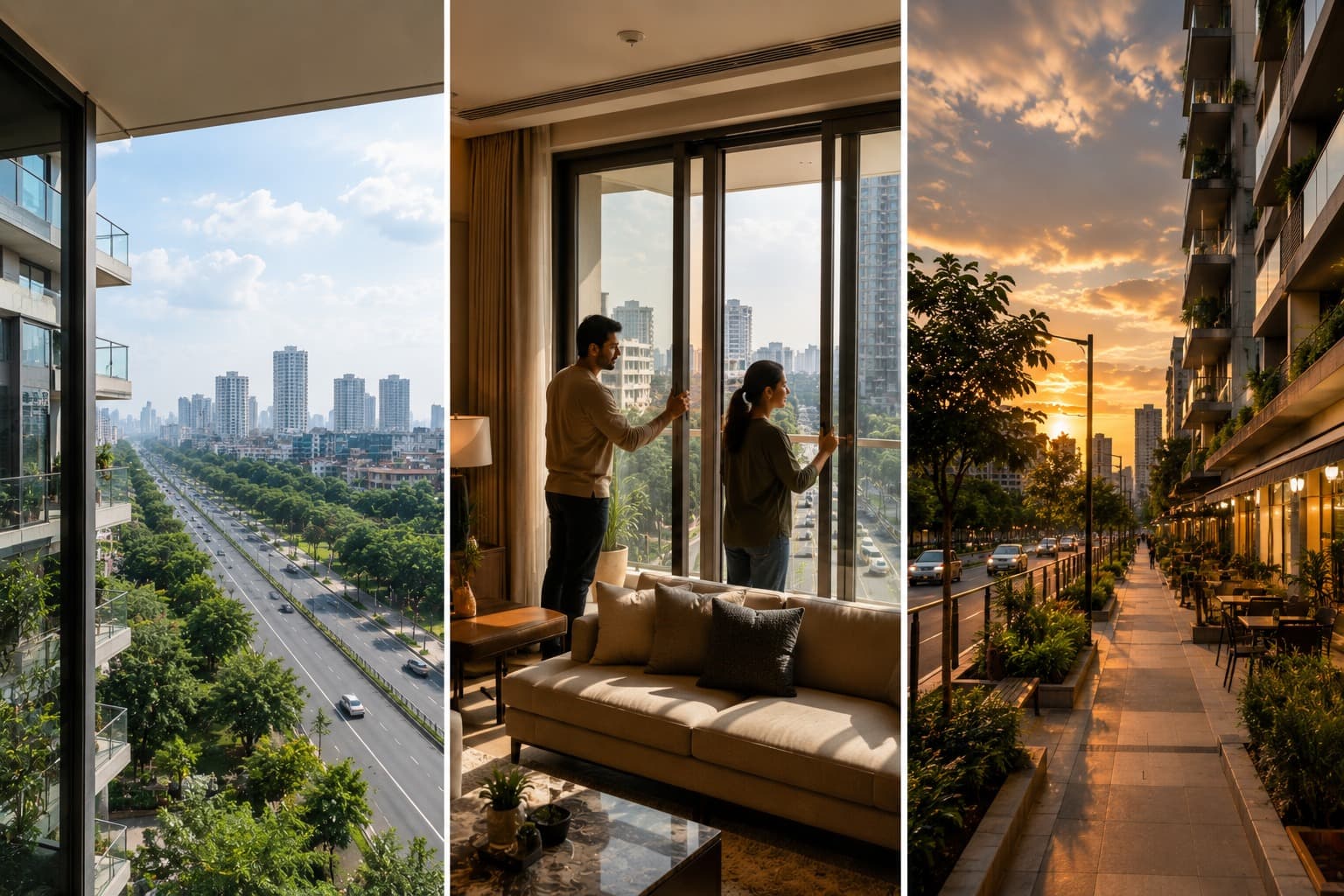
Setback distance between the building and the road edge is another factor worth checking physically rather than trusting a brochure. Buildings with even a modest landscaped buffer, a service road, or boundary plantation absorb a surprising amount of noise and dust before it reaches your window.
A Practical Checklist Before You Decide
Visit the flat at three different times. Early morning, peak evening traffic, and late night. What feels manageable at 11 am can feel unbearable at 7 pm when office traffic peaks. Stand on the actual balcony rather than just the living room window, since sound travels differently depending on orientation. Ask current residents in the building, not just the seller, how they genuinely feel about the noise after living there for a while.
If you are buying purely as an investment for rental income, road facing units with strong connectivity often rent out faster, particularly to working professionals and students who prioritise commute time over absolute silence. If you are buying as a long term family home, particularly with young children or elderly parents, the calculus shifts more toward comfort than convenience.
Summary
A road facing flat is neither automatically a red flag nor automatically a bargain. It comes with real upsides in connectivity, sunlight, and slightly softer pricing, balanced against genuine concerns around traffic noise, air quality, and long term resale appeal. The smarter move is judging each property individually, factoring in road width, floor level, setback distance, and your own tolerance for ambient city sound, rather than ruling road facing units in or out as a category before you have even seen them.