
Should You Buy a Home Near a Highway? The Complete Indian Buyer's Guide
Summary
Investing near Indian highways offers high returns due to increased connectivity and infrastructure. However, consider noise, air quality, and legal compliance. Due diligence is key to smart highway property investment.

Introduction
Every few months, a new township comes up along some highway stretch, and the builder's brochure makes it sound like the location is an absolute gift. Superb connectivity. Growing infrastructure. Prices that will only go up. And honestly, some of that is true. Buying property near highway corridors has made a lot of investors very happy over the last decade in India. But it has also given some families a few years of disrupted sleep and dusty windowsills.
The truth, as always, sits somewhere in the middle. And if you are seriously considering a highway property investment in India, you owe yourself a clear-eyed look at both sides before you sign anything.
Why Highway Corridors Have Become So Attractive
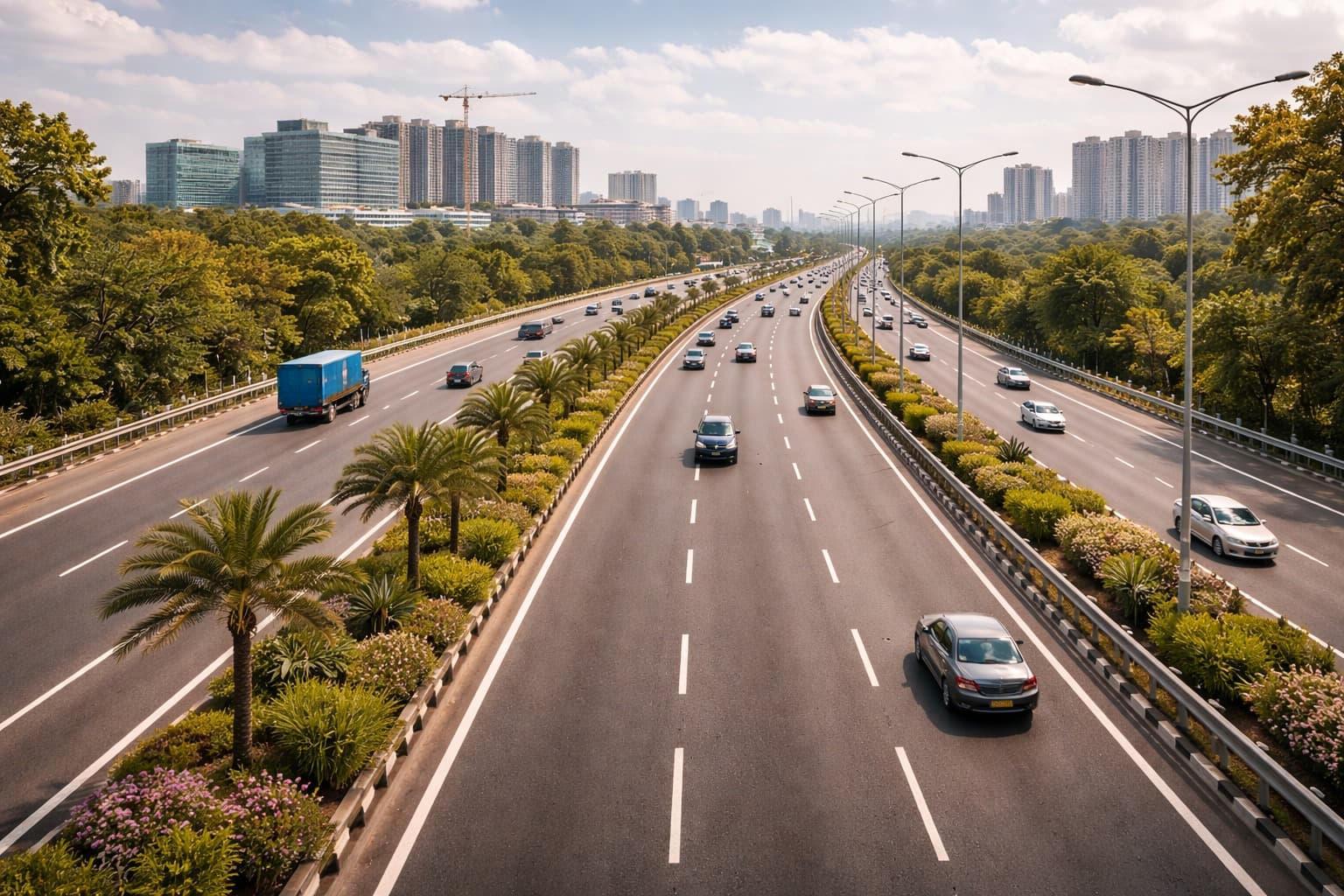
India's infrastructure story has changed dramatically. The country has been building expressways, ring roads, and national highway corridors at a pace that was unimaginable even fifteen years ago. Every time a new corridor comes alive, the land around it transforms. Shops, schools, hospitals, and offices follow the roads. That is how cities grow.
Property near highway locations benefits directly from this chain reaction. When physical access improves, demand for homes in the area rises. And when demand rises, prices follow. This is not speculation. It is a pattern that has repeated itself across Indian cities.
The Appreciation Numbers Are Hard to Ignore
Let us talk about what has actually happened on the ground. Along Dwarka Expressway, rates climbed from roughly Rs 5,359 per square foot in 2019 to around Rs 10,350 per square foot by 2024. That is a near-doubling of capital value in five years. Projects in Noida along the expressway corridor saw similar trajectories, moving from around Rs 5,075 per square foot to Rs 8,400 per square foot within the same period.
Property appreciation near expressway India markets like Sohna and New Gurugram also posted gains of 43 to 59 percent across a five-year window. These are not fringe examples. They represent a systemic pattern that runs across multiple cities and corridors. For anyone thinking about highway property investment in India, these numbers are a strong opening argument.
Connectivity Is the Core Advantage
The reason highway adjacent residential property tends to outperform is simple. Connectivity is the single biggest driver of real estate value. A home that puts you within striking distance of major employment hubs, airports, and freight corridors is a home that a large pool of buyers and tenants will always want.
This advantage compounds over time. Early buyers get in at lower prices and then watch as the metro station arrives, the retail strip fills up, the school opens nearby. Buying home near expressway during the early development phase is essentially a bet on infrastructure delivery. And in India right now, that bet has been paying off fairly consistently.
The Social Infrastructure Lag Is Real
But here is where it gets complicated. Most highway residential plots come up on the outskirts of cities, sometimes well beyond existing urban limits. The road is there, but everything else takes time. Hospitals, reliable public transport, good schools, a functioning neighbourhood market. These things do not appear overnight.
If you are buying to live immediately and you have school-going children or elderly parents at home, that lag matters enormously. You could end up spending the first three to five years driving long distances for basic needs while waiting for the area to fill in. That is a quality-of-life cost that no brochure will mention.
Noise and Air Quality: The Daily Reality
Let us be direct about this. Living right next to a busy highway or expressway is noisy. Heavy trucks move through the night. Horns carry across long distances, especially on older two-lane national highways where traffic behaviour is chaotic.
India's permissible ambient noise level for residential zones sits at 55 decibels during the day and 45 decibels at night. Busy highway traffic routinely exceeds both. Prolonged exposure to elevated noise levels has documented health effects, from poor sleep quality to stress-related conditions. If you are looking at a highway facing flat with windows that open directly onto the carriageway, double-glazing is not optional, it is essential.
Air quality follows a similar pattern. Vehicular exhaust, road dust, and diesel particulates accumulate along highway corridors. This is especially relevant if you have young children or family members with respiratory issues.
Legal Rules Every Buyer Must Check First
This is the part that many buyers completely skip and later regret. NHAI has clear regulations about how close any construction can be to a national highway boundary. The minimum permitted construction distance has been revised upward to 7.5 metres from the highway edge. Any building inside the restricted zone is legally vulnerable to demolition without compensation, regardless of how long people have lived there.
When checking a property near highway, always verify that the project has a valid No Objection Certificate from NHAI or the relevant state highways authority. Confirm that the building setbacks comply with the National Highways Control of Land and Buildings Rules. An NOC is not just paperwork. It is the document that protects your investment from regulatory action.

Haphazard Development Around Highways
The availability of cheap land along highway corridors attracts developers quickly, and not always the careful kind. Haphazard layouts, incomplete drainage, encroachment disputes, and delayed project delivery are all more common in these zones than in established residential neighbourhoods. Land acquisition complications can stall projects for years, leaving buyers in a painful limbo.
Is it safe to buy a flat near a highway in India is a question that depends heavily on which specific project you are looking at. A well-capitalised developer with clear land title and proper regulatory approvals is a very different proposition from a small operator sitting on disputed land with a promotional price.
How to Mitigate the Downsides
None of the drawbacks are necessarily deal-breakers. They are manageable with the right planning. Ask the developer what sound attenuation measures are built into the construction. Look for projects that include green buffer zones between the residential blocks and the highway. Trees genuinely reduce both noise and particulates.
Pick a building that does not directly face the carriageway. Even being one or two rows back from the road edge makes a measurable difference in daily comfort. If you are buying highway adjacent residential property for investment rather than immediate self-use, many of these daily concerns simply do not apply.
Summary
Buying property near highway and expressway corridors can deliver strong property appreciation near expressway India markets, with corridors like Dwarka Expressway and the Yamuna Expressway delivering near-double returns in five years. The advantages of highway property investment in India include superior connectivity, faster infrastructure development, and rental demand. But pros and cons of buying property near highway decisions must account for noise, air quality, the social infrastructure lag, and NHAI compliance. With proper legal checks and the right developer, a highway facing flat or plot can be a smart, long-term asset.