
Should First-Time Homebuyers Pay Extra for an Eco-Friendly Building? Here's the Honest Answer
Summary
First-time homebuyers often face the dilemma of paying extra for eco-friendly buildings. While green certified homes in India have a 3-8% premium, they deliver substantial long-term savings on electricity and water bills, alongside commanding higher resale values. This makes them a financially sound choice over time.

A Question That Comes Up More Than It Used To
A few years ago, hardly any first-time buyer asked about green certification while shortlisting flats. Today, it comes up almost every time. Eco-friendly buildings have moved from being a niche developer pitch to a genuine talking point at site visits across Indian cities.
But here is the real question nobody answers honestly enough. Is it actually worth paying more for a green-rated home when you are buying your very first property, often with a tight budget and a long loan ahead of you?
What Green Certification Actually Means
Before deciding anything, it helps to understand what these labels mean. In India, the two major certifying bodies are the Indian Green Building Council, known as IGBC, and GRIHA, which was developed by TERI with backing from the Ministry of New and Renewable Energy. Both evaluate a building on things like energy efficiency, water conservation, material choices, and indoor air quality.
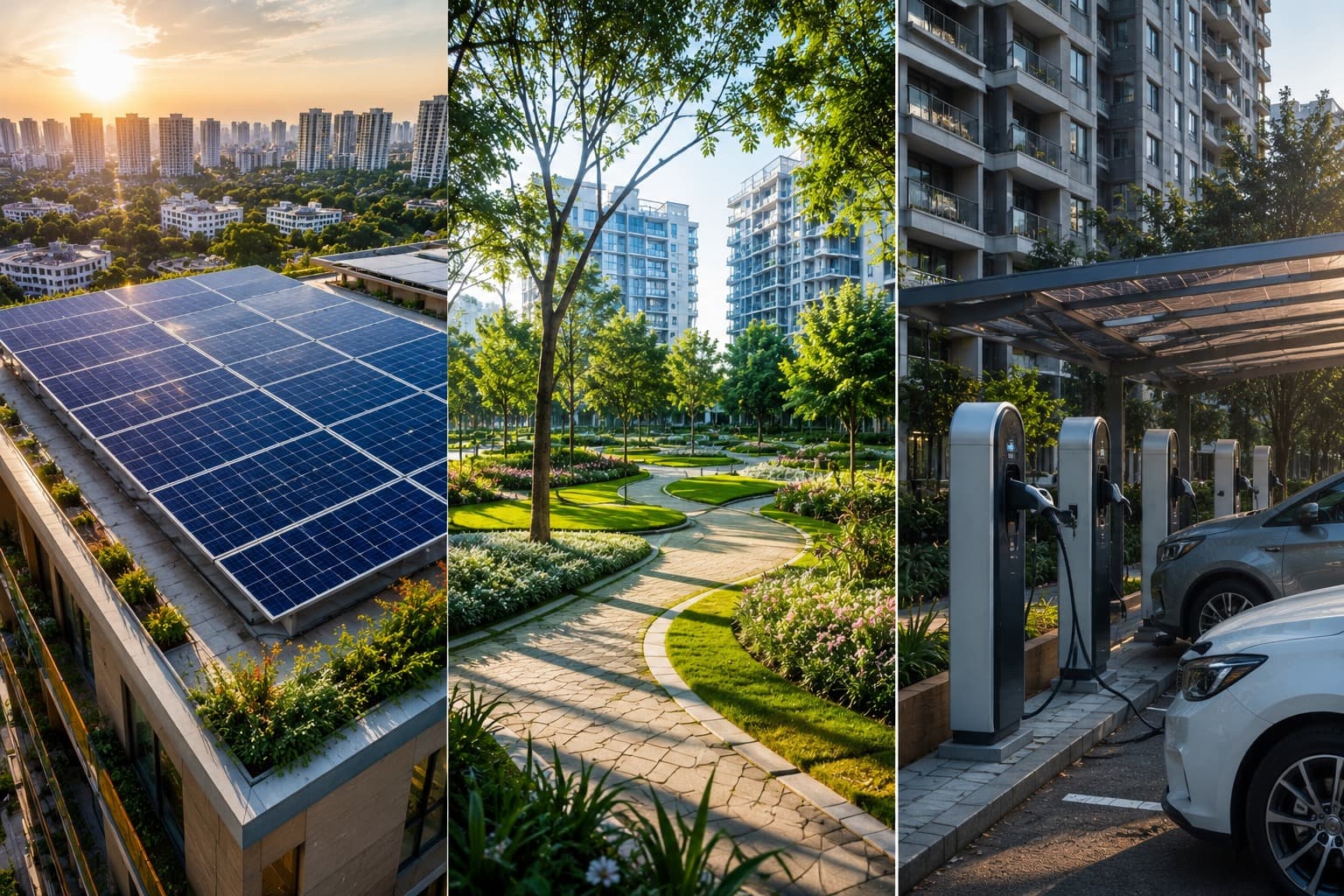
A certified project is not just slapping solar panels on the roof and calling itself green. It usually involves better orientation for natural light, more efficient cooling systems, low flow plumbing fixtures, and construction materials that reduce the building's overall environmental footprint.
The Price Tag You Will Actually Pay
Let us be upfront about cost, because this is where most buyers hesitate. Green certified homes typically carry a construction premium of roughly three to eight percent over a conventional project. On a Rs 60 lakh flat, that could mean an additional Rs 2 lakh to Rs 5 lakh on the sticker price.
That is not pocket change for someone buying their first home. And it is precisely the number that makes many young buyers walk away from green projects without digging any deeper into what they get in return.
What You Get Back Over Time
Here is where the picture changes. Energy efficient apartments in India routinely cut electricity consumption by twenty to fifty percent compared to conventional buildings, depending on design quality and the specific features included. Water usage often drops by thirty to fifty percent thanks to recycling systems and efficient fixtures.
For an average household spending somewhere between Rs 18,000 and Rs 29,000 annually on electricity, even a conservative thirty percent reduction adds up to real, recurring savings every single year. Over a ten or fifteen year ownership period, that premium you paid upfront starts looking considerably smaller.
The Resale Angle Nobody Talks About Enough
There is another dimension that often gets ignored in these conversations. Green building cost premium discussions usually stop at construction price, but they rarely mention resale value. Certified green properties in Indian cities have been commanding anywhere from five to fifteen percent higher resale and rental values compared to similar non-certified buildings nearby.
That premium exists because buyers increasingly understand what they are paying for. Lower utility bills, better indoor air quality, and a building that is less likely to feel outdated as sustainability regulations tighten over the coming years.
So, Should a First-Time Buyer Actually Go Green?
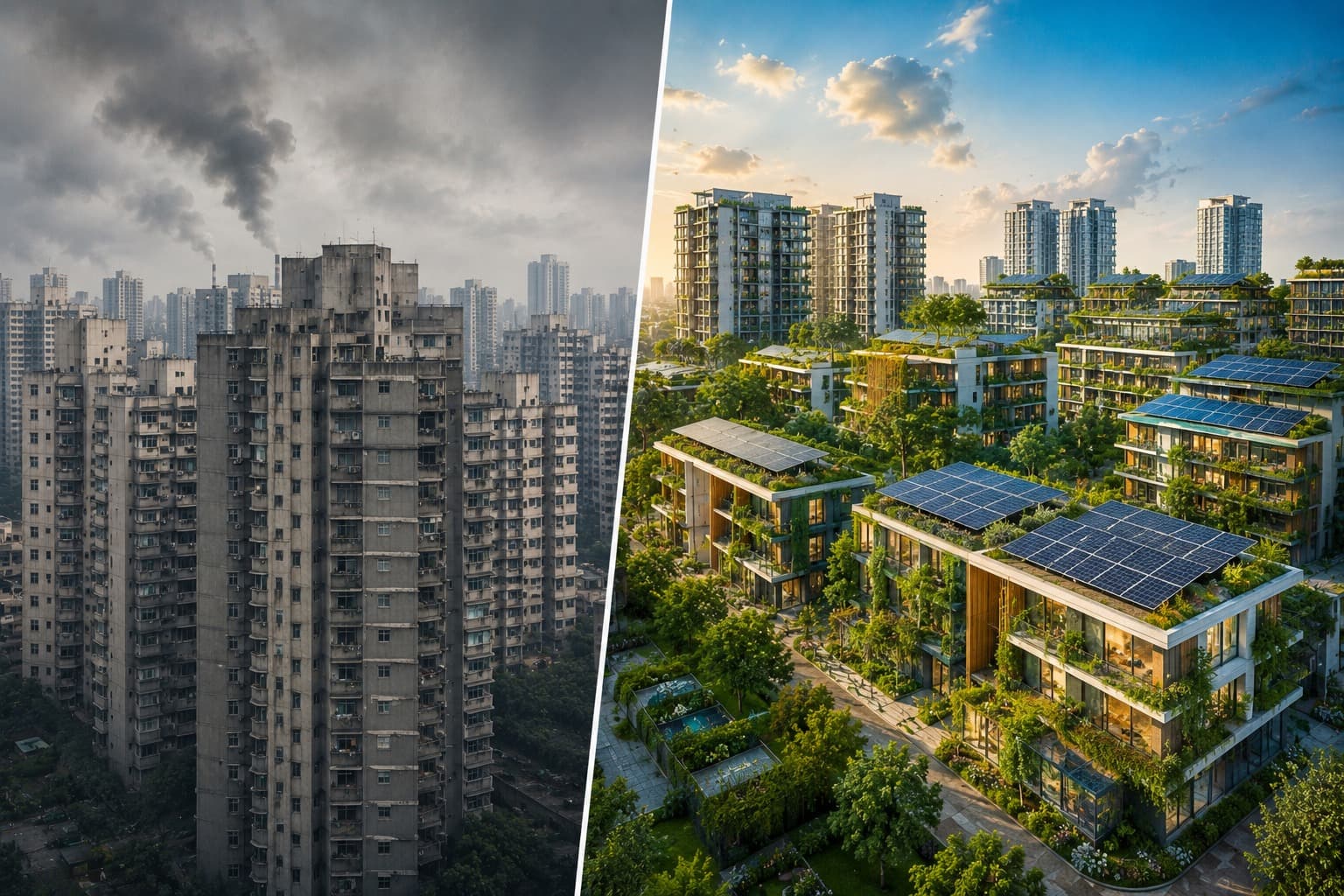
If your budget genuinely cannot stretch even slightly, do not force it. A good location with strong fundamentals will always matter more than a certification plaque in the lobby. But if the price difference between a certified and non-certified project in your shortlist is modest, the long-term math tends to favour the green option.
Think of it less as an environmental decision and more as a financial one dressed in eco-friendly language. The lower bills alone, spread across a decade of ownership, often justify the initial premium comfortably.
Summary
For first-time buyers weighing eco-friendly buildings against conventional projects, the decision ultimately comes down to long-term math rather than upfront cost. IGBC certified homes and GRIHA rated homes in India typically cost three to eight percent more to build but deliver substantial electricity and water savings, alongside stronger resale value over time. Green homes are no longer a luxury indulgence. They are increasingly a financially sound choice for buyers thinking beyond their first few years of ownership.