
Senior Citizen Housing: Buy or Rent a Retirement Home in India?
Summary
Explore the pros and cons of buying versus renting senior citizen housing in India. Understand the key factors like financial health, health trajectory, and emotional readiness to make the right choice for your retirement.

Introduction
India's senior living landscape is changing faster than most people realise. A decade ago, the choice was essentially between staying with family or moving into a charity-run old-age home. Today, professionally managed retirement homes India spread across cities like Pune, Bengaluru, Chennai, Coimbatore and Hyderabad offer something altogether different. Think gated communities with emergency response systems, wellness centres, medical tie-ups, housekeeping and genuine social life.
But as more families start seriously exploring senior living apartments, one question surfaces almost immediately. Should the senior citizen buy the unit or rent it? This is not a simple financial calculation. It is a life decision, and the right answer is deeply personal.
What Exactly Is a Senior Living Apartment?
A senior living apartment is a residential unit designed for individuals typically aged 55 and above, located within a community built specifically around the needs of older adults. These are not hospitals and they are not charity institutions. They are homes, with the added infrastructure of round-the-clock security, health emergency systems, accessible design and community programming.
The three broad formats available in India today are independent living, where active seniors want community without daily support; assisted living, for those who need help with routine activities; and continuing care communities that allow residents to transition between levels of care as their health needs evolve over years.
The Case for Buying a Senior Living Apartment
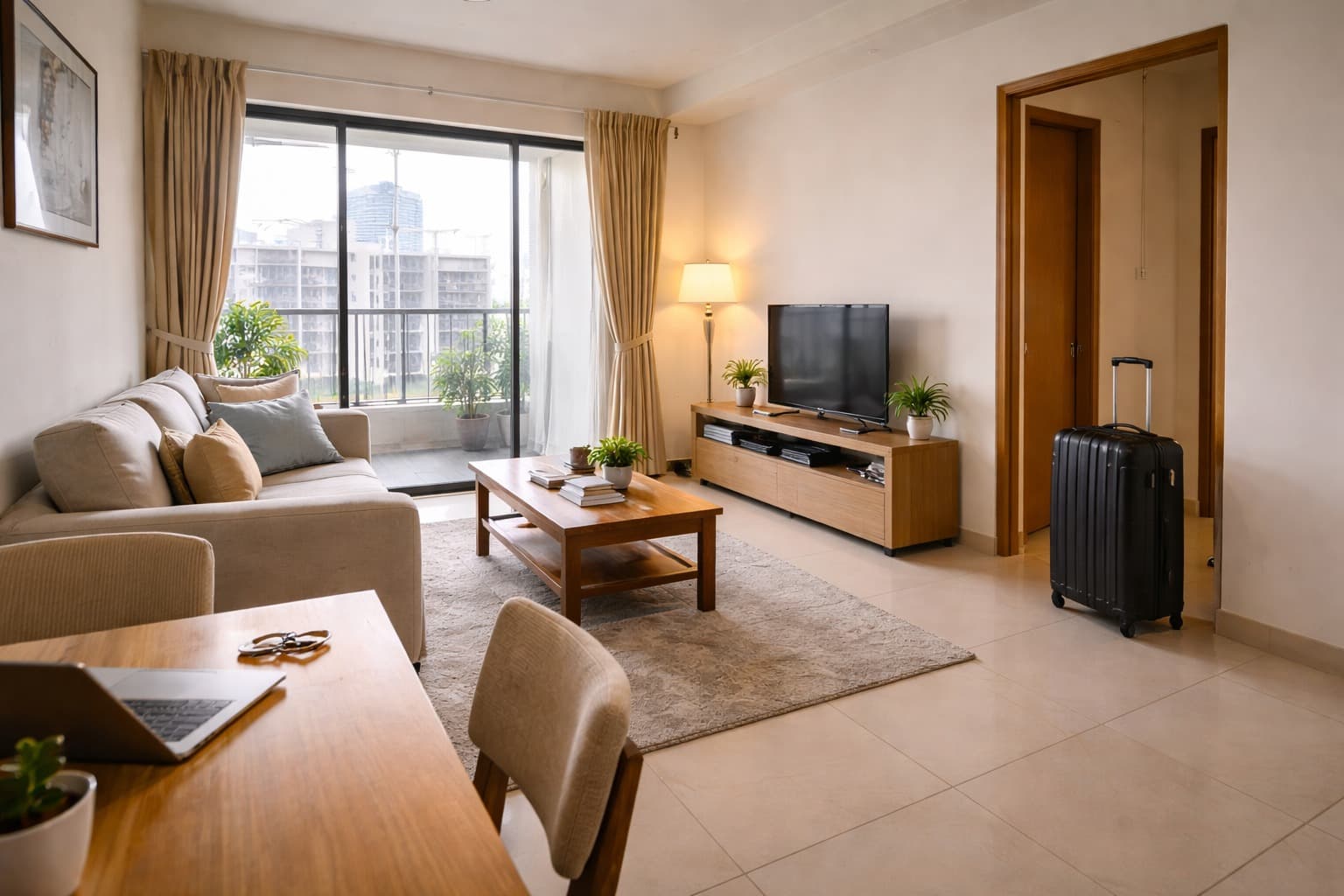
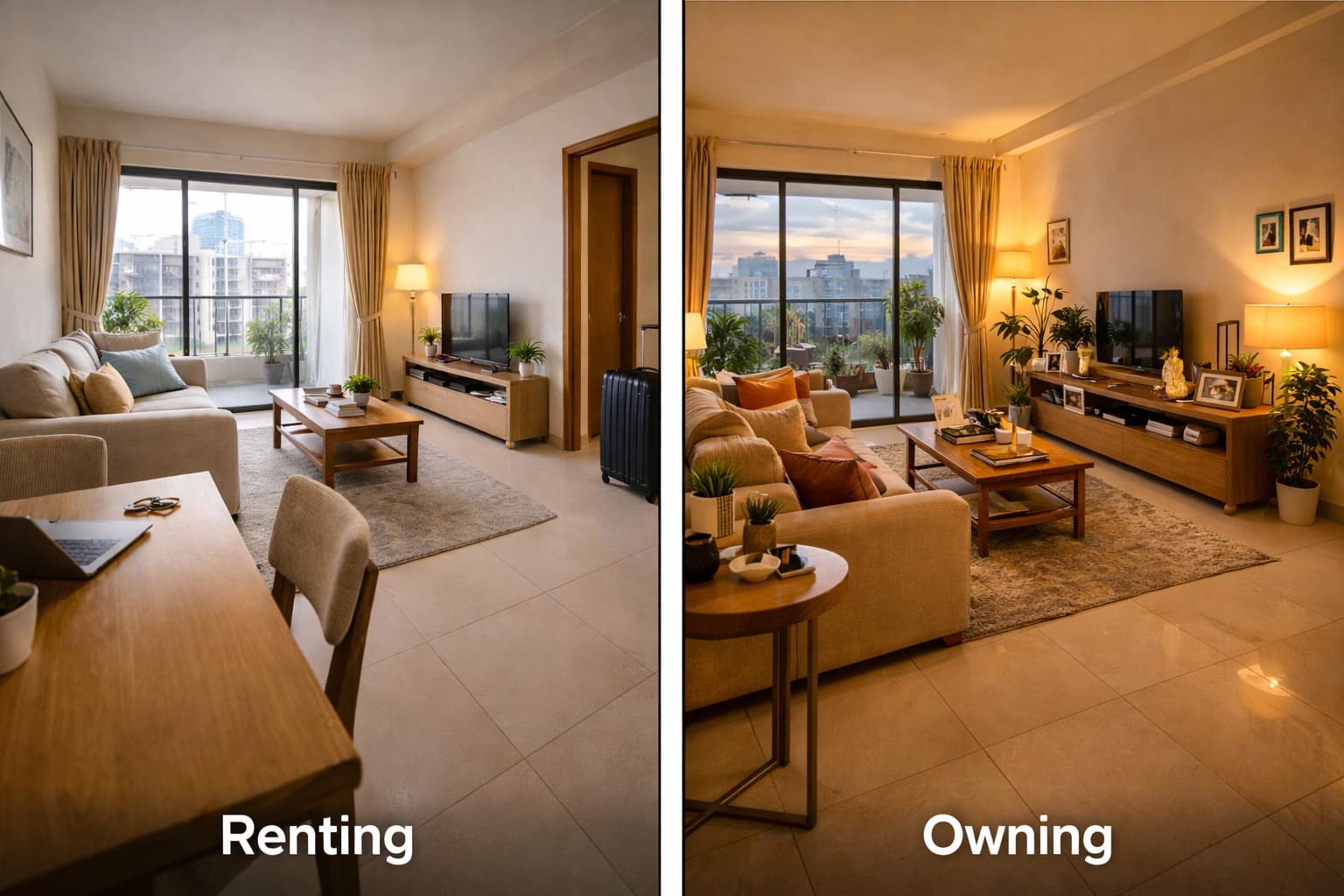
Buying brings ownership, and ownership brings a particular kind of peace of mind that many Indian seniors and their families find deeply reassuring. You are not subject to a landlord's renewal terms. You can personalise your space. You are building a lasting asset that can be passed on or liquidated if needed.
In established retirement communities in high-demand cities, senior citizen housing units have also shown meaningful capital appreciation over time. If you buy early in a project's lifecycle, the long-term value can be significant.
For seniors who have clarity about where they want to spend their later years, who have surplus retirement savings beyond their emergency and healthcare buffers, and who value stability above flexibility, buying makes a genuine case. The emotional comfort of ownership is real, especially in a culture where having a home of one's own carries deep meaning.
The challenges are equally real. Senior living apartments often carry a high upfront cost. Resale can be slow because the buyer pool is limited by age eligibility rules. Monthly maintenance and service charges add up and tend to increase over time. And real estate is illiquid. If a medical emergency demands sudden liquidity, a property cannot be converted to cash quickly.
The Case for Renting a Retirement Home India
Renting requires far less capital upfront and preserves the retirement corpus for health expenses, travel, family support or simply as a buffer against uncertainty. For a senior who is not entirely sure about which city they want to settle in, or whose care needs may change significantly in the next few years, renting offers something ownership cannot: the freedom to move.
This flexibility matters more than it might seem. A senior who rents a unit in a community today can assess the quality of services, the friendliness of neighbours and the responsiveness of management over time before making any permanent decision. Some developers even allow residents to transition from renting to buying within the same community, which is a genuinely sensible option for those who want to try before they commit.
The downsides of renting are just as honest. Monthly payments build no ownership and no asset. Rent tends to increase year on year. And there is always the background uncertainty of tenancy, even in well-run communities with professional management.
What Should Actually Drive Your Decision
Neither option is universally better. The right choice depends on four things that only the senior citizen and their family can honestly assess.
The first is financial health. Does buying require dipping into funds earmarked for healthcare? If yes, that is a warning sign.
The second is health trajectory. Seniors with stable health and a long planning horizon can afford to think like property owners. Those with evolving or complex medical needs may find flexibility more valuable than ownership.
The third is duration of intent. Buying suits a ten-plus year horizon. Renting suits uncertainty or shorter stays.
The fourth, and most underrated, is emotional readiness. Moving into a senior living community India is a significant life transition. Some people adjust beautifully to community living. Others find it isolating regardless of the amenities. Visiting the community, speaking with existing residents and spending time in the space before committing to anything is not optional. It is essential.
Summary
The senior citizen housing rent vs buy debate in India ultimately comes down to liquidity, flexibility and life stage. Buying a senior living apartment suits seniors with financial surplus, long-term location clarity and a desire for ownership permanence. Renting a retirement home India suits those who prioritise adaptability, want to preserve capital for healthcare, or are still exploring their options. In either case, verifying developer credentials, service quality and legal documentation before committing is non-negotiable for any senior living decision in India.