
Renting in Premium Zones vs Buying in Affordable Zones: The Mumbai Decision Most People Get Wrong
Summary
This blog dissects Mumbai's key real estate dilemma: renting in premium zones versus buying in affordable areas. It compares costs, lifestyle benefits, and investment potential, guiding you to the choice best suited for your life stage and financial goals.

Introduction
It is one of the most debated questions in Mumbai real estate.
Should you spend ₹70,000 to ₹90,000 a month renting a 2 BHK in Bandra or Powai, staying close to work and lifestyle? Or should you stretch the same money toward an EMI on a flat you actually own in Panvel, Virar, or Badlapur?
Both choices have genuine merit. Both have real costs that are not always obvious at first glance. The answer depends almost entirely on where you are in life, how much you earn, and how long you plan to stay in Mumbai.
What Premium Zone Renting Actually Costs
In Bandra West, a well-maintained 2 BHK in a decent building costs between ₹55,000 and ₹90,000 per month in rent. In Worli, similar configurations run ₹50,000 to ₹85,000. In Powai, which is more accessible, the range is ₹35,000 to ₹60,000 for a 2 BHK.
Add the security deposit, which is typically six to twelve months of rent in these zones, and a single lease cycle demands ₹3 to ₹10 lakh of locked-up capital before you have even paid your first month's rent.
The lifestyle benefits are real. Proximity to BKC, quick access to the Bandra-Worli Sea Link, proximity to airports, schools, hospitals, restaurants, and colleagues who live nearby. For young professionals building careers and networks, the intangible value of address and access in Mumbai's premium zones is genuinely significant.
But you own nothing at the end of it. Every rupee paid is gone.
What Buying in an Affordable Zone Actually Costs
In Panvel, property prices currently range from ₹9,000 to ₹14,000 per square foot. A 650 square foot 1 BHK can be bought for ₹35 to ₹60 lakh. A 1,000 square foot 2 BHK runs ₹65 to ₹90 lakh.
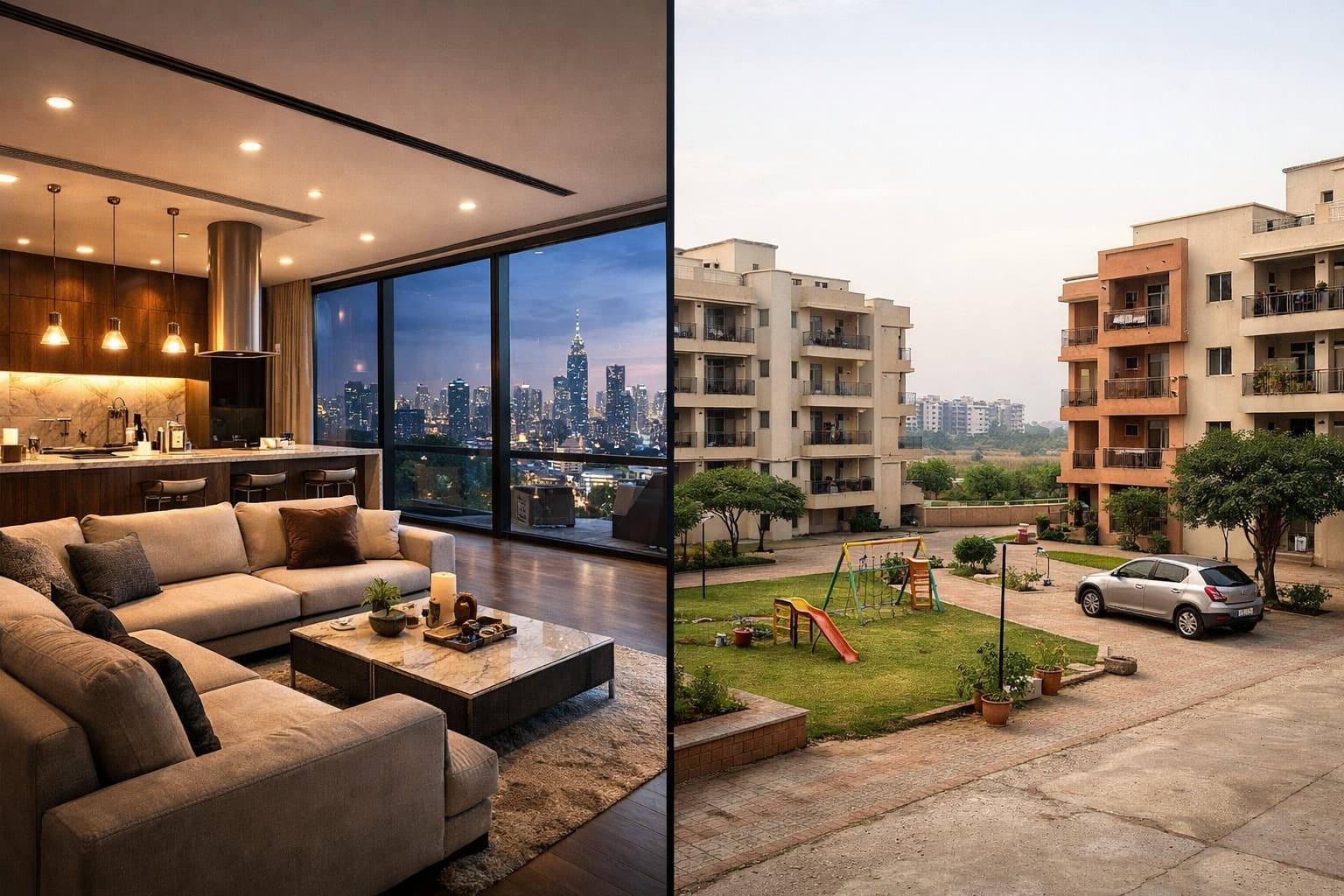
On a ₹65 lakh loan at 8.5 percent over 20 years, your EMI is approximately ₹56,000 per month.
That is comparable to, or lower than, what you would pay in rent for a much smaller flat in Bandra or Worli. And at the end of 20 years, you own the property outright.
In Virar, entry is even lower. A 1 BHK here can be bought for ₹25 to ₹35 lakh, with EMIs well below ₹30,000 per month.
In Badlapur and Ambernath, prices range from ₹4,500 to ₹6,500 per square foot, making them the most accessible entry points in the Mumbai Metropolitan Region for first-time buyers.
The Infrastructure Argument for Affordable Zones
The biggest objection to buying in Panvel or Virar has always been commute time and social isolation.
That objection is weakening by the year.
The Mumbai Trans-Harbour Link has cut the Navi Mumbai to South Mumbai drive to under 25 minutes. The Navi Mumbai International Airport is advancing toward operations, which will permanently reprice the Panvel and Ulwe catchment. Metro Line 8 is planned for the area. Multiple expressways and railway upgrades are progressing across the extended MMR belt.
Panvel property prices are still 20 to 25 percent lower than comparable Navi Mumbai locations. That gap is closing. Buyers who enter now are ahead of the repricing curve.

The Rental Yield Factor for Investors
If you are buying in an affordable zone purely for investment rather than end-use, the rental yield mathematics support the decision.
A ₹65 lakh flat in Panvel can generate ₹8,000 to ₹12,000 per month in rent for a 1 BHK. That is a gross yield of around 2.5 to 3 percent, which is broadly in line with Mumbai's residential market. But the absolute capital at risk is far lower, and the appreciation potential from infrastructure-led repricing is significantly higher than in already-mature premium zones.
In Bandra or Worli, a property worth ₹5 to ₹10 crore generates rent that rarely exceeds 1.5 percent yield annually. The appreciation story is about wealth preservation, not high returns.
Who Should Rent Premium and Who Should Buy Affordable
Renting in a premium zone makes sense if your career stage demands the network and proximity, you are uncertain about staying in Mumbai for more than five years, you do not yet have the down payment capital to buy meaningfully, or your employer provides rental reimbursement that effectively reduces your personal outgo.
Buying in an affordable zone makes sense if your job is stable enough to sustain a 15 to 20-year EMI, your commute to work is manageable from the outer suburbs, you have a family that will genuinely live in the property, or you are an investor seeking capital appreciation rather than yield.
Summary
Renting in premium zones like Bandra, Worli, and Powai offers lifestyle, proximity, and career network value. Buying in affordable zones like Panvel, Virar, and Badlapur builds equity, benefits from infrastructure-led appreciation, and often delivers comparable or better monthly outflows. The smartest Mumbai real estate decisions come from matching the choice to your life stage, income trajectory, and how long you intend to stay in the city.