
Renovating Your Flat Responsibly: Minimizing Waste in India
Summary
Renovating your flat in India responsibly means minimizing waste through planning, segregation, and responsible disposal. New regulations in 2026 are pushing for accountability, making sustainable practices a must for homeowners.

Introduction
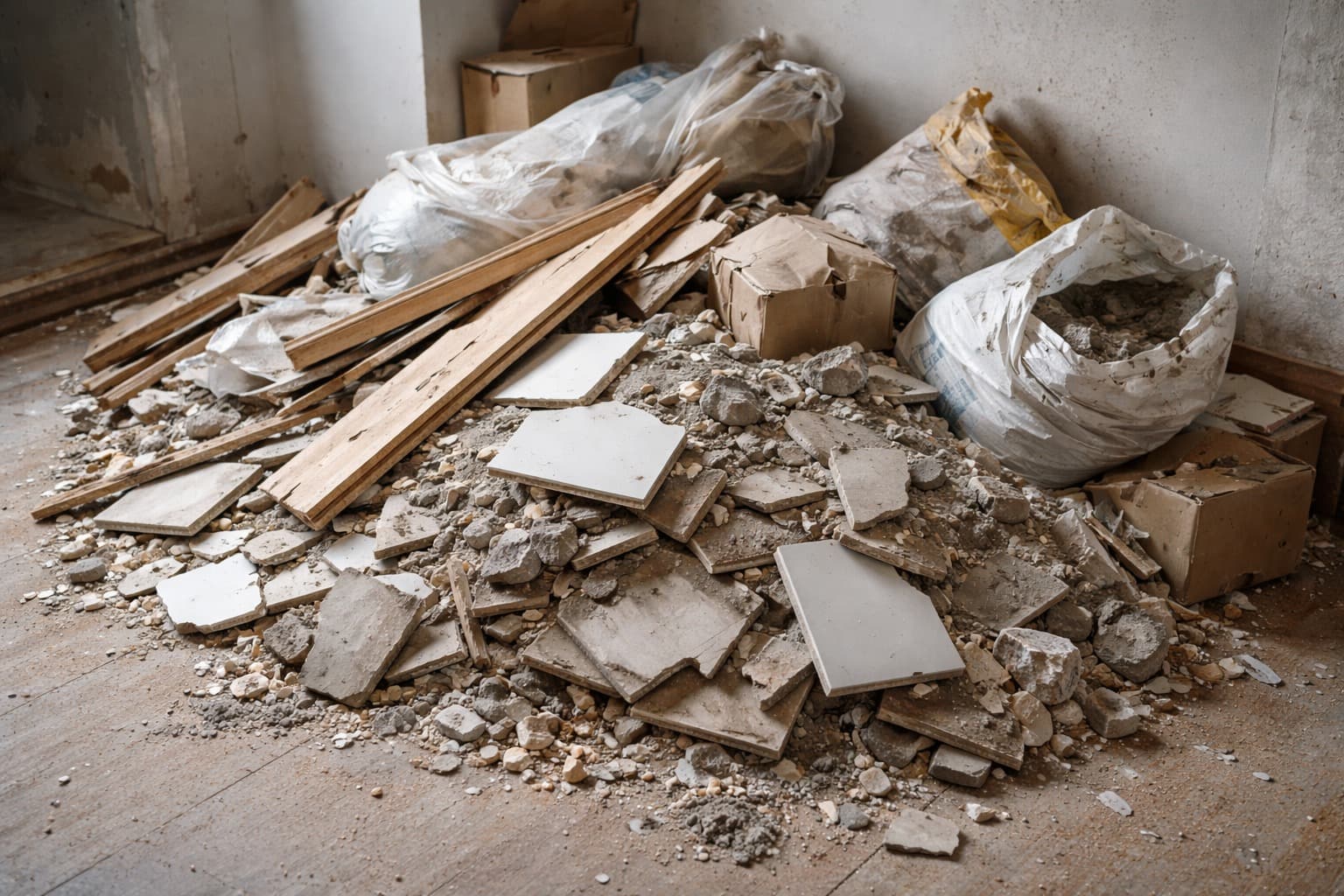
If you have ever renovated a flat in India, you know what the aftermath looks like. Broken tiles piled outside the building entrance, chunks of plaster scattered across the staircase, a pile of old wood and bent steel rods waiting for someone to figure out what to do with them. Most of it eventually disappears into an unmarked truck and ends up dumped somewhere it should not be. This is not just an eyesore. India's construction and demolition sector generates an estimated 165 million metric tonnes of waste annually by 2030, according to projections from the Central Pollution Control Board. A significant share of that comes from residential renovation activity. The good news is that practical waste minimization during apartment renovations is achievable with planning, and as of April 2026, it is increasingly a legal requirement.
What the New Rules Mean for Homeowners
India's Ministry of Environment, Forest and Climate Change notified the Environment (Construction and Demolition) Waste Management Rules, 2025, which came into force on April 1, 2026. These rules replace the older 2016 framework and are far more comprehensive, covering 21 provisions compared to the earlier ten. They apply to all construction, demolition, reconstruction, renovation, and repair activities across residential, commercial, and infrastructure categories.
For large projects with a built-up area of 20,000 square metres or more, producers must now prepare a waste management plan, register on a central portal, meet mandatory recycling targets of 25 percent for 2025-26 rising to 100 percent by 2028-29, and ensure that processed construction and demolition debris is used back in construction activities. The requirement to incorporate recycled materials begins at 5 percent from 2026-27 and climbs to 25 percent by 2030-31. While these specific thresholds apply to larger developers and contractors rather than individual flat owners renovating a kitchen, the framework creates a market and regulatory environment that affects every renovation project in the country. Contractors who handle your waste are now subject to compliance obligations, and the push for accountability is moving down the supply chain.
Plan Before You Demolish
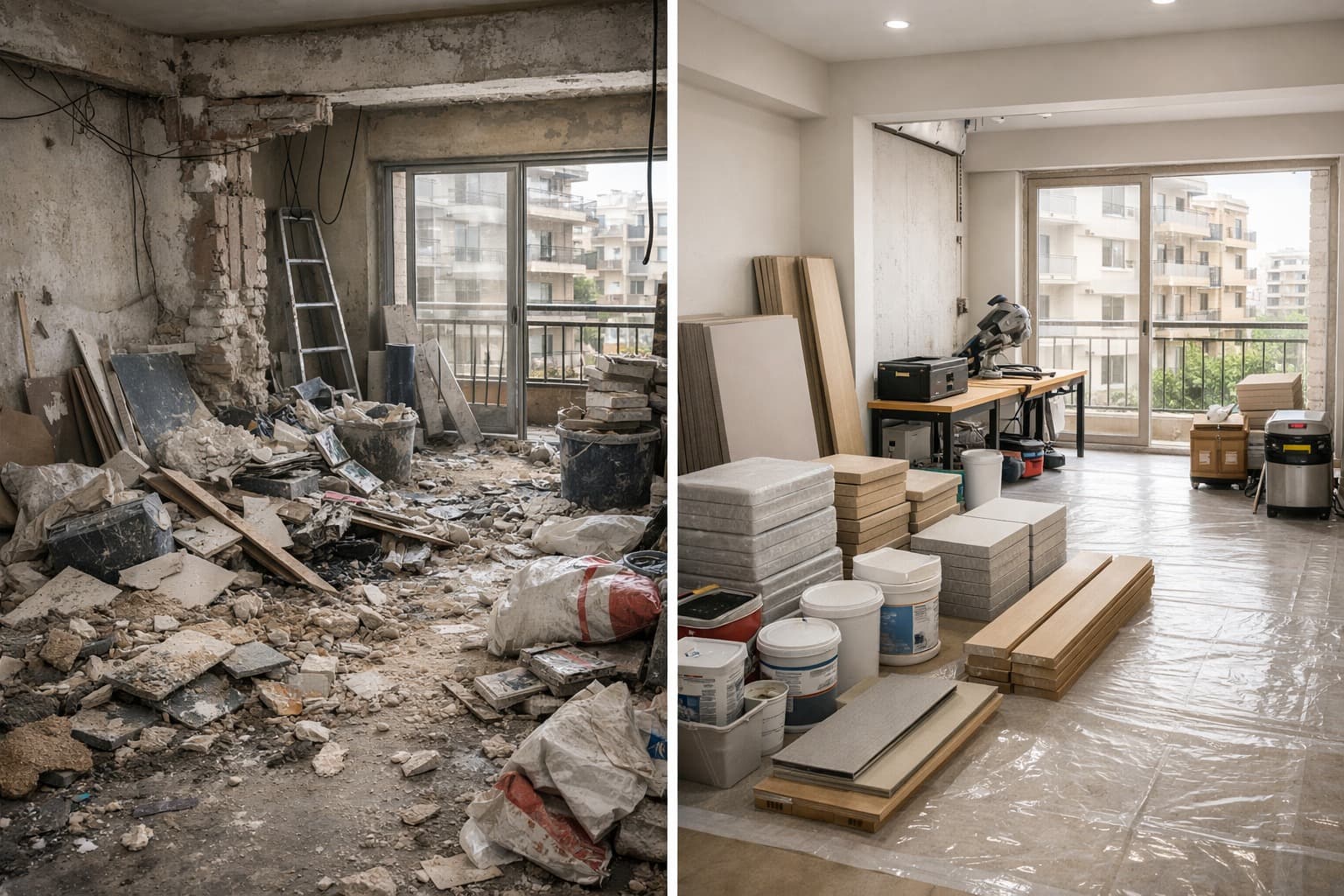
The single most effective waste reduction strategy is planning the scope of demolition before a single wall is touched. Many Indian apartment renovations involve unnecessary demolition, tearing out functioning tiles, removing cabinets that could have been refurbished, or breaking walls that did not need to come down. Every item removed is a waste stream to manage.
Walk through the flat with your contractor and categorise what must be removed versus what can stay or be repurposed. A bathroom with structurally sound tiles that simply look dated may need only a surface-level refresh rather than full tile removal. Kitchen cabinets with good bones can sometimes be repainted and re-fitted with new handles rather than discarded. Asking these questions before work begins can reduce the volume of demolition debris by 20 to 30 percent on a typical apartment renovation.
Segregate at Source
Once demolition begins, the key to effective waste minimization is segregation at the point of generation. Concrete rubble, broken tiles, and plaster should be kept separate from wood, metal, glass, and packaging waste. Mixed debris is difficult and expensive to process. Segregated waste, on the other hand, can often be handed to authorised recyclers who process specific material streams.
Broken tiles and concrete can be crushed into recycled aggregates used in non-structural fill, road base material, and paving applications. Metal including old pipes, rods, and window frames has active scrap markets in every Indian city. Wood from old doors, window frames, and cupboards can find second life through local carpenter workshops or salvage dealers. None of this requires extraordinary effort. It requires the contractor to maintain three or four separate collection areas within the flat during the renovation period rather than throwing everything into one pile.
Material Ordering and Precision
One of the quieter contributors to renovation waste is over-ordering. When tiles are ordered in bulk with a loose estimate, the surplus that cannot be returned goes to waste. The same applies to paint, putty, adhesives, and hardware. Insisting that your contractor prepares a precise material takeoff before purchasing, accounting for standard cut wastage on tiles of around 10 percent, reduces both expenditure and disposal burden.
Choosing standard tile sizes that cut cleanly and align with your floor dimensions also helps. Non-standard or irregular layouts generate far more tile cut waste than simple rectangular patterns. These decisions at the design stage have a direct impact on how much material ends up broken on the floor of the flat rather than installed on the wall.
Responsible Disposal Over Dumping
When material does need to leave the flat, the choice of disposal route matters. Many urban local bodies now operate or license Construction and Demolition waste collection points and authorised recyclers. In cities like Delhi, Bengaluru, and Mumbai, IGBC-rated projects and environmentally conscious contractors already route debris to these facilities. For individual homeowners, asking your contractor specifically how they plan to dispose of waste, and requesting that it be handed to an authorised recycler, is a reasonable and increasingly common expectation.
The new 2025 rules introduce environmental compensation provisions for improper disposal, signalling a regulatory tightening that will over time make responsible waste handling the default rather than the exception.
Summary
Waste minimization during apartment renovation in India begins before demolition starts, with honest planning about what truly needs to be replaced. Segregating materials at source, ordering precisely, salvaging reusable items, and choosing authorised disposal routes are practical steps any homeowner can implement. India's new Construction and Demolition Waste Management Rules 2025, effective April 2026, are reshaping accountability across the entire renovation supply chain. Acting responsibly today puts Indian homeowners ahead of a regulatory and environmental curve that is only going to tighten.