
Renovating Before Selling: When It Pays and When You Are Just Spending Money You Will Not Get Back
Summary
Renovating before selling in India is strategic, not automatic. Focus on repairs, fresh paint, and cleanliness to address buyer objections. Avoid costly remodels that rarely recoup their investment, sticking to a 1-2% budget for value protection.

Introduction
Every homeowner preparing to sell faces the same dilemma at some point. The flat has a few years of living on it, the kitchen tiles are dated, the walls need fresh paint, and the bathroom fittings have seen better days. The question is whether fixing these things before listing will fetch a meaningfully higher sale price or simply reduce your net proceeds after accounting for renovation cost. Home renovation before selling is one of those decisions where popular wisdom consistently misleads sellers. The correct answer is neither always renovate nor never renovate. It depends on what you fix, what you spend, and what the buyer profile in your specific micro-market actually responds to.
When Renovation Before Selling Makes Clear Financial Sense
There are specific situations where renovate before selling India logic holds up under honest scrutiny. The first is when the property has visible damage or disrepair that buyers will use as leverage to negotiate a price reduction far exceeding the actual repair cost. A leaking bathroom, cracked plaster, broken tile flooring, or non-functional electrical points are examples where the buyer's imagination about repair costs almost always runs higher than the actual expense. Fixing these before listing removes a negotiation weapon from every buyer who walks through the door.
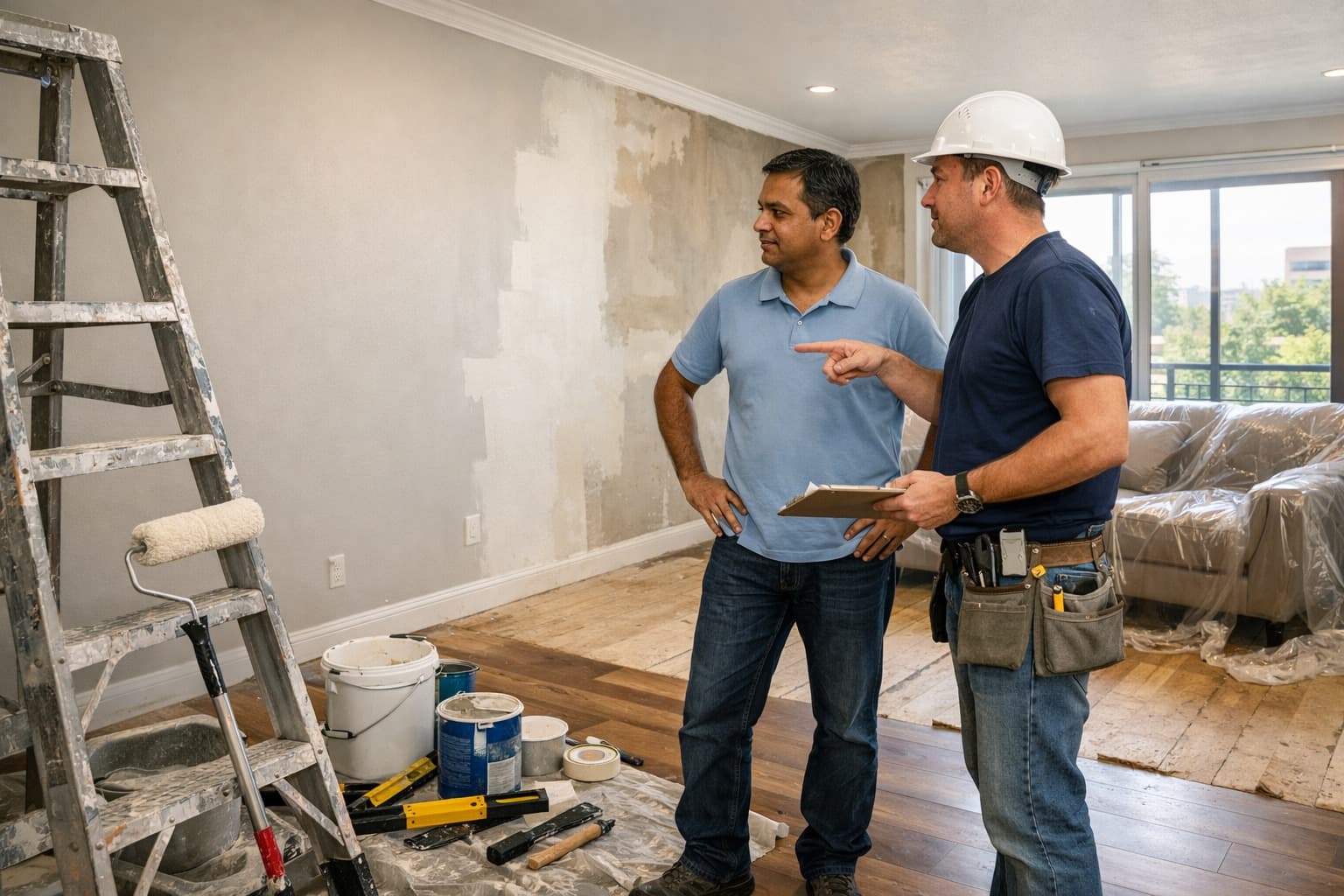
The second situation is fresh paint. Of all renovation investments before a sale, a full interior repaint delivers the highest return relative to cost. A professional paint job across a 1,000 square foot apartment costs Rs 25,000 to Rs 40,000 and makes the property photograph significantly better, feel cleaner during visits, and removes the subliminal sense of neglect that buyers register even when they cannot articulate it. Almost no buyer will pay you extra for fresh paint, but almost every buyer will discount an apartment with dirty, scuffed, or dated walls.
The Renovations That Rarely Recover Their Cost
Renovation ROI India analysis consistently shows that full kitchen remodels are the most common renovation mistake sellers make before listing. Replacing perfectly functional granite countertops with newer stone, changing cabinet shutters, or installing a modular kitchen in a property you are about to sell rarely recovers even 50% of the cost in a higher sale price. Indian buyers, particularly end-users, have strong preferences about kitchen layout, materials, and storage configuration. Many will renovate the kitchen themselves after purchase regardless of what the seller has done.
Similarly, bathroom overhauls beyond basic repairs fall into the same trap. Replacing functional bathroom fittings with premium brands, retiling a bathroom that works perfectly well, or installing a glass shower partition are expenses the seller almost never recovers. Buyers notice a clean, functional bathroom. They do not pay a premium for a recently renovated one unless the property is in the luxury segment where presentation standards are held to a genuinely higher bar.
What Buyers in Indian Apartments Actually Notice
Understanding home resale value renovation decisions requires understanding what Indian apartment buyers actually register during a site visit. The first impression is the door and entrance corridor. A repainted front door, a clean entrance, and working lights in the entry passage cost almost nothing and set the entire tone for the visit. Buyers make faster and more positive decisions when the first thirty seconds of a property visit feel welcoming.
The second major impression point is natural light and ventilation. No renovation can fix a structurally dark apartment, but removing heavy curtains, cleaning windows, and replacing a burned-out bulb with a brighter warm-white fitting costs nothing and changes how a space feels entirely. The third point is smell. An apartment that smells of fresh paint, clean air, or light fragrance versus one that carries the accumulated odour of years of cooking and use is a meaningful sensory difference that influences buying decisions.
The Cost Versus Return Framework
A practical way to approach property selling tips India is to set a renovation budget ceiling of 1% to 2% of the expected sale price and spend exclusively on repairs and improvements that remove buyer objections rather than add features. On a Rs 80 lakh apartment, that ceiling is Rs 80,000 to Rs 1.6 lakh. Fresh paint, minor tile repairs, fixing all non-functional switches and fixtures, deep cleaning, and basic decluttering can typically be accomplished within this range.
Anything that pushes beyond this ceiling needs a specific justification: either the property is genuinely distressed and requires rectification to be saleable at all, or you are targeting a buyer segment where presentation quality commands a documented premium.

When Selling As-Is Is the Smarter Decision
There are properties and market conditions where renovation cost vs resale value India maths simply do not work regardless of what you do. In a seller's market with limited inventory, buyers accept properties in average condition because alternatives are scarce. In premium locations where buyers intend to undertake full interior customisation after purchase, seller renovation is almost entirely wasted. And in lower-ticket markets where buyers are maximally price-sensitive, the marginal improvement in presentation rarely justifies the outlay.
Selling as-is at a price that factors in the property's current condition is often the cleanest outcome for both parties.
Summary
Renovating before selling in India is worth the money only when it removes specific buyer objections, repairs visible damage, or improves first impressions through low-cost, high-impact interventions like fresh paint and deep cleaning. Full kitchen remodels, bathroom overhauls, and decorative upgrades almost never recover their cost in a higher sale price. The practical framework is a 1% to 2% budget ceiling focused entirely on resale value protection rather than feature addition. Spend to fix what is broken and clean what is dirty. Stop there.
Video will be embedded from: https://www.youtube.com/watch?v=Unju4p0eY8A