
Reducing Noise Pollution Inside Apartments Without Spending a Fortune
Summary
Combat apartment noise pollution affordably with practical strategies for a calmer home. Learn to seal windows and doors, utilize soft furnishings, and address neighbor-related sound, proving that effective noise reduction doesn't require expensive renovations.

The Problem Nobody Warns You About Before You Buy
Brochures show you sunlit balconies and landscaped gardens. They never show you the sound of a neighbour's washing machine running at midnight, or the steady hum of traffic that never quite stops on a main road facing flat. Noise is the one variable that almost never makes it into a site visit checklist, and yet it shapes daily life more than most amenities ever will.
Noise pollution apartments has become a genuine quality of life issue across dense Indian cities, where buildings sit close together and roads carry traffic well past midnight.
Where the Noise Is Actually Coming From
Before fixing anything, it helps to figure out where the sound is entering from. Is it airborne noise coming through windows and walls from traffic, construction, or street vendors? Or is it structure borne noise, the kind that travels through floors and ceilings when an upstairs neighbour drags furniture or children run around at odd hours?
These two categories require completely different fixes. Treating the wrong one wastes money and leaves the actual problem untouched.
Windows Are Usually the Weakest Link
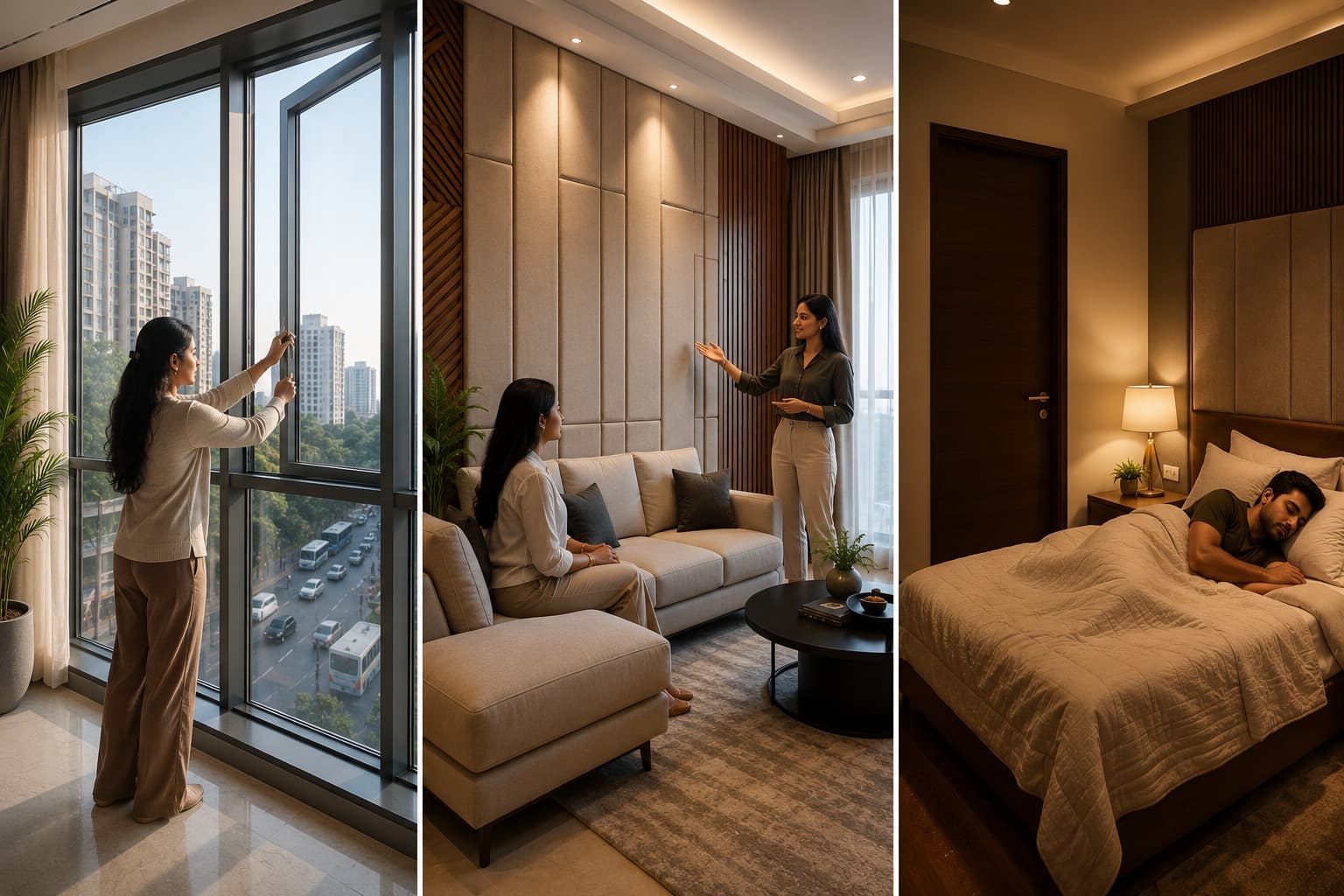
In most Indian apartments, standard single pane windows are the single biggest entry point for outside noise. Even a well built wall does little good if the window beside it is letting traffic sound straight through. Upgrading to double glazed or laminated glass windows with proper rubber gasket seals can cut incoming street noise dramatically, often by a noticeable margin within the first few days of installation.
For renters or owners who cannot justify a full window replacement, heavy curtains with multiple layers, combined with foam or felt weather strips along window edges, offer a budget friendly middle path that still makes a real difference.
Doors Deserve More Attention Than They Get
Main entrance doors in many apartment complexes have visible gaps at the bottom and sides, gaps that quietly let in corridor noise, cooking smells, and even insects along with sound. A simple door sweep installed along the bottom edge, paired with weatherstripping tape around the frame, is one of the cheapest fixes available and genuinely effective for how to reduce traffic noise apartment living spaces close to busy roads.
Soft Furnishings Absorb More Than People Realise
Hard surfaces reflect sound, soft surfaces absorb it. A room with bare walls, tiled floors, and minimal furniture will always feel louder than one filled with rugs, curtains, upholstered furniture, and bookshelves. This is not just decorating advice. It is functional acoustics.
Adding a thick rug in the living room, hanging fabric curtains instead of blinds, and placing a bookshelf against a shared wall can each shave off a meaningful amount of echo and reverberation inside the home, even before tackling external noise sources.
Dealing With Noisy Upstairs Neighbours
Structure borne noise from above is harder to fix from your own flat alone, since the real solution usually involves the upstairs unit installing carpets, rugs, or acoustic underlay beneath their flooring. A polite conversation, ideally framed around mutual comfort rather than complaint, tends to work better than a formal society notice in most buildings.
If a direct conversation does not help, raising the matter through the resident welfare association, with specific timings and patterns noted, gives the issue a documented trail that tends to get taken more seriously over time.
Acoustic Panels and Ceiling Treatments
For households dealing with persistent noise from a neighbour or a nearby commercial establishment, acoustic foam panels mounted on a shared wall or false ceiling fitted with sound dampening insulation can meaningfully reduce sound transfer. These are more involved fixes, but they are far less expensive than most people assume, and several Indian manufacturers now offer pre cut acoustic panels designed specifically for residential walls.

Balconies and Ventilation Without the Noise
One genuine challenge in noisy apartments is keeping air flowing without keeping windows wide open all day. Acoustic vents, which allow air exchange while reducing sound transmission compared to a fully open window, have started appearing in newer residential projects and are worth asking about during renovation planning.
Choosing Quieter Locations From the Start
The most effective form of soundproofing flats India buyers can pursue is choosing the unit wisely in the first place. Flats facing internal courtyards rather than main roads, units on middle floors away from rooftop equipment and ground floor traffic, and towers set back from arterial roads all start with a meaningful noise advantage that no amount of retrofitting can fully replicate later.
A Realistic Approach for Existing Homeowners
Nobody needs to attempt every fix at once. Start with windows and doors, since they offer the highest impact for the lowest cost. Move to soft furnishings next, since they improve comfort regardless of the noise problem. Reserve structural fixes like acoustic panels for situations where the simpler measures genuinely have not been enough.
Summary
Tackling noise pollution apartments does not require an expensive renovation in most cases. Sealing windows and doors, adding soft furnishings, and addressing structure borne sound from neighbours through conversation or acoustic underlay can resolve a large share of everyday noise complaints. For anyone exploring reduce apartment noise strategies, starting with the cheapest and highest impact fixes, while keeping quiet apartment living in mind during future home searches, offers the most practical long term path to a calmer home.