
Rainy Season Regrets: 5 Mistakes Your Apartment Cannot Afford This Monsoon
Summary
Prevent costly monsoon damage to your apartment by avoiding 5 common neglects. This guide details pre-season checks—from sealing cracks to ensuring ventilation and electrical safety—to protect your home effectively.

Introduction
Every year, the first heavy shower of the season reveals exactly how prepared a home actually is. Not the optimistic version that felt prepared in May, but the real version sitting under a slow ceiling drip wondering how the paint got this damp. Monsoon damage in Indian apartments rarely arrives dramatically. It shows up in quiet, expensive ways that trace directly back to five very avoidable mistakes.
Leaving Hairline Cracks Unattended
A tiny crack on an exterior wall or bathroom corner looks harmless in March. Give it three months of sustained rainfall and it behaves like an open invitation. Water finds every gap, works its way behind plaster, and surfaces inside your room as a damp patch or peeling paint weeks later. The moisture by then is already deeper than the surface.
This is the single most neglected pre-monsoon task in urban apartments. A basic waterproof sealant or exterior wall putty applied before the rains costs a few hundred rupees. The replastering and repainting job after the damage costs several thousand. The investment case is not complicated.
Ignoring Drainage Points Until They Are Blocked
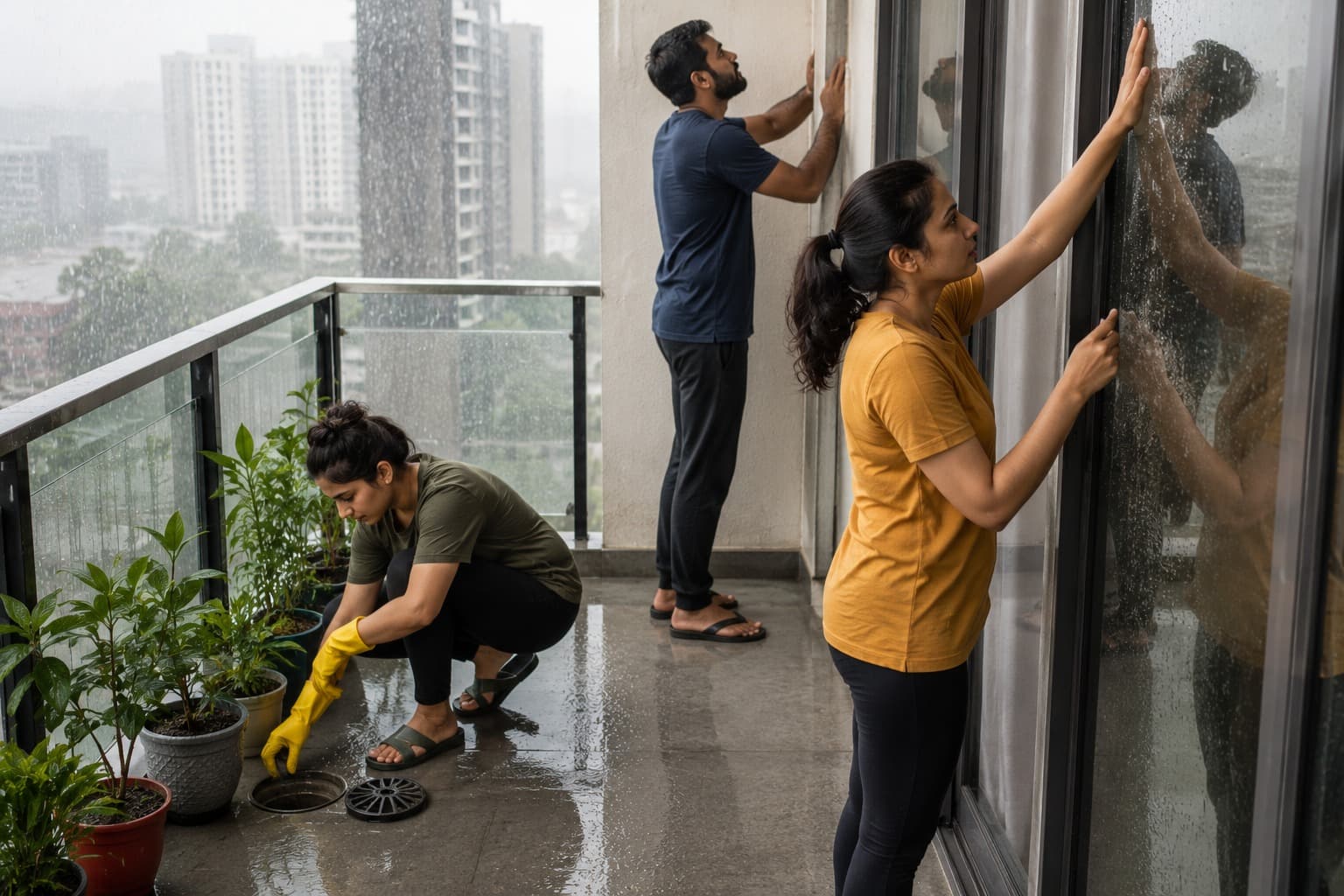
Every balcony drain, bathroom floor trap, and terrace outlet in your flat needs to be cleared before the monsoon arrives, not during it. When drainage points get partially blocked by dirt, dust, and debris accumulated over summer, standing water builds up faster than people expect.
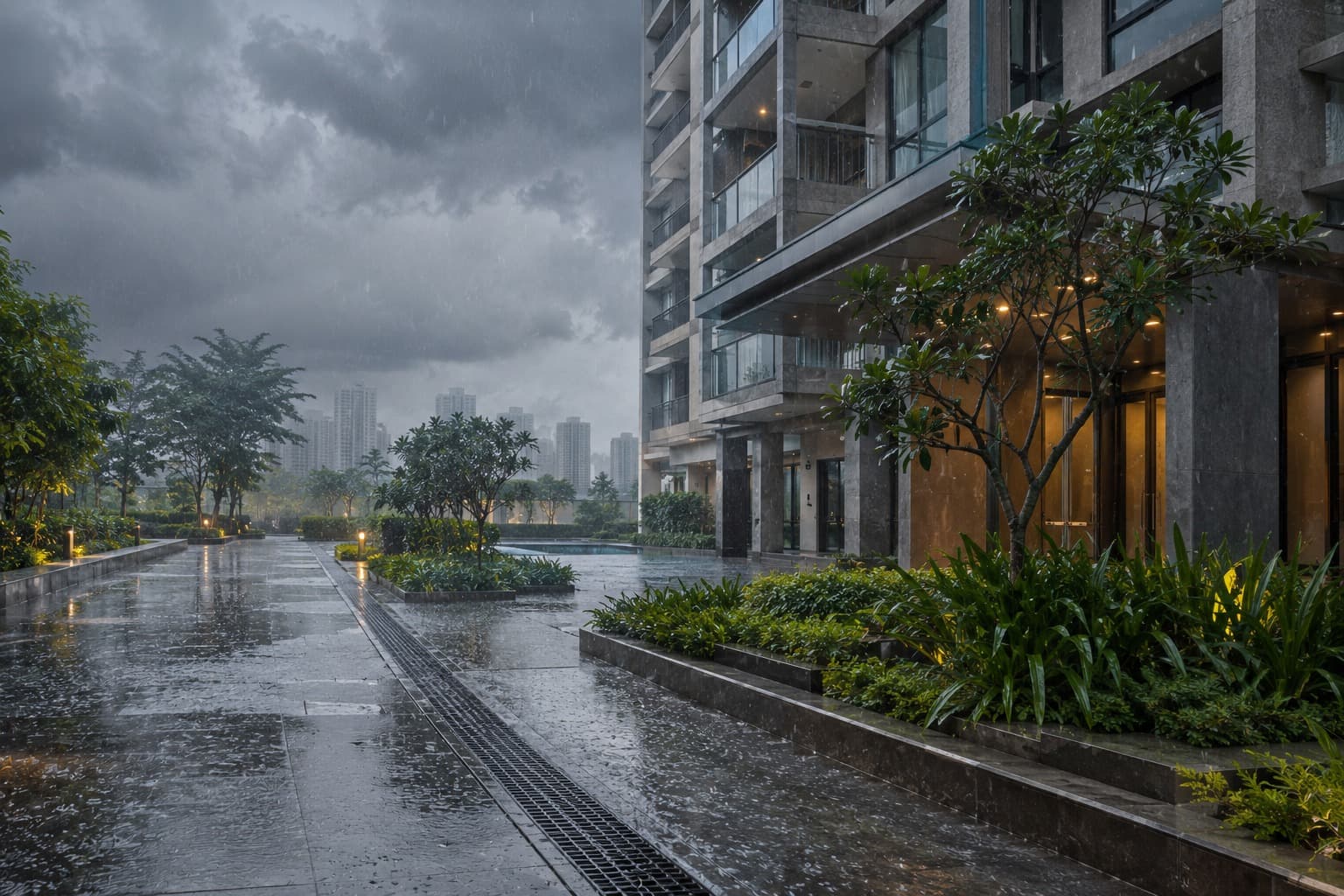
Balcony flooding pushes water under door frames. Roof terrace waterlogging eventually finds its way through ceiling slabs into flats below. Even a partially blocked drain in the bathroom can create enough standing moisture to accelerate grout deterioration. Spend twenty minutes clearing every drainage point in early June. The return on that time is significant.
Overlooking Wooden Furniture Near Damp Walls
Wooden items placed flush against external walls absorb moisture steadily through an entire monsoon season. Wardrobes, bookshelves, and beds positioned against walls that receive direct rainfall on the outside are the most vulnerable. By October, the wood has swollen, possibly warped, and the wall behind it has developed the kind of hidden mould that affects indoor air quality for months.
Moving furniture six to eight inches away from exterior walls costs nothing. Applying a protective wood polish or varnish coat before the rains adds a meaningful barrier against moisture absorption. Both steps together add years to your furniture's life.
Skipping the Electrical Check
Nobody thinks about their wiring until something trips. But loose connections, frayed insulation on older wiring, and uncovered junction boxes all become genuine hazards the moment humidity climbs to monsoon levels. Moisture and faulty insulation together create exactly the conditions for short circuits and electrical shocks.
A licensed electrician spending two hours checking your switchboards, visible wiring, and earthing connection before the season is a safety investment, not an optional one. This is particularly important in older apartments where wiring has not been upgraded in more than a decade.
Ventilating Too Little and Too Late
Most Indian flat owners shut every window the moment clouds appear. The result is an apartment that traps humidity indoors, creating ideal conditions for mould on walls, musty odours in wardrobes, and condensation on windows and tiles. Mould does not need flood-level moisture to grow. It only needs sustained humidity in an unventilated room.
On days when it is overcast but not actively raining, keeping windows open for a few hours circulates air enough to prevent moisture accumulation. A dehumidifier running in particularly affected rooms makes a measurable difference. Ventilation during the monsoon is not about letting rain in. It is about stopping stagnant moisture from taking hold.
Summary
5 common mistakes homeowners make during monsoon in India all share one pattern: small neglect that compounds under sustained rainfall into expensive, frustrating damage. How to protect your apartment from monsoon damage India starts with sealing cracks, clearing drains, and checking wiring before the season, not after the first drip appears. Monsoon waterproofing and drainage mistakes Indian homes encounter most are entirely preventable. The effort required is modest. The cost of skipping it is not.