
Pune Ring Road and Property Prices: What's Moving, Where, and Why It Matters
Summary
The Pune Ring Road is poised to reshape Pune's real estate. Western corridor localities are already seeing price appreciation, while the eastern belt offers future potential. Townships and logistics hubs will further boost property values.

Introduction
Pune has been building its real estate case on IT employment and expressway connectivity for two decades. But the city's growth geography has always had a problem. Traffic. Specifically, the kind of gridlock that makes a twenty-kilometre commute take ninety minutes on a bad day and turns peripheral localities into undersupplied real estate pockets simply because reaching them from the city centre is too painful. The Pune Ring Road is the infrastructure answer to that problem. At 172 kilometres of access-controlled expressway encircling the city, it is not a marginal improvement to an existing road. It is a rewiring of how Pune moves. And in real estate, how a city moves determines where people want to live and what they are willing to pay.
The Project: Scale and Current Status
MSRDC conceptualised the Pune Ring Road back in 2007. It has taken the better part of two decades to arrive at actual construction. The project spans two phases: the Western Ring Road connecting the Mumbai-Pune Expressway to the Pune-Satara Highway, and the Eastern Ring Road linking the Pune-Nashik Highway to the Pune-Solapur Highway. Combined, the alignment touches almost every major inbound and outbound corridor the city uses.
The Western phase has been progressing faster, with land acquisition largely complete and construction well underway. The Eastern phase has followed, with the Maharashtra government allocating over Rs 11,000 crore toward land acquisition across 32 villages in four talukas. The completion target, initially December 2026, has shifted to mid-2027 for the full project. The Western corridor is expected to be operational earlier.
Why This Project Moves Property Markets
Ring roads have a specific and well-documented effect on real estate in Indian cities. The Mumbai-Pune Expressway did it to Lonavala and Talegaon. The Katraj Bypass did it to Undri and Pisoli. Every time a new access-controlled corridor opens around or through a growing city, localities that were previously too inconvenient to consider suddenly become viable for residential demand.
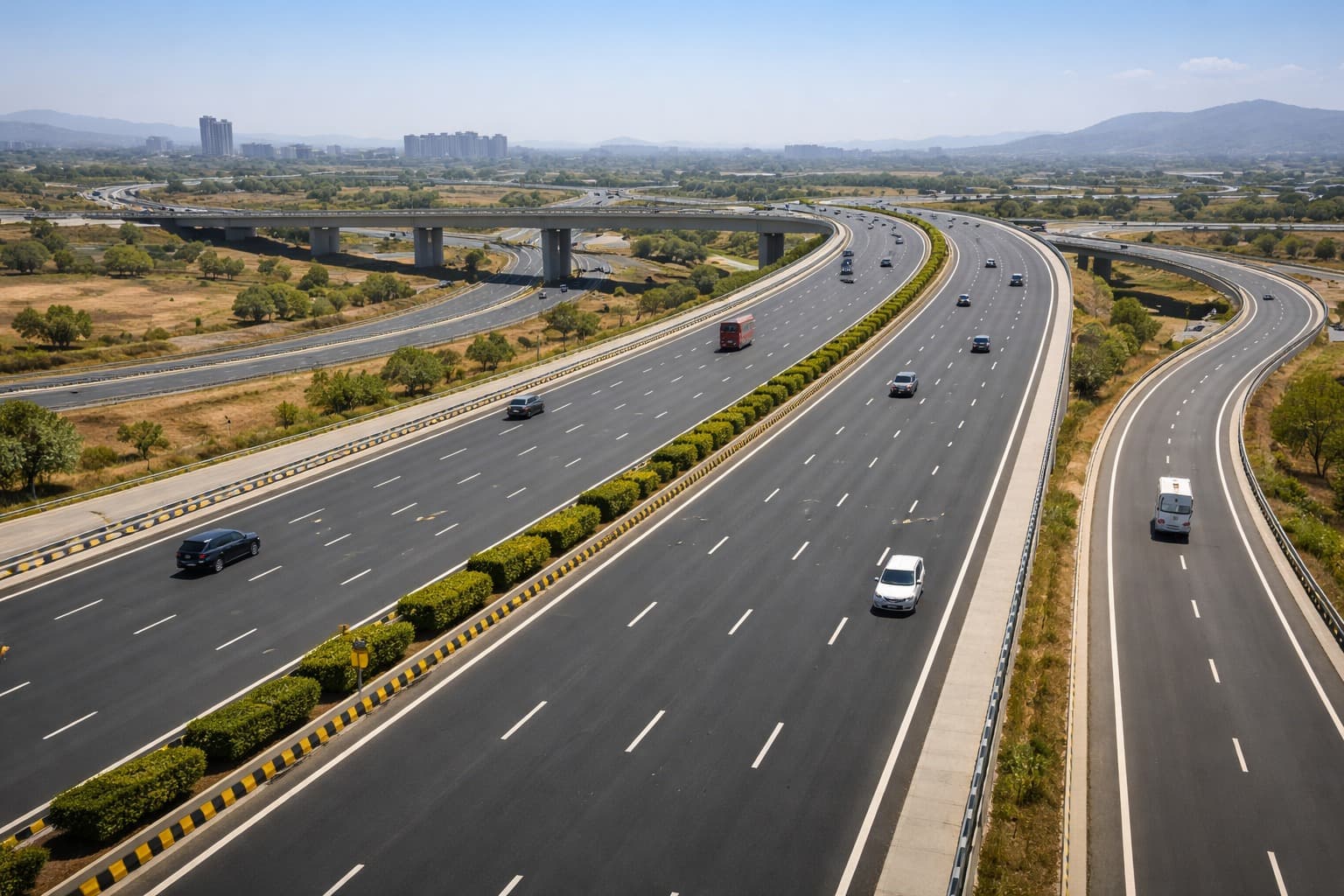
Pune Ring Road real estate appreciation works on the same logic. Areas that currently sit along the ring road alignment but feel peripheral and disconnected from city employment zones become, almost overnight after the road opens, the most conveniently located residential markets relative to multiple parts of the city simultaneously. That is the geometric advantage a ring road creates that a simple bypass or flyover cannot.
Western Phase Localities: Where Prices Are Already Moving
Ambegaon, Dhayari, Sinhagad Road, Pirangut, and the Sus-Marunji belt are the localities most directly in the Western Ring Road's influence zone. Pune Ring Road property prices in these areas have already begun reflecting anticipatory demand from buyers and investors who understand where the appreciation cycle is headed.
Pirangut, for example, was priced at Rs 3,500 to Rs 4,500 per square foot two years ago. Current asking prices in organised projects here have moved to Rs 5,000 to Rs 6,500. That is a 25% to 40% move before the road has even opened. The market is pricing in the connectivity that is arriving, not waiting for it to materialise.
Eastern Phase Localities: The Patient Investor's Territory
Wagholi, Kharadi, Phursungi, Manjri Budruk, and the Hadapsar periphery sit within the Eastern Ring Road's influence zone. These localities have been growing independently on the back of east Pune's IT and manufacturing employment, but the ring road will add a cross-city connectivity dimension that current road access simply cannot offer.
Pune property appreciation in the eastern belt has been steady rather than dramatic. Kharadi has matured into a fully established residential market. Wagholi remains mid-development with meaningful supply-demand tension. Phursungi and Manjri are still early enough in their cycles that buyers entering now are ahead of the appreciation wave rather than chasing it.
Township Development Along the Corridor
PMRDA has already initiated township planning along the ring road alignment. The Mhalunge-Maan township, planned across 700 acres and modelled loosely on the Hinjewadi IT Park concept, is one of fifteen new townships being conceptualised along the Phase 1 stretch alone. These are not small residential projects. They are integrated mixed-use developments that bring employment, retail, and housing into proximity in a way that creates self-sustaining demand ecosystems.

MSRDC is also developing five logistics hubs along the ring road. Logistics infrastructure attracts warehousing and manufacturing employment, which in turn generates residential demand from a workforce that wants to live near work. The MSRDC ring road Pune ecosystem is therefore not just about moving cars. It is about anchoring economic activity at strategic points along the outer city perimeter.
Risks Buyers Should Hold in Mind
No infrastructure-driven real estate story is without its honest complications. Land prices along the ring road corridor have already moved significantly in the past two years, which means the easy money has been partially captured. Buyers entering today are paying post-announcement pricing, not pre-announcement pricing.
Execution risk is real. The project has already slipped timelines once. Further delays would extend the period during which peripheral localities lack the connectivity that justifies current pricing. Buyers who need short-term liquidity should be cautious about locking capital into ring road corridor assets that may take three to four years to fully reflect their appreciation potential.
Summary
The Pune Ring Road is the single most consequential infrastructure project shaping property price movement across Pune's peripheral real estate markets in 2026 and beyond. Western corridor localities like Pirangut, Ambegaon, and Sus have already seen 25% to 40% appreciation in anticipation of the opening. Eastern belt areas including Wagholi, Phursungi, and Manjri offer the next appreciation wave for patient investors. With township development, logistics hubs, and improved cross-city connectivity arriving together, the Pune Ring Road corridor represents one of India's most infrastructure-backed real estate investment opportunities this decade.