
Open Layout vs Partitioned Layout: Which One Actually Saves More Space?
Summary
Comparing open vs. partitioned layouts for Indian homes reveals nuanced space savings. Open plans offer visual spaciousness but can complicate furniture, while partitioned layouts provide privacy and acoustic comfort despite consuming literal space. A hybrid approach often delivers optimal functionality.

Introduction
If you have spent any time looking at new apartments in Indian cities, you have almost certainly been confronted with this choice. The developer shows you a wide, column-free living area merged with the kitchen and dining space, then shows you another option where walls neatly separate every room. Both look appealing in brochures. But when it comes to which layout genuinely saves more space in an Indian home, the answer is less obvious than most people expect.
What an Open Layout Does to Your Space
An open floor plan removes internal walls between the living room, dining area, and kitchen, merging them into one continuous zone. The immediate effect is visual. The room looks larger than its actual square footage because your eye travels the full depth without interruption.
In cities like Mumbai, Pune, and Bengaluru, where the average apartment layout India has been shrinking steadily, this visual expansion is genuinely valuable. Removing a wall between the kitchen and living area can make a 600-square-foot flat feel closer to 750 in practical terms. Light travels better. Cross-ventilation improves. The unit breathes differently. What an open layout home is really eliminating is wall thickness and dead corridor space, which in compact homes adds up to more than most buyers realise.
The Case for Partitioned Layouts
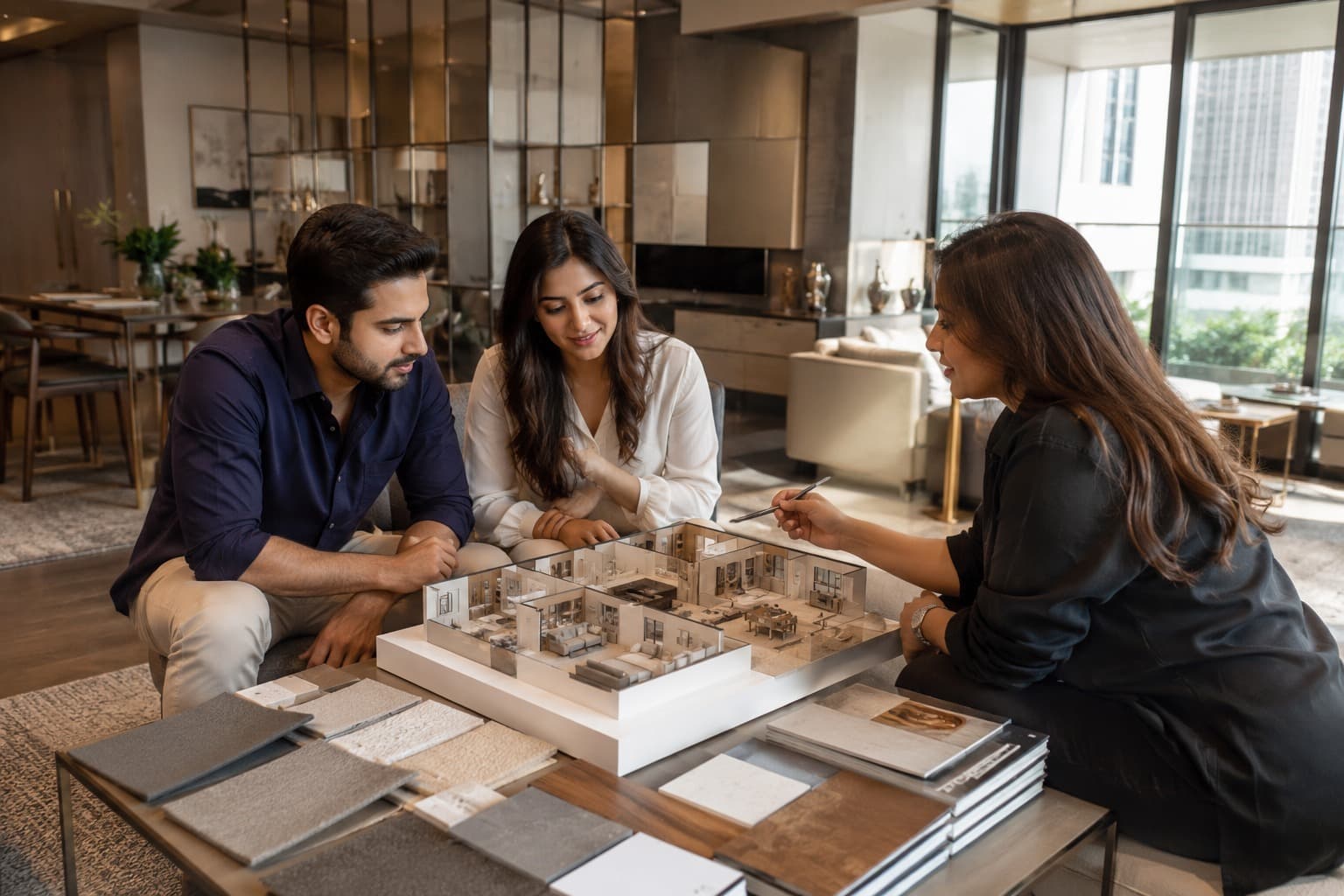
Partitioned layouts divide the home into distinct rooms, each with a specific function. For many Indian families this is not just a preference but a real requirement. Joint families, homes with work-from-home professionals, households with children studying while others cook or watch television — these everyday situations make defined rooms genuinely necessary.
There is an acoustic argument here that rarely gets enough attention. Noise travels effortlessly in open homes. A mixer grinder running while someone is on a work call in the same open zone is a daily problem, not a hypothetical. Walls solve that immediately.
Partitioned home design also allows you to air-condition selectively. Running an AC in one sealed bedroom rather than an entire open floor plan is meaningfully cheaper month over month. That financial reality matters to most Indian homebuyers across all income levels.
Where Each Layout Loses Space
Open layout homes lose space in subtle ways. Without walls as anchors, furniture placement becomes harder. Your sofa, dining table, and kitchen island must all coexist in one plane, and poor planning can make the space feel busier and more chaotic than a well-partitioned home of the same size.
Partitioned layouts lose space more literally. Internal walls consume actual square footage. Corridors connecting rooms eat area that could otherwise be used. A 900-square-foot apartment with heavy partitioning can feel noticeably smaller than one with a semi-open configuration at the same carpet area.
The Hybrid Approach That Most Designers Prefer
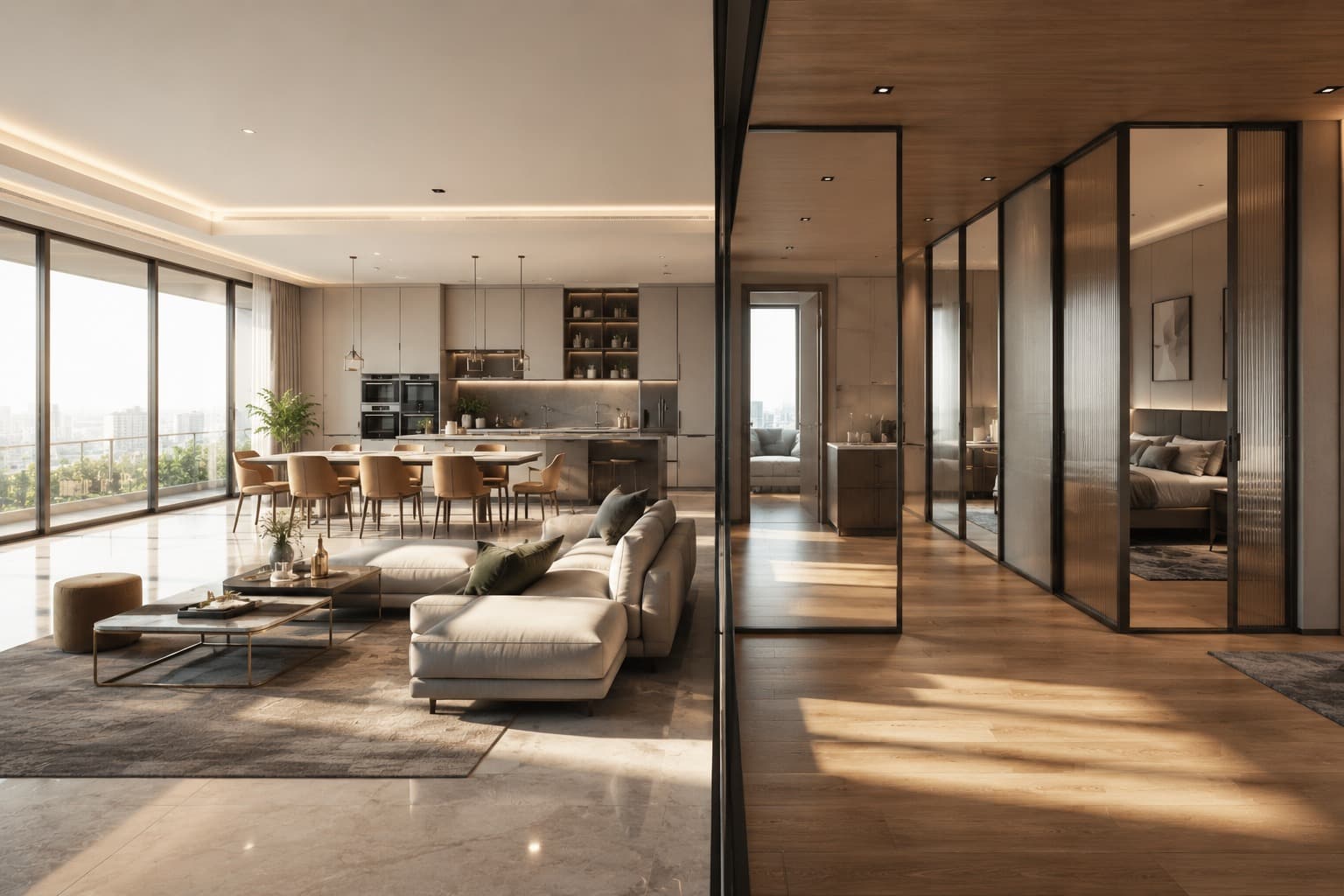
Most thoughtful interior designers in India today are moving away from the binary choice. A semi-open layout that keeps bedrooms fully enclosed but opens the kitchen toward the living and dining zone gives you the best of both configurations. You get visual spaciousness and natural light in the social areas of your home, while retaining sound separation and privacy where it matters.
Glass partitions, sliding panels, and open shelving used as room dividers are increasingly popular in mid-premium and luxury apartments. They create visual zoning without blocking light and can be adjusted as your family's needs evolve.
What Should Drive Your Decision
The right home floor plan depends entirely on who lives in the home and how they actually use it. A young professional couple will almost always be more comfortable in an open plan apartment India. A family with elderly members, school-going children, or regular work-from-home routines will function better in a partitioned or semi-open home.
Summary
The open layout vs partitioned layout debate has no universal answer. Open floor plans create perceived spaciousness, improve light and ventilation, and work beautifully for smaller households. Partitioned layouts offer privacy, acoustic comfort, and lower energy costs. For most Indian homebuyers, the semi-open layout combining open common areas with enclosed bedrooms delivers the most practical space-saving apartment result, without asking you to sacrifice either daily comfort or long-term functionality.