
Open Kitchen or Closed Kitchen: The Debate Every Indian Homebuyer Eventually Faces
Summary
The open vs. closed kitchen debate is crucial for Indian homebuyers, driven by unique cooking styles and family dynamics. Open kitchens offer visual space and social flow, while closed kitchens contain strong aromas and activity inherent in Indian cooking. Your lifestyle dictates the best choice for your home.

The Kitchen Question Nobody Warns You About
You spend months comparing floor plans, checking carpet area calculations, and negotiating with builders. Then somewhere in the final stretch of choosing your home, the kitchen layout question lands quietly on the table. Open kitchen or closed kitchen? It sounds like a simple preference. It rarely is.
For Indian homebuyers in particular, this choice carries more weight than most people initially realise. The way Indian households cook, the smells produced, the noise levels involved, and the cultural role kitchens play in daily life all feed into a decision that will affect how you live every single day.
What Actually Separates the Two
An open kitchen removes the wall between the cooking space and the living or dining area. The kitchen becomes part of the larger room, visually and functionally. It is a design borrowed heavily from Western residential architecture, and it has been gaining ground in Indian urban apartments, especially among younger buyers.
A closed kitchen operates as a separate, walled room with its own door. Traditional in Indian homes for generations, it contains cooking activity within a defined boundary. What happens in the kitchen stays in the kitchen.
Both have genuine merit. Neither is universally right. The honest answer depends on how you cook and how you live.
The Case for an Open Kitchen
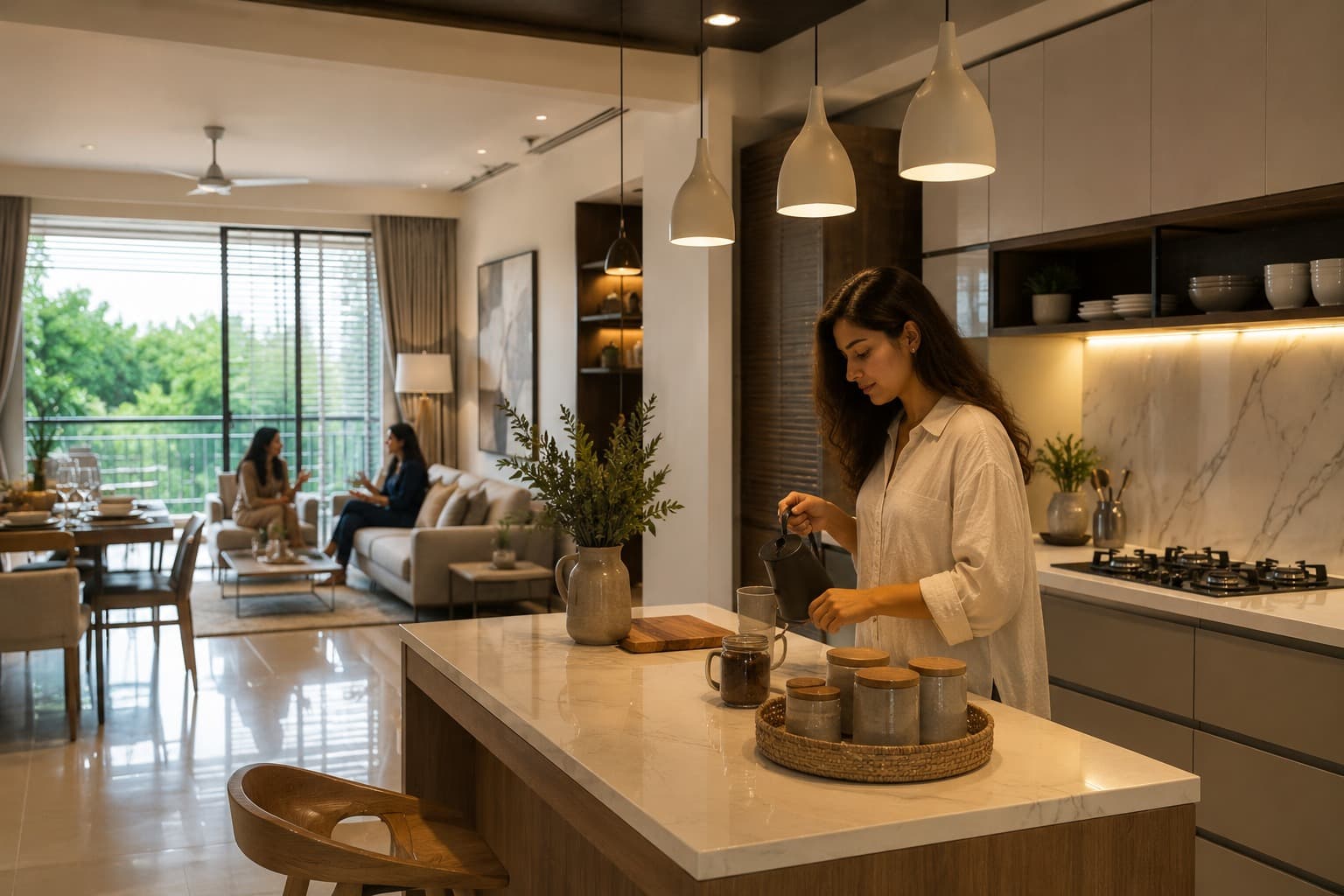
The biggest selling point of an open kitchen interior design is the sense of space it creates. Smaller apartments, which make up a large share of urban Indian housing inventory, feel noticeably more expansive when the cooking area merges with the living room visually. Natural light flows better. The person cooking does not feel isolated from guests or family.
For households where cooking is relatively simple, with limited frying and minimal use of strong spices, an open kitchen works well day to day. Entertaining is also dramatically easier. You can chop vegetables while your guests sit at the dining table and everyone remains part of the same conversation.
Modern open kitchen design ideas for small apartments solve storage limitations through overhead cabinets, islands, and modular shelving that double as visual dividers.
The Case for a Closed Kitchen
Here is the honest truth about why Indian families prefer closed kitchen layouts: we fry a lot, we temper spices in hot oil, and we cook on high flame for extended periods. That combination produces smoke, grease particles, and strong aromas that spread quickly through an open space.
In a closed kitchen, the exhaust chimney and ventilation work within a contained area. Walls do not accumulate cooking residue. The living room sofa does not absorb masala smells. Guests see a presentable space while the kitchen behind the door handles the real work.
For large joint families, a closed kitchen also provides clearer separation between work zones and social zones in the home. Children and elderly members are not constantly in a shared cooking space that may involve hot oil or sharp utensils.
The Hybrid Approach Gaining Popularity
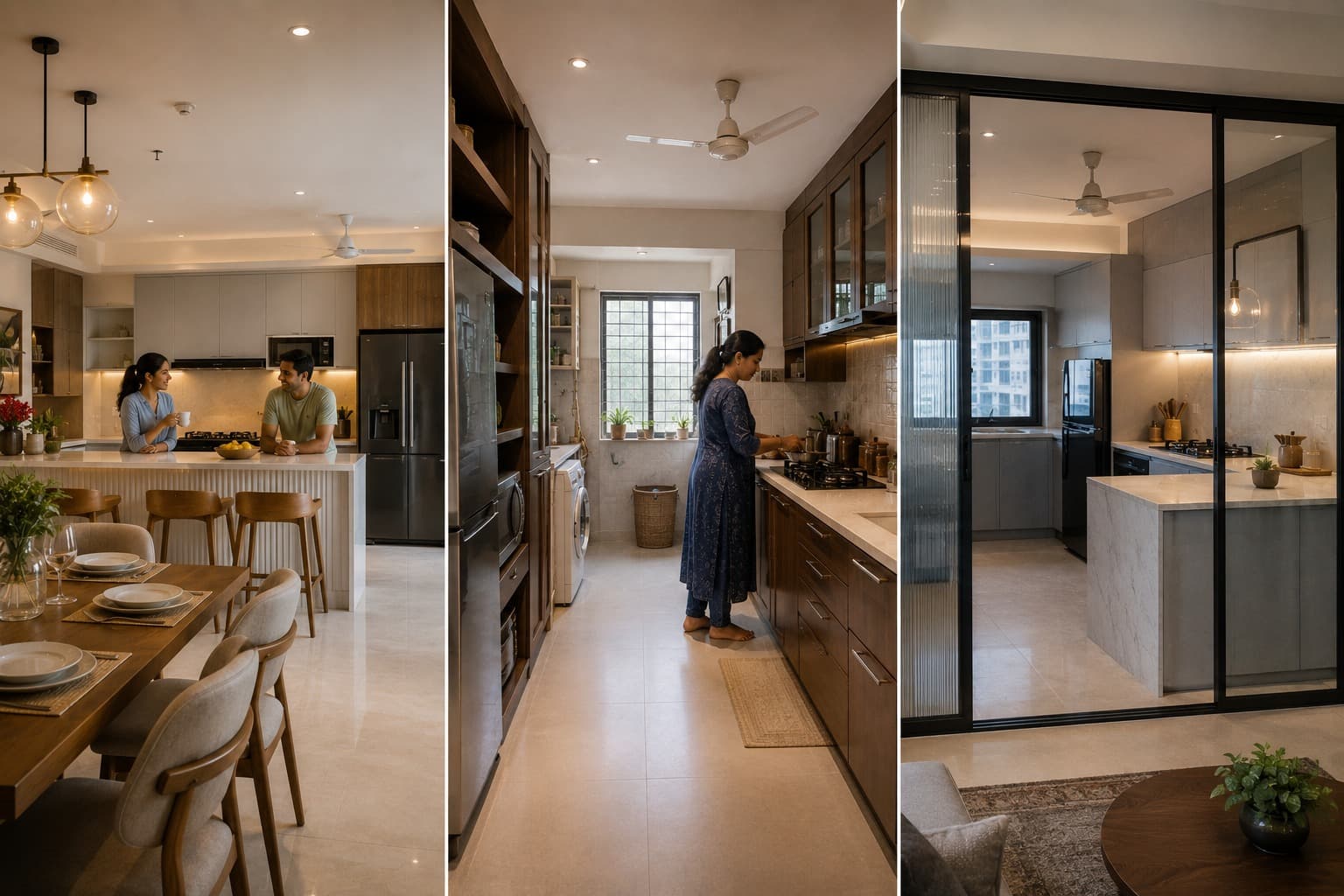
Many Indian homebuyers are now choosing a middle path. A semi-open kitchen uses a partial wall, a breakfast counter, or frosted glass partitions to maintain visual connection without fully merging the two spaces. Best kitchen design for Indian homes in the current market tends to lean toward this flexible configuration, particularly in apartments above 1,000 square feet.
Which One Should You Choose?
If you cook elaborate daily meals, live with children or elderly parents, or prioritise keeping living spaces clean and odour-free, a closed kitchen fits better. If you live alone or with a partner, prefer minimal cooking, and value a larger-feeling home, an open kitchen makes sense. Budget matters too. Open layouts save on one wall's worth of construction but may cost more in finishing and cabinetry quality.
Summary
The open kitchen vs closed kitchen debate has no single winner for Indian homes. Open kitchens offer visual space and social connection, while closed kitchens protect living areas from cooking smells and heat that are part of everyday Indian cooking style. The best kitchen design for Indian homes often depends on cooking habits, family size, and apartment layout. Understanding your own lifestyle clearly before deciding is the one piece of advice that applies to every homebuyer equally.