
Office vs. School: Where Should You Buy Your Home in India?
Summary
Choosing between a home near your office or a good school in India depends on your life stage. Prioritize office proximity for career-focused individuals, while families with children benefit from school zone properties due to convenience and resale value.

Introduction
Every homebuyer eventually faces a version of this conversation. The apartment near the office is tempting because the commute becomes a ten-minute auto ride. But the one near the reputed school is where the children will spend their formative years without the daily scramble of a long morning drop. Both arguments are compelling. Both carry real financial and lifestyle weight. Should you buy a home near your office or near a good school in India is not a question with one universal answer, but it has a structured way of being thought through that most buyers skip entirely. The answer changes depending on your life stage, family composition, career stability, and the specific city you are buying in.
The Case for Buying Near Your Office
The daily commute is one of the most consistently underestimated costs of homeownership in Indian cities. And the cost is not just financial. Time spent in Bengaluru's outer ring road traffic or Mumbai's suburban trains during peak hours does not return. A buyer who shaves 90 minutes off their daily commute by choosing office proximity housing effectively recovers over 500 hours a year. That is more than three months of working days.
The financial savings are equally real. Fuel costs, vehicle wear, auto fares, and the invisible productivity tax of arriving at work already exhausted all compound across years of a career. For a dual-income household where both partners work, multiplying those savings by two changes the calculation considerably.
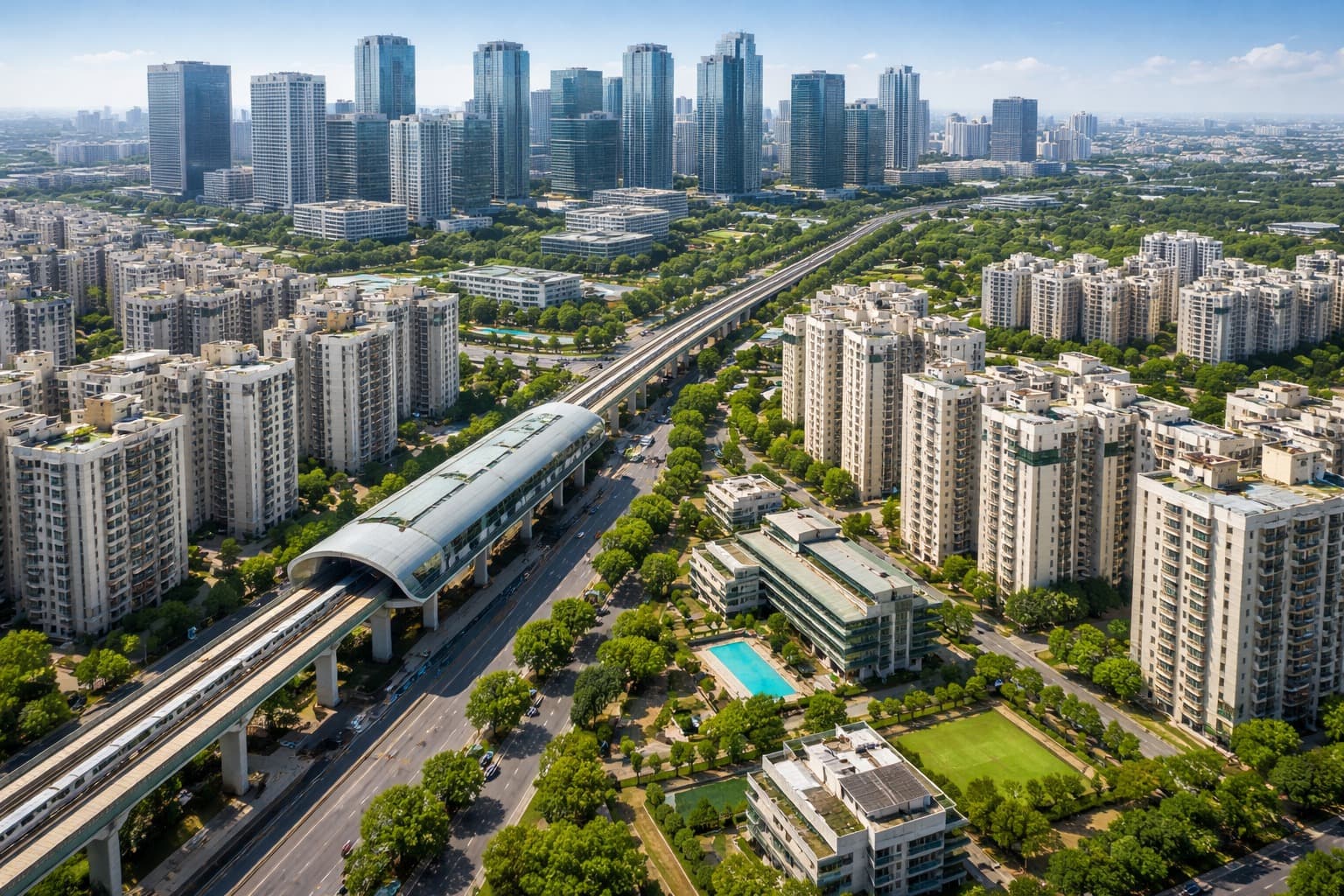
Office proximity property also tends to sit in commercial corridors with strong infrastructure, reliable power supply, better road maintenance, and metro access. These are not aesthetic advantages. They translate directly into rental demand for investors and resale liquidity for end-users. A property in a well-connected commercial zone rarely struggles to find tenants during vacancy periods.
The Case for Buying Near a Good School
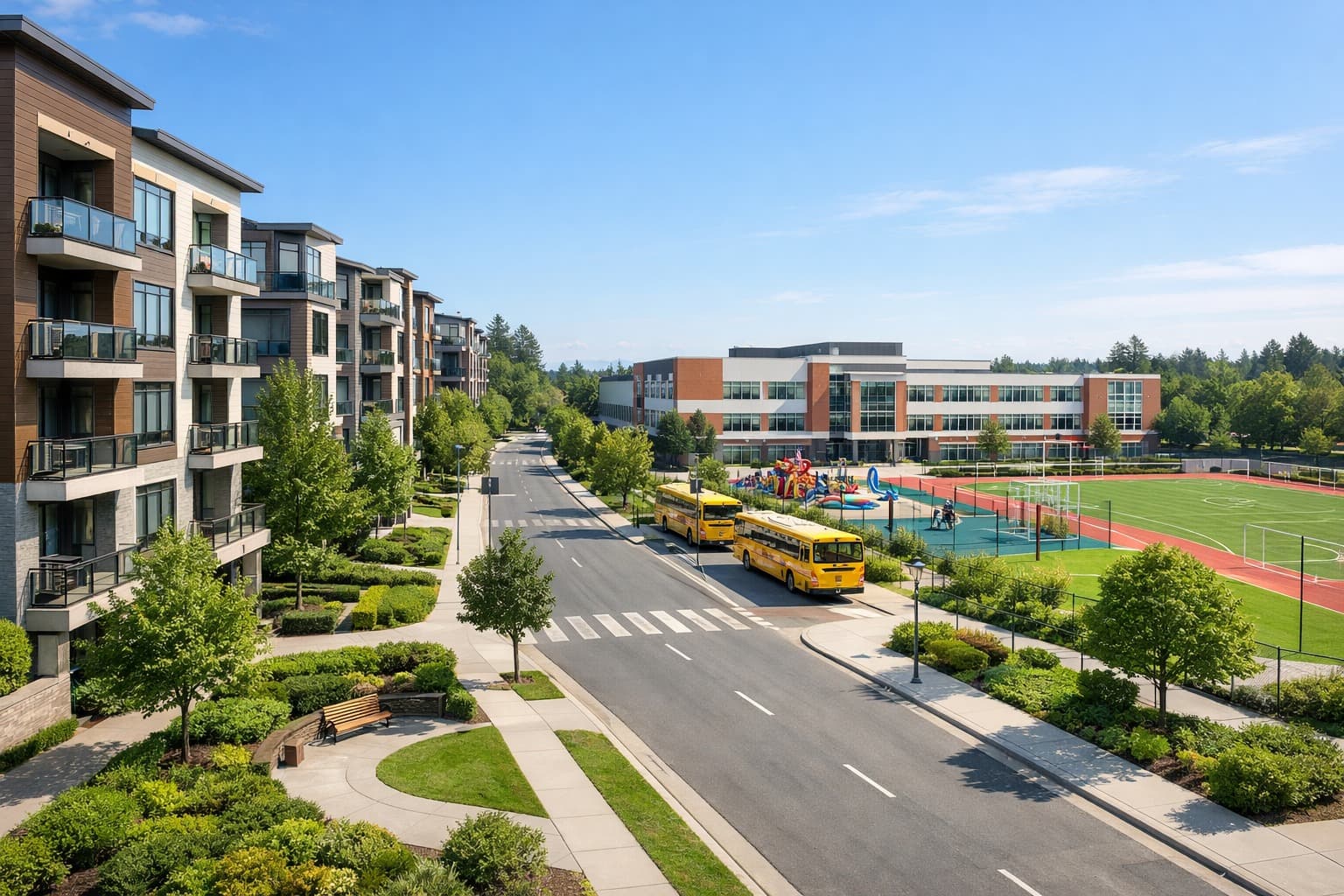
For households with children under twelve, the school proximity argument carries a weight that is difficult to argue against. The morning school run is a daily event for years. Parents who underestimated the stress of driving across town at 7:30 AM in Indian traffic consistently report it as the single decision they would revise in retrospect.
Beyond daily convenience, school zone property India carries a premium that holds remarkably well across market cycles. Homes located within catchment distance of reputed schools, whether CBSE, ICSE, or IB institutions with strong track records, attract a buyer profile that is both emotionally motivated and financially capable. That combination sustains demand even when the broader market is soft. An NAR-aligned principle holds in Indian markets too: a significant proportion of homebuyers in the 30 to 40 age bracket cite school quality as a primary location driver, which creates structural floor pricing in catchment zones.
The resale value of homes near reputed schools in India is also more predictable than office-proximity housing, because school reputations and catchment demand are far more stable than the commercial fortunes of a particular business district. Office corridors go through cycles. IT parks see vacancy swings. But a school with a 40-year reputation does not experience demand collapses.
When Life Stage Changes Everything
A 28-year-old single professional buying their first home in Pune's Hinjewadi corridor is making a completely different calculation from a 36-year-old couple with a four-year-old child buying in the same city. The first buyer should weight office proximity heavily. Commute hours are the primary drag on quality of life, career flexibility matters, and school zones are irrelevant to the immediate decision.
The second buyer needs to map their shortlist against school catchment areas before anything else. The five-year window when a child enters school and parents need reliable proximity is not reversible mid-tenure. And the premium paid for a school zone housing premium India address is not dead money. It is captured in resale when the family eventually upgrades.
What Cities Change About the Answer
Geography matters here. In Mumbai, where the train network is genuinely functional and covers the city comprehensively, living near a good school in a western suburb and commuting to an office in BKC is manageable in a way that a similar distance in Bengaluru, with its road-only dependency, is not. In Pune, the emergence of the Hinjewadi Metro corridor is changing the calculus by making office zones accessible from previously inconvenient residential belts. Hyderabad's dual-corridor structure, with HITEC City in the west and the Financial District anchoring the south, gives buyers more flexibility than cities with single commercial spines.
The general principle is: the better the public transport, the less penalty you pay for distance from office. Cities with weak transit infrastructure demand much stronger office proximity weighting in the location decision.
The Investor's Lens on This Question
If the purchase is purely for rental income rather than personal occupation, property near school resale value India wins over office proximity in most scenarios. School-driven rental demand is anchored by families who stay for the school tenure, often four to six years, and renew. That is a fundamentally more stable tenancy profile than a corporate executive on a two-year deputation who may transfer unpredictably.
Summary
Should you buy a home near your office or near a good school in India depends entirely on where you are in life. For young professionals without children, office proximity housing saves time, money, and daily stress while delivering solid rental appeal. For families with school-age children, school zone property India offers daily convenience, a stable peer community, and resale value that holds through market cycles. The smartest buyers find locations where both demands overlap, and in India's best-planned residential corridors, that overlap exists more often than buyers realise.