
Occupancy Certificate Verification: What Every Indian Homebuyer Must Do Before Moving In
Summary
Indian homebuyers must verify their home's Occupancy Certificate (OC) for legal compliance and safety. This guide covers checking OC via RERA, municipal bodies, or digital QR, protecting your utilities and resale.

Introduction
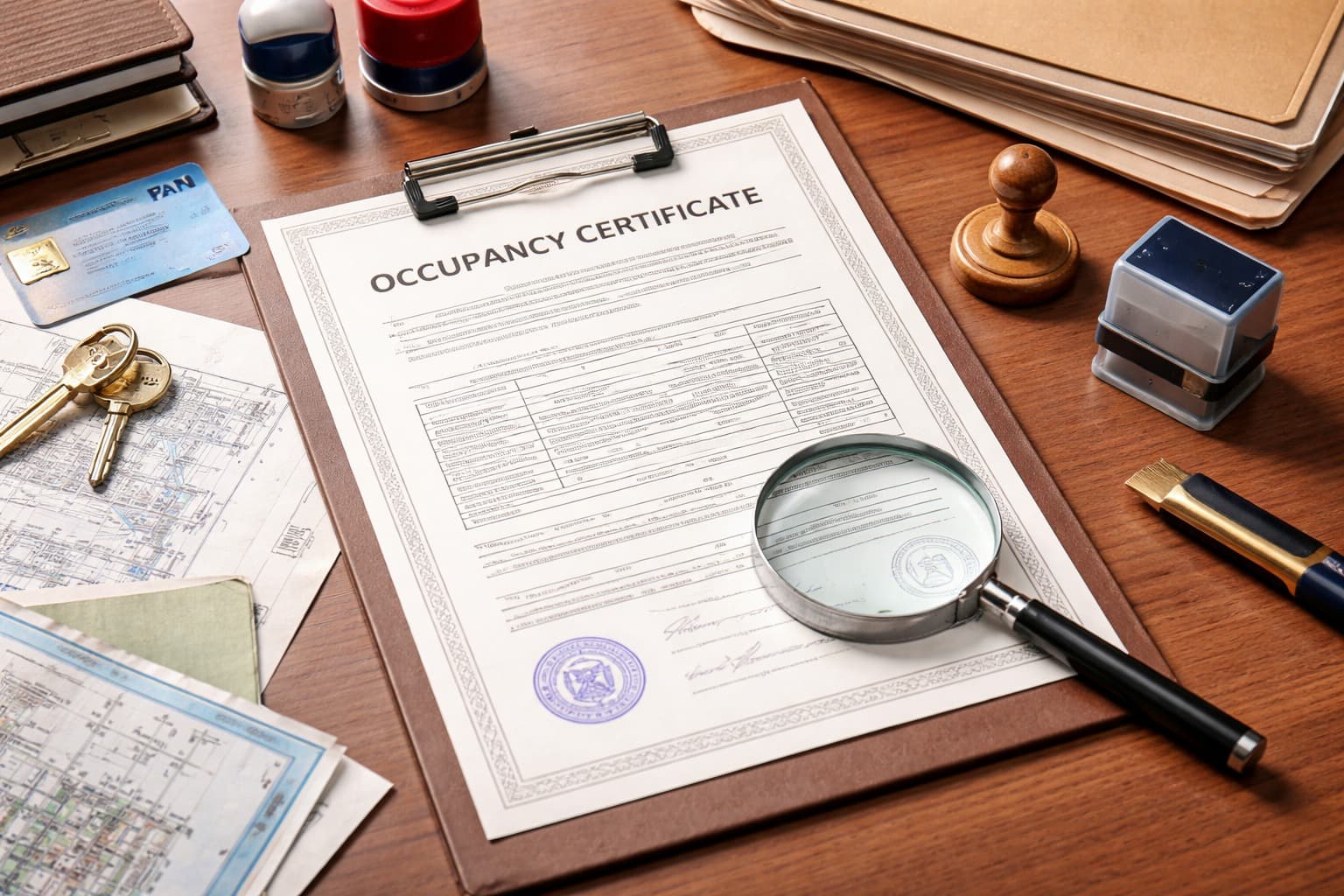
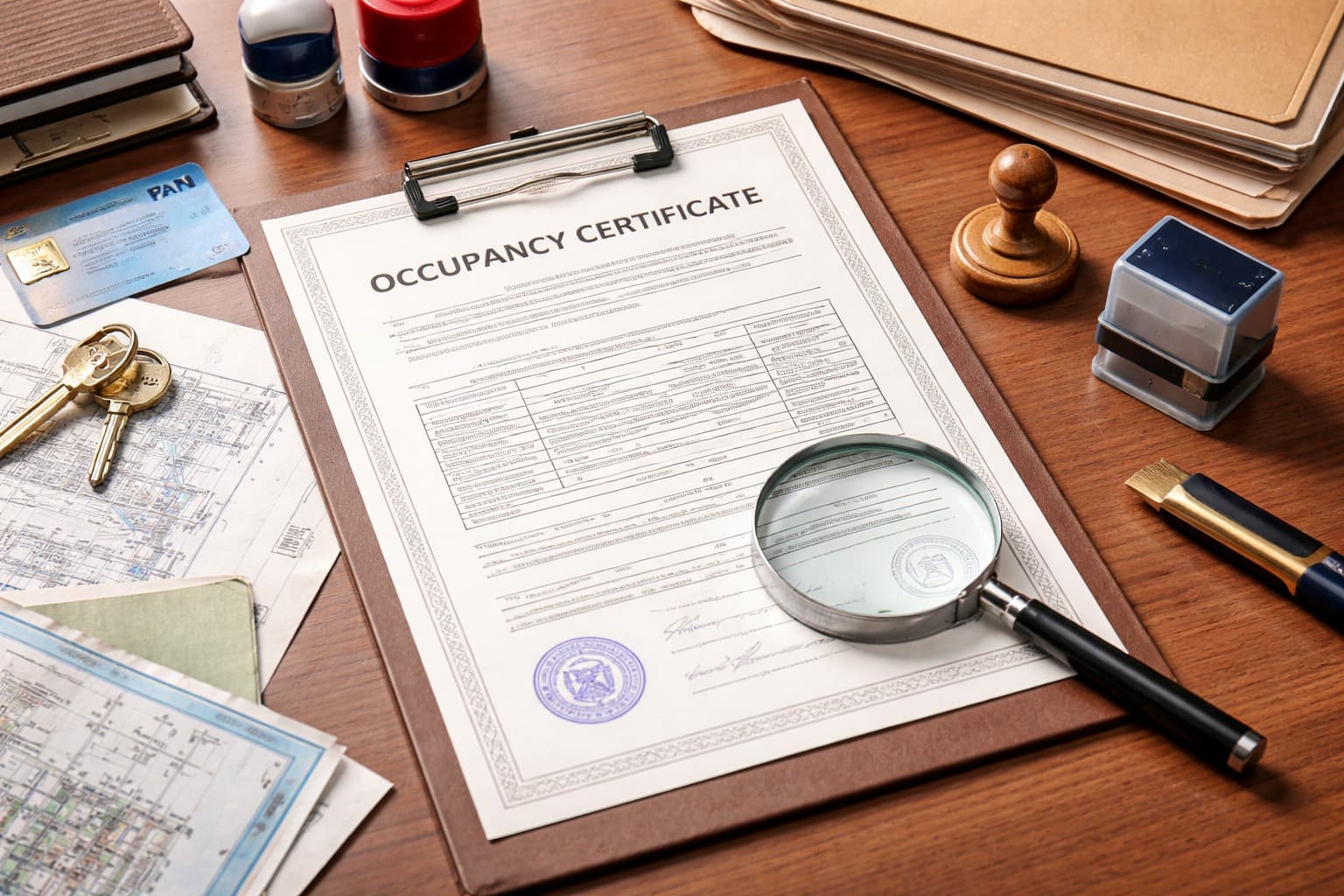
A lot of homebuyers sign their sale agreements, pay their instalments, and eventually collect their keys without ever stopping to seriously look at one document that matters more than almost anything else. The occupancy certificate, or OC as it is commonly called, is the municipal authority's formal declaration that a building is safe to inhabit and has been built according to the approved plan. Without a genuine, valid occupancy certificate, your home is technically an unauthorised structure in the eyes of the law.
And yet, a 2024 survey found that roughly 30 percent of multi-storey apartments in major Indian cities were occupied without proper OCs. That number should unsettle anyone currently in the process of buying a home.
What an Occupancy Certificate Actually Is
The OC is issued by the local civic body, which could be a municipal corporation, a development authority, or in some cases a panchayat, depending on where the property sits. It is issued only after officials physically inspect the completed building and confirm that the construction matches the sanctioned plan, that fire safety norms have been followed, and that all necessary No Objection Certificates have been obtained.
Think of it as the building's final clearance before residents are legally allowed to move in. A completion certificate confirms the building is done. The occupancy certificate goes one step further and says the building is safe and fit for actual use. The two are related but not the same thing.
Why Missing OC Is a Bigger Problem Than Most Buyers Realise
Banks are often the first to flag this issue. Most lenders will decline a home loan if the property lacks a valid occupancy certificate. So if you are buying a resale flat and planning to finance it, an absent OC can stop the transaction before it begins.
Permanent utility connections are another casualty. Municipal corporations typically do not sanction regular water and electricity connections to buildings without an OC. Residents in such buildings often make do with temporary connections that are both unreliable and more expensive. Then there is resale. A flat without property OC documentation will find very few willing buyers, and those who do come forward will negotiate aggressively on price.
Checking OC Through RERA: The Easiest First Step
For properties registered under the Real Estate (Regulation and Development) Act of 2016, the RERA portal is the most accessible starting point for occupancy certificate verification India. Every registered project has a RERA number, and builders are legally required to keep the project's documentation updated on the state portal.
In Maharashtra, the MahaRERA website allows you to enter a project's RERA number along with the pincode and then scroll to the uploaded documents section to find and download the OC. In Karnataka, the BBMP and Karnataka RERA portals offer similar tools. Telangana homebuyers can check through the GHMC website or the Telangana RERA portal. Delhi NCR buyers can cross reference through DDA and MCD portals. The process differs slightly from state to state, but the logic is the same: enter the project details, locate the documents section, and confirm whether the OC has been uploaded.
How to Check OC Directly With the Municipal Authority
How to verify OC online through a portal is convenient, but a direct confirmation from the issuing authority remains the most reliable method. If you have the OC number from the document the builder gave you, you can walk into the relevant municipal office with that number, your sale deed, and the building's reference details.
Ask the officer to confirm that the certificate exists in their records. A genuine OC will have a clear seal, a signature from the authorised official, a reference or file number, exact property address details, approved floor count, and a mention of the permitted usage, whether residential or commercial. If any of these elements are missing or inconsistent, that is a signal worth taking seriously.
Verifying the OC Document the Builder Gives You
Builders often hand over a copy of the OC at the time of possession. Do not treat this as the end of the process. Cross-reference every detail on that document against your sale deed and the building's sanctioned plan. The tower name, block number, number of floors, and address should all match exactly.
If your building has multiple towers and the OC only covers certain blocks, make sure your specific unit falls within the scope of that certificate. This is a detail many buyers miss entirely. Ask the builder whether the property OC covers the entire project or only specific phases, because partial OCs are not uncommon in large township developments.
Digital OCs and QR Code Verification
Several municipal bodies have shifted to digitally signed occupancy certificates that carry a QR code. This is worth knowing because scanning that QR code with your phone will pull up the certificate's details from the government's own server. It takes thirty seconds and immediately tells you whether the document is genuine or has been tampered with.
Always download a copy of the OC and save it both on a device and in cloud storage. A printed colour copy should also be kept separately. For OC authentication property purposes, a digitally signed certificate with a valid QR code is fully recognised by banks, courts, and authorities.
What to Do If the OC Is Missing
If the builder cannot produce an OC or keeps deferring the question, you have legal options. Under RERA, builders are prohibited from demanding full payment or handing over possession without providing a valid occupancy certificate. A complaint filed with the state's RERA authority carries an application fee of Rs 1,000 in most states. Filing an RTI application with the municipal body to understand the status of the building's OC is another route.
Do not let verbal assurances substitute for documented proof. Friendly conversations with site managers mean nothing if the building is later flagged by authorities.
Summary
Occupancy certificate verification is not a formality. It is one of the most consequential checks a homebuyer can perform before committing to a property. Whether you verify OC through the state RERA portal, confirm it directly at the municipal office, or scan the QR code on a digital certificate, the process is neither complicated nor time-consuming. A genuine valid occupancy certificate protects your access to utilities, loan eligibility, and future resale value. Given that OC check takes a few hours at most, there is no reason to skip it. Do the occupancy certificate verification India step properly, every single time.