
NRI Power of Attorney in India: Legal Requirements and Procedures
Summary
An NRI Power of Attorney allows NRIs to manage Indian affairs legally. Key steps include drafting, attestation, stamping, and registration while adhering to state-specific stamp duty and registration guidelines.

Introduction
For Non-Resident Indians managing assets back home, understanding the legal requirements for NRI power of attorney in India is extremely important. Distance should not become a barrier in handling property or financial matters. An NRI power of attorney India document allows a trusted person to act legally on behalf of the NRI. However, many people assume the process is simple paperwork. In reality, NRI POA requirements involve drafting, attestation, stamping, and registration rules that must be followed carefully.
What is an NRI Power of Attorney?
An NRI property POA is a written legal instrument through which an NRI appoints an agent to manage property, banking, or legal affairs in India. This authority can include selling property, signing agreements, handling disputes, or even managing loans. The purpose is convenience, but also protection. If drafted properly, the POA ensures that the NRI’s rights remain secure while transactions move forward smoothly.
Types of NRI Power of Attorney
NRIs can choose between General, Specific, Property, Limited, and Durable POA formats. A general POA grants broad authority, while a specific one limits the agent to defined tasks. For example, NRI POA for property sale is usually drafted as a specific POA to avoid misuse. Durable POA can continue even in case of incapacity, depending on the clause included. Selecting the correct type is not just technical; it defines how much control you hand over.
Documents Required for NRI POA
Before execution, certain documents must be prepared. The documents required for NRI POA typically include a valid passport, visa or residency proof, PAN card, Aadhaar if available, passport-size photographs, and address proof. Two witnesses are also necessary. Proper documentation ensures compliance with NRI POA requirements and reduces chances of rejection during registration.
Procedure to Create NRI POA from Abroad
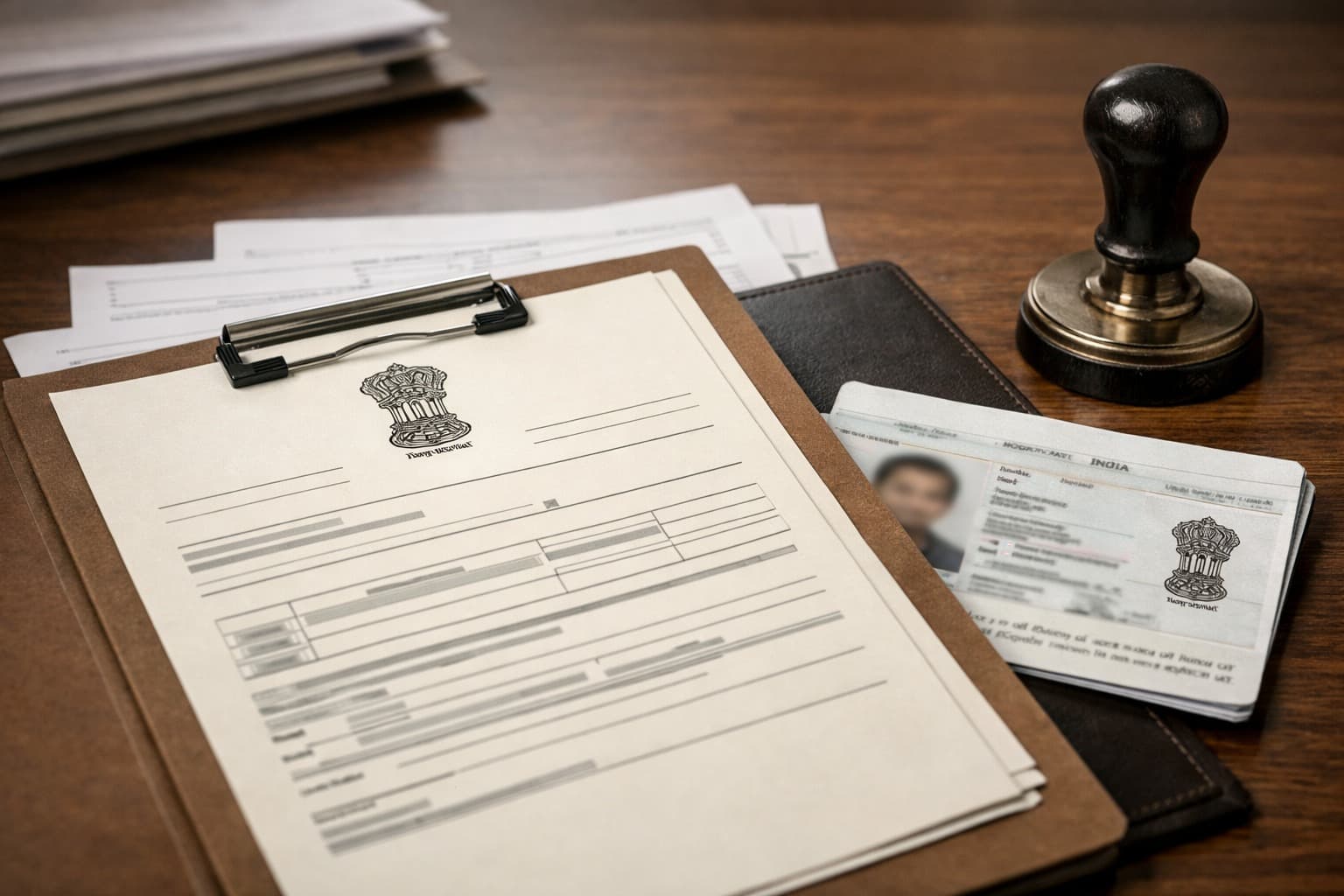
The procedure to create NRI POA from abroad involves multiple verification steps. First, the POA must be drafted, preferably with legal guidance. After drafting, it should be notarised in the country of residence. The next crucial step is Indian embassy attestation POA, where the Indian Consulate confirms the authenticity of the signature. Once attested, the document must be couriered to India. Within three months of receipt, it must be stamped according to stamp duty for NRI POA rules and presented for registration.
Registration Process in India
The NRI power of attorney registration process in India requires submission at the local Sub-Registrar office where the property is located or where the attorney resides. While registration is not mandatory for all POAs under the Indian Registration Act, property-related POAs usually require compulsory registration, especially when they involve sale of immovable property. Many people ask how to register NRI POA in India properly. The answer lies in ensuring stamping is done first, followed by physical appearance of the attorney with identification documents and witnesses.
Stamp Duty and Legal Compliance
Understanding stamp duty rules for NRI POA property transactions is essential. Stamp duty varies from state to state and may depend on whether the attorney is a close relative. In some states, concessional duty applies for family members, while higher charges apply for others. Non-payment or underpayment of stamp duty for NRI POA can invalidate the document. Therefore, checking state-specific guidelines is not optional; it is necessary.
Validity and Revocation
Once executed and registered, the POA remains valid for the duration mentioned in the deed. If no period is specified, it generally remains valid until revoked. Knowing how to revoke NRI power of attorney in India is equally important. Revocation requires drafting a cancellation deed, notifying the attorney, and registering the revocation with the Sub-Registrar. Public notice may also be issued in certain cases. This ensures that outdated authority cannot be misused later.

Attestation Methods: Legalisation and Apostille
There are two common authentication methods for overseas execution. Legalisation requires attestation by the Indian Consulate under relevant diplomatic laws. Apostillisation, governed by the Hague Convention, verifies the authenticity of the document for member countries. Regardless of the route chosen, POA attestation India standards must be satisfied before the document is accepted for local use.
Accountability and Dispute Handling
If disputes arise due to misuse by the attorney, the principal is not automatically liable. However, the NRI may need to prove lack of knowledge in court. This is why careful drafting, clear limits, and reliable agent selection are essential. A properly executed NRI POA registration reduces the risk of litigation and strengthens legal standing in case of conflict.
Conclusion
An NRI Power of Attorney is more than a convenience document. It is a structured legal arrangement governed by Indian laws, registration rules, and stamp duty regulations. By understanding documentation, attestation, stamping, and registration procedures, NRIs can safely delegate authority without losing control. Proper compliance ensures that property transactions and financial decisions continue seamlessly, even across borders.
Summary
An NRI Power of Attorney enables overseas Indians to manage property and financial matters in India legally and efficiently. It requires proper drafting, notarisation, embassy attestation, stamping, and registration to remain valid. State-wise stamp duty rules and compulsory registration for property transactions must be carefully followed. NRIs should select trusted agents and clearly define authority limits to avoid misuse. Understanding execution, compliance, and revocation procedures ensures secure transactions and smooth management of Indian assets from abroad.