
Noise Level Inspection in Apartments: A Guide for Indian Homebuyers
Summary
Don't overlook noise levels when buying an apartment in India! This guide details how to inspect for noise pollution, covering legal standards, noise sources, and inspection techniques to ensure a peaceful home.

Introduction
Most homebuyers in India spend hours evaluating square footage, floor plans, views, and amenity lists. Very few spend even fifteen minutes thinking about noise. That oversight has a way of making itself known at eleven at night when the neighbour upstairs decides to rearrange furniture, or at six in the morning when the temple loudspeaker kicks in three buildings away.
Noise level inspection in apartments is one of the most underrated parts of the property evaluation process. It costs nothing extra, requires no specialist equipment for a basic check, and can save years of daily frustration. Done right, it tells you things about a building's construction quality that no brochure ever will.
What the Rules Actually Say About Residential Noise
India does have standards in place, though enforcement is uneven at best. The Central Pollution Control Board specifies that acceptable ambient noise pollution residential apartment levels in residential zones should not exceed 55 decibels during daytime hours and 45 decibels at night. For silence zones near hospitals and schools, the limits are tighter at 50 and 40 decibels respectively.
To put those numbers in context, a normal conversation between two people registers around 60 decibels. A busy road generates 70 to 80 decibels. So the prescribed residential standard is actually quieter than typical conversation, which means a flat sitting next to a main road is almost certainly exceeding it through most of the day. Knowing this benchmark before visiting a property gives you a useful reference point even without a sound meter in your hand.
The Five Sources of Noise You Need to Evaluate
Common sources of noise pollution in Indian apartments fall into predictable categories, and each one requires a slightly different inspection approach.
External traffic noise is the most obvious. A flat on the fourth floor of a building facing a major road will receive a different sound experience than one on the same floor facing an internal courtyard. The direction your windows and balcony face matters enormously, and this is something you can assess simply by standing in the flat for ten minutes with the windows open.
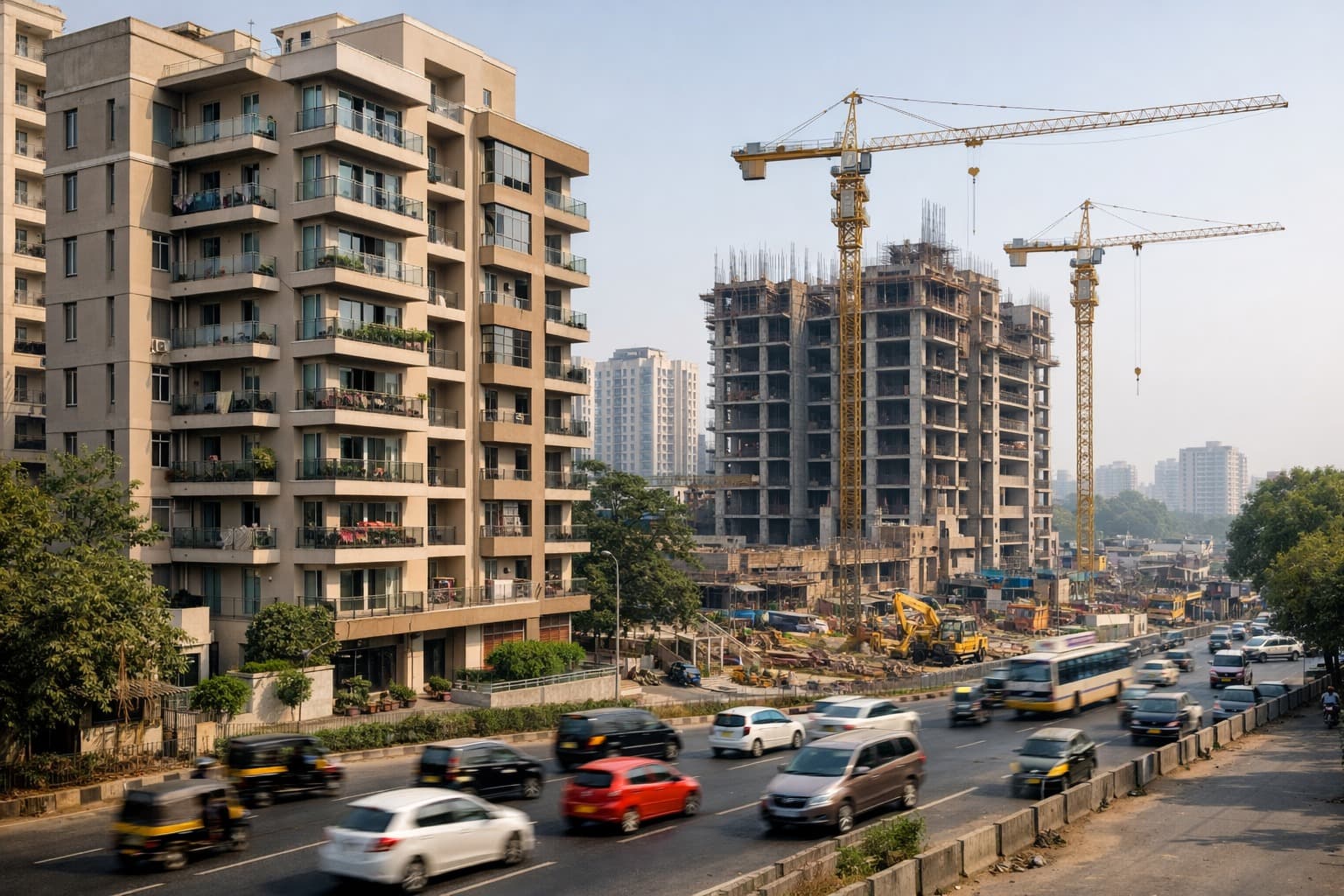
Neighbour-to-neighbour transmission through walls and floors is the second category and arguably the trickier one to spot during a brief visit. This depends almost entirely on the slab thickness and wall construction quality. A building with 150 to 200 millimetre concrete slabs and properly filled brick walls will transmit significantly less sound than one built with thin gypsum partitions or lightweight block construction. Ask the developer or agent directly about slab thickness. If they cannot answer, that itself is informative.
Plumbing noise is something almost nobody checks. In buildings with shared vertical plumbing risers, the sound of water rushing through pipes after someone flushes two floors above you can be genuinely disruptive in a quiet bedroom at night. During your site visit, ask someone to use a tap or flush in an adjacent unit while you stand near the bathroom wall and listen.
Lift and mechanical equipment noise affects units that sit adjacent to lift shafts or near pump rooms and generator rooms. These units are sometimes priced slightly lower, and the reason becomes obvious the first time the lift motor runs at midnight. Check the floor plan for your unit's proximity to these elements before shortlisting.
Finally, social noise from common areas, clubhouses, swimming pools, and children's play zones affects certain units more than others depending on their position within the building. A ground floor flat adjacent to the clubhouse entrance will have a very different evening soundscape than a mid-floor unit facing away from the amenity zone.
How to Actually Inspect Noise During a Site Visit
How to check wall and floor soundproofing quality during apartment site visit does not require any equipment beyond your own ears and a bit of attention.
Visit at different times of day if possible. A morning visit on a weekday tells you one thing. An evening visit on a weekend tells you something completely different. Traffic patterns, social activity in the building, and neighbourhood noise all vary significantly across the day.
When you are inside the flat, turn everything off and simply listen for two to three minutes. What can you hear? Is there a consistent traffic hum? Can you hear the lift? Any sounds from adjacent units? That baseline silence test is more revealing than most buyers expect.

Knock gently on the interior partition walls. A hollow sound suggests lightweight drywall or thin block construction with poor acoustic performance. A dull, dense sound suggests solid brick or concrete, both of which transmit less airborne noise between units.
Check window quality carefully. Apartment soundproofing quality at the facade level depends heavily on glass thickness and frame sealing. Double-glazed uPVC windows with proper rubber sealing cut external noise dramatically compared to single-pane aluminium frames with gaps. Run your hand along the frame edges when the window is closed. Any air movement means sound is getting in.
What to Ask the Developer
Beyond your own observations, a few direct questions during the site visit can surface useful information about apartment noise insulation India quality.
Ask about the construction system, whether it is conventional brick and concrete, precast, or lightweight steel frame. Conventional construction generally performs better acoustically. Ask specifically about slab thickness, which should ideally be 150 millimetres or above for reasonable sound insulation between floors. And ask whether the building has any acoustic treatment in common areas, particularly the lobby and stairwells, where hard surfaces create echo that travels into adjacent units.
If the developer cannot answer basic construction questions, it is worth asking to speak with their technical team or reviewing the building plans, which RERA mandates be publicly available for registered projects.
Summary
Noise level inspection in apartments is a critical but routinely overlooked step in the Indian homebuying process. Acceptable residential noise pollution standards in India cap daytime levels at 55 decibels, a benchmark many urban apartments exceed simply due to location. A thorough noise inspection covers external traffic exposure, wall and floor transmission quality, plumbing sounds, lift proximity, and social noise from amenity zones. Visiting at multiple times of day, listening carefully, testing wall density, and checking window soundproofing quality during site visits costs nothing and reveals construction realities that no marketing brochure will ever honestly disclose.