
New Launch vs Ready-to-Move Property in India: A Cost Comparison
Summary
Choosing between a new launch and ready-to-move property in India involves more than just the initial price. GST, pre-EMI, tax benefits, and appreciation timing significantly impact the final cost. This guide helps you make an informed decision.

Introduction
The question lands on every homebuyer's desk at some point. A new launch is priced attractively, the brochure is stunning, and the developer promises possession in three years. Across the street, a ready-to-move flat in the same locality costs 15 percent more but is available today. Which one actually costs less? The honest answer requires looking beyond the sticker price, because the new launch vs ready to move decision involves tax implications, loan structure, rental costs, and appreciation timing that together determine the real financial outcome.
The Headline Price Difference
New launches in Indian metros are typically priced 10 to 30 percent below comparable ready properties in the same micro-market. A 3BHK in Bengaluru's Electronic City corridor might open at Rs 70 lakh at pre-launch while an equivalent ready flat in the same area is quoted at Rs 90 lakh. That Rs 20 lakh difference looks compelling on paper. But it is the starting point of the comparison, not the conclusion.
Under construction property India prices follow a phase structure. Early buyers get the lowest rate, but prices are revised upward with each construction milestone. By the time the project reaches its final 20 percent of construction, prices often approach or match the ready-to-move rate in the same locality. The entry discount is real, but it compresses as the project matures.
The GST Factor Most Buyers Underestimate
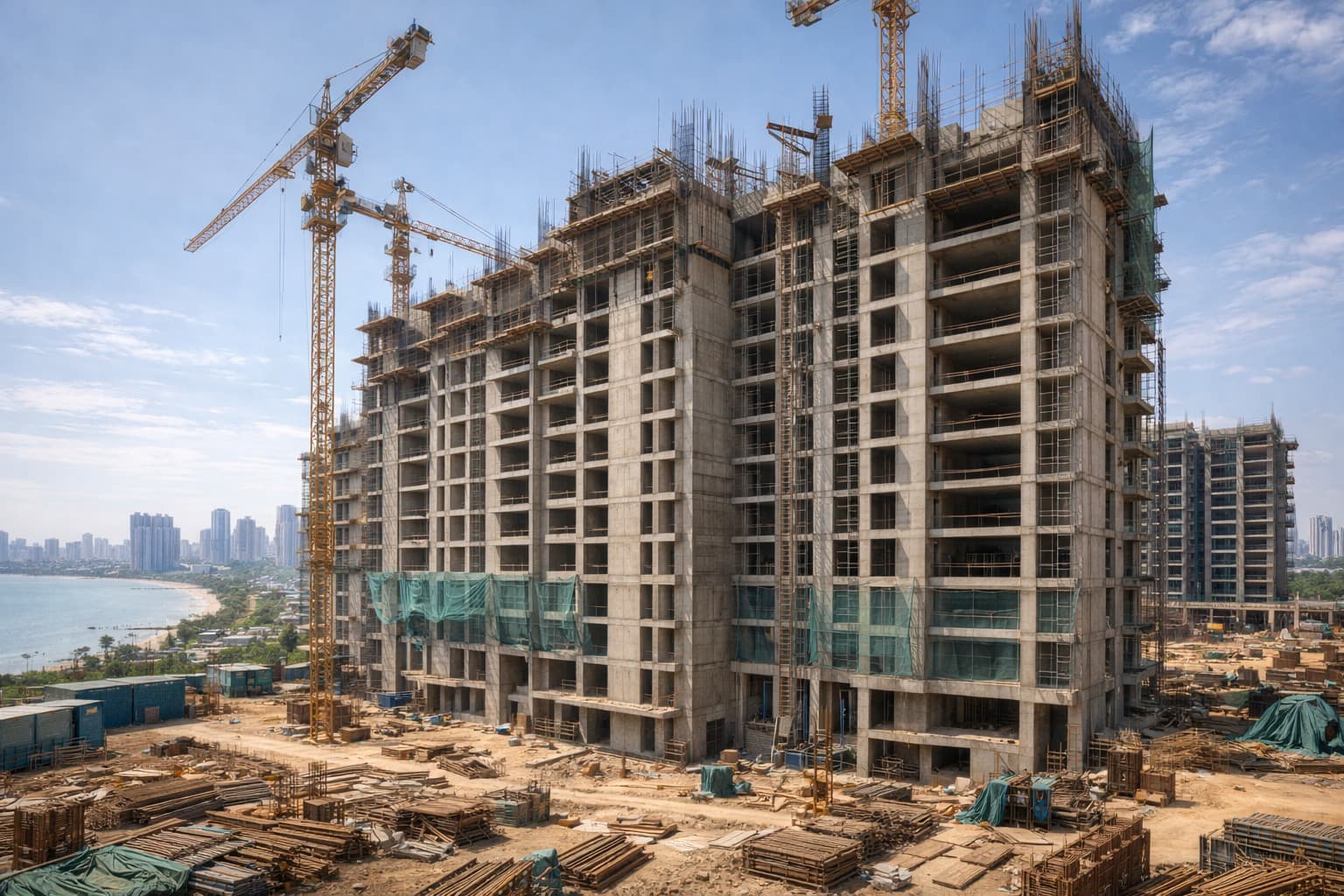
GST on under construction property India is one of the largest hidden cost differentials in this comparison. Under current tax rules, under-construction properties attract 5 percent GST on the transaction value. Affordable housing units below Rs 45 lakh are charged at 1 percent. Ready-to-move properties that have received their Completion Certificate are entirely exempt from GST. On a Rs 80 lakh under-construction flat, 5 percent GST translates to Rs 4 lakh added to your cost. That amount alone erases a significant portion of the launch discount and rarely appears prominently in the developer's marketing material.
Pre-EMI and Dual Payment Burden
For buyers who are renting while their new launch property India is under construction, the financial picture includes a cost that does not appear in any comparison chart: dual payment burden. Most banks disburse home loans against construction progress and charge Pre-EMI interest on the disbursed amount during construction. This is interest only, not principal repayment. A buyer paying Rs 20,000 Pre-EMI monthly and Rs 25,000 in rent simultaneously is committing Rs 45,000 toward housing costs every month for two to four years. Add up 36 months of that and the number is Rs 16.2 lakh, which is pure cost without any equity being built.
Ready-to-move buyers begin full EMI immediately, but that EMI is also building principal. The rent stops the moment possession happens.
Tax Benefits and When They Begin
Under construction home loan tax benefits are structured differently from those on ready properties. Section 80C allows principal repayment deductions and Section 24(b) allows interest deductions, but these apply only after possession of an under-construction flat. The pre-construction interest is accumulated and then claimed in five equal installments post-possession. A buyer waiting three years for possession loses three years of annual interest deductions worth up to Rs 2 lakh per year under 24(b). That foregone deduction in the 30 percent tax bracket represents a real cash cost of Rs 60,000 per year or Rs 1.8 lakh across three years.
Ready-to-move buyers begin both sets of deductions from the first year of loan repayment. Financial advantages of ready to move homes over new launches India are most visible in this tax calculation when buyers are in higher income brackets.

Appreciation and Timing
New launch property price advantage India does deliver on appreciation in growth corridors when developers deliver on time. A buyer who entered a corridor early and received possession on schedule has typically seen 20 to 35 percent appreciation by the time the project completes. That is the genuine return case for patient investors. But delayed possession, which remains a structural risk in Indian real estate despite RERA, converts that appreciation story into a carrying cost story very quickly.
Ready-to-move properties in proven localities appreciate more steadily and predictably, making them better suited for buyers with fixed timelines or families who cannot absorb a two-year possession delay.
Summary
Cost comparison between new launch and ready to move property in India must account for GST savings, Pre-EMI burden, foregone tax deductions, and rental overlap before arriving at a true number. GST savings on ready to move property vs under construction India alone can range from Rs 1 lakh to Rs 5 lakh depending on property value. Which is better new launch or ready to move flat India 2025 depends on buyer profile: patient investors with stable rental accommodation and a five-year horizon benefit from new launches in growth corridors, while end-users seeking immediate occupancy and financial certainty are better served by ready-to-move options despite the higher headline price. Both can create wealth. The question is which one fits your actual life.