
Navi Mumbai Property Price Growth After NMIA: A Comprehensive Analysis
Summary
NMIA's launch significantly boosted Navi Mumbai property values, especially in Panvel, with apartment prices rising 74% since 2021. Enhanced connectivity via Atal Setu and projected ROI make it a prime investment zone.

Introduction
The launch of the Navi Mumbai International Airport (NMIA) on December 25, 2025, marks a defining moment for India’s urban and real estate landscape. What was once considered a long-term infrastructure promise has now become a powerful economic engine, reshaping demand, pricing, and investor sentiment across Navi Mumbai. The airport’s operational debut has already translated into sharp capital appreciation, especially in Panvel and surrounding micro-markets, signalling a new growth cycle driven by connectivity, employment, and global accessibility.
NMIA Launch: A Historic Trigger for Real Estate Growth
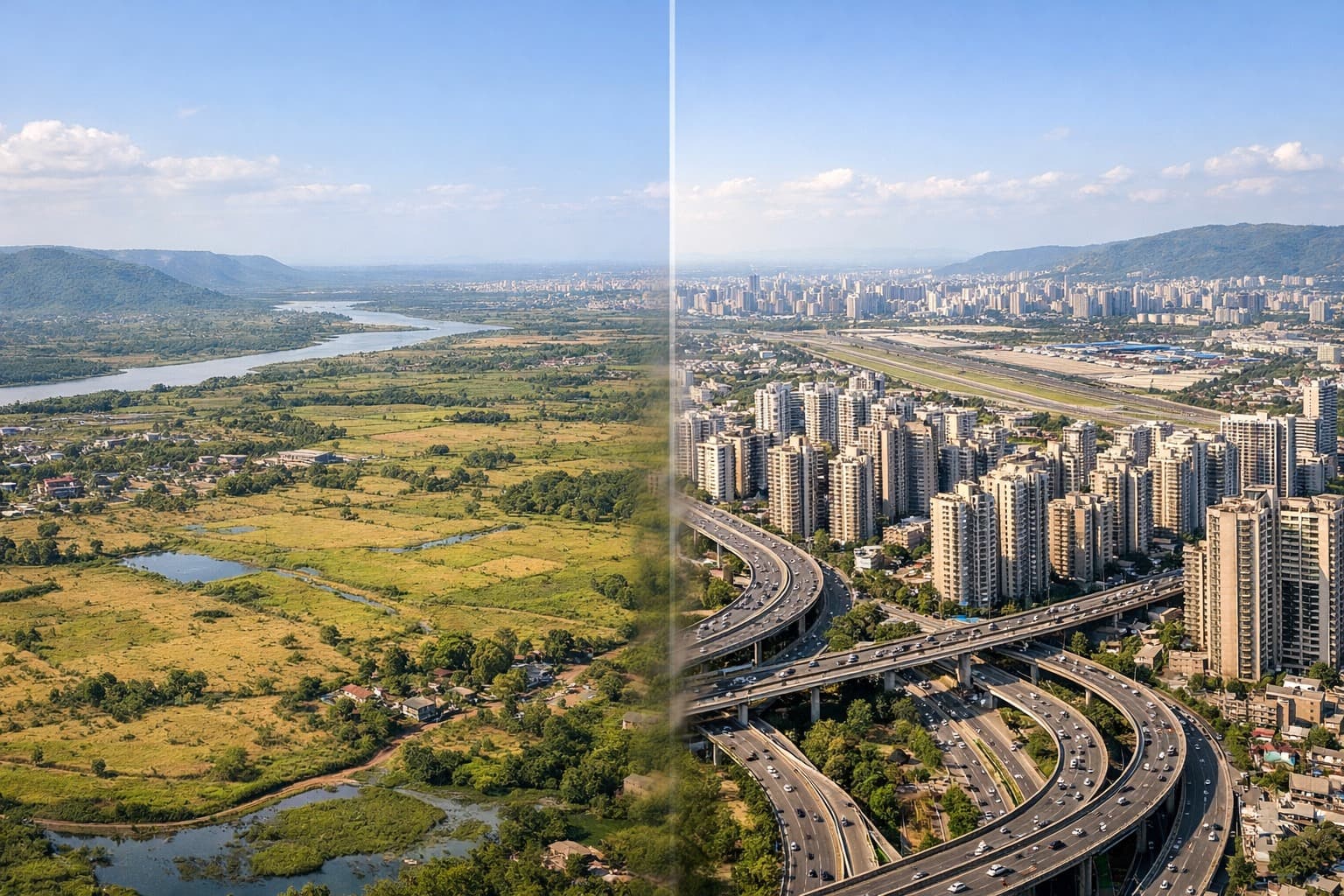
The commencement of commercial operations at NMIA has unlocked years of pent-up real estate potential. The inaugural IndiGo flight from Bengaluru symbolised more than aviation readiness—it confirmed Navi Mumbai’s transition into a globally connected urban node. Since 2021, Panvel real estate has recorded a remarkable 74% rise in apartment prices, while residential plots have surged by nearly 93%. This scale of appreciation clearly reflects how airport-led infrastructure can transform peripheral regions into high-demand investment zones.
Latest Developments Strengthening Market Confidence
Several parallel infrastructure upgrades are reinforcing this growth momentum. Major airlines such as IndiGo and Akasa Air have announced multiple daily connections to domestic cities, ensuring consistent passenger traffic. The iconic Atal Setu, now fully operational, has reduced travel time from South Mumbai to the airport region to under forty minutes. Together, these developments have significantly enhanced liveability, commercial feasibility, and investor confidence in Navi Mumbai.
How NMIA Has Changed Property Prices in Panvel
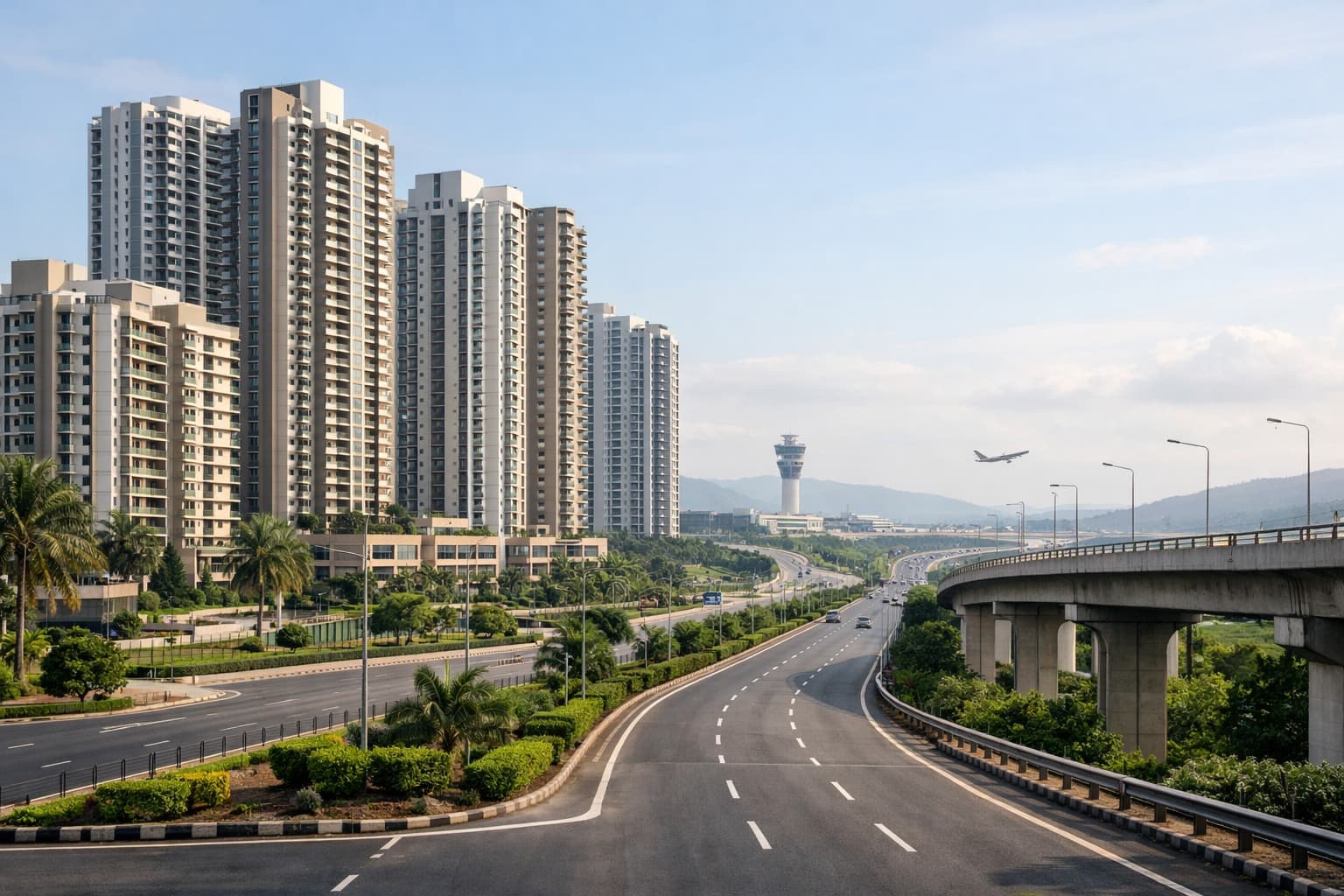
The most visible impact of NMIA is evident in Panvel, which has evolved from an affordable suburb into a high-growth real estate destination. Apartment prices that once ranged between ₹5,800 and ₹6,900 per sq ft in 2021 now command ₹10,000 to ₹12,000 per sq ft. This NMIA real estate growth has outperformed much of the Mumbai Metropolitan Region, driven by improved accessibility, job creation, and the emergence of an airport-centric economic ecosystem.
Residential Land Sees Even Sharper Appreciation
While apartments have grown steadily, residential land has seen an even more aggressive upswing. Plot prices near the airport influence zone have almost doubled in four years, reflecting strong interest from developers and high-net-worth individuals. The scarcity of well-located land, combined with long-term commercial potential, has made land parcels one of the most sought-after asset classes in Navi Mumbai property prices post-NMIA.
Top Investment Hotspots Near Navi Mumbai Airport
Three locations stand out as clear beneficiaries of NMIA-led growth: Ulwe, Taloja, and Kharghar. Ulwe property has emerged as the closest residential market to the airport, attracting aviation professionals and investors focused on rental income. Taloja remains a relatively affordable entry point, supported by industrial expansion and metro connectivity. Kharghar, with its superior social infrastructure and premium developments, appeals to end-users and long-term investors seeking lifestyle-driven appreciation.
Role of Connectivity in Sustained Appreciation
Infrastructure connectivity is the backbone of this real estate surge. The Atal Setu, Mumbai–Pune Expressway, suburban rail, and upcoming metro lines have effectively integrated Navi Mumbai with the core city. This seamless mobility has repositioned Panvel and Ulwe as practical residential choices for professionals working across Mumbai. As a result, airport-led real estate growth is no longer speculative—it is supported by daily commuting patterns and real economic activity.
Architectural Scale and Global Positioning of NMIA
Beyond connectivity, NMIA’s scale and design add to its long-term impact. Spread over more than 1,100 hectares, the airport’s lotus-inspired terminal reflects India’s ambition to create world-class aviation infrastructure. With an initial capacity of 20 million passengers and a planned expansion to 90 million annually, NMIA ensures sustained demand for housing, hospitality, logistics, and commercial spaces around it for decades.
Expected ROI and Future Growth Outlook
Industry experts forecast annual capital appreciation of 8% to 12% in the NMIA influence zone over the next five to seven years. As airport operations move toward a 24-hour cycle in 2026, employment generation in aviation, logistics, hospitality, and retail is expected to multiply. This will directly push rental demand higher, with yields projected to approach 4.5% in prime locations. For investors evaluating Navi Mumbai property price growth after NMIA, the focus should remain on well-connected projects near metro stations and major road links.
Summary
The operational launch of the Navi Mumbai International Airport has fundamentally altered the region’s real estate trajectory. What began as infrastructure anticipation has now matured into real, measurable value creation. With Panvel recording a 74% price rise, strong gains in residential land, and transformational connectivity through Atal Setu, Navi Mumbai has moved from the periphery to the centre of Mumbai’s growth story. For homebuyers and investors alike, the NMIA corridor offers a rare combination of connectivity, lifestyle, and long-term capital appreciation—making this phase a critical window for informed real estate decisions.