
Natural Light and Space Perception
Summary
Natural light profoundly influences a flat's perceived spaciousness, often more than its actual size, a factor frequently underestimated by home buyers. This blog explains how light tricks the eye, the importance of orientation (especially in India), and practical design strategies to maximize natural light for an open, airy feel.

Introduction
Walk into two flats of the exact same carpet area, same furniture, same layout. One feels open and breathable. The other feels boxed in, almost claustrophobic. Measure them and the numbers are identical. The difference, nine times out of ten, is light. Natural light flat quality changes how a space feels far more than its actual square footage does, and most buyers underestimate this until they have lived in both kinds of homes themselves.
Why Light Tricks the Eye Into Seeing More Space
The human eye does not measure rooms in square feet. It measures them in contrast, depth, and how far the gaze can travel before hitting a wall or a shadow. A room flooded with daylight allows your eye to read every corner clearly, which the brain interprets as openness. A dimly lit room, even a genuinely large one, forces the eye to stop short at the edge of visible light, and the brain reads that boundary as the edge of the space itself.
This is not decorating folklore. It is basic visual perception, and it explains why a 600 square foot studio with a large window facing an open courtyard often feels roomier than an 850 square foot flat with small windows facing a narrow lane.
Orientation Matters More Than Most Buyers Realise
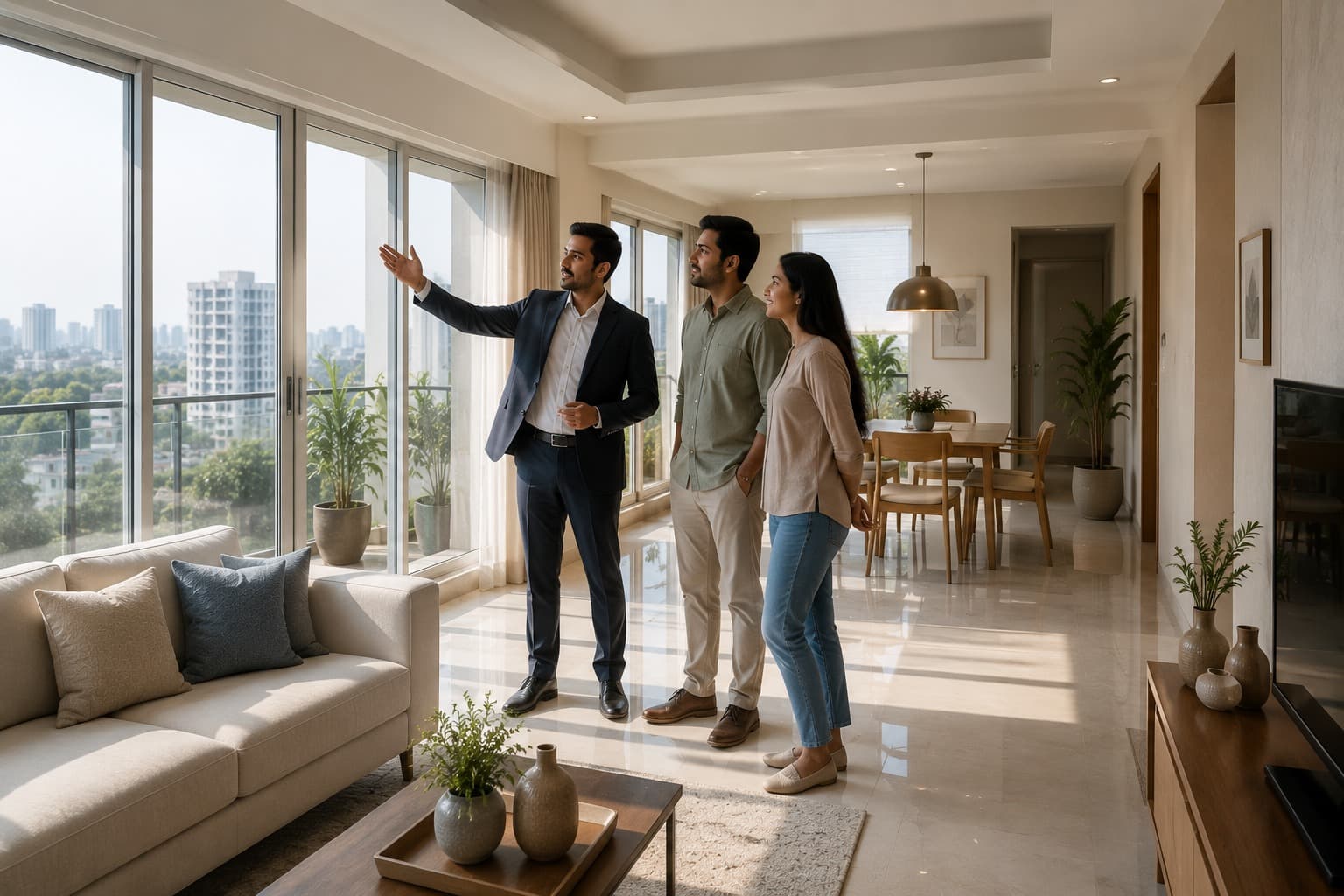
Why north and east facing flats feel more spacious in India has a straightforward climatic explanation. North-facing rooms receive soft, even, indirect daylight through most of the day without the harsh glare that direct sun produces. East-facing rooms get a gentle morning flood of light that warms the space early and tapers off by afternoon, avoiding the punishing heat that west-facing rooms absorb later in the day.
South and west orientations in Indian cities often mean drawing curtains shut by early afternoon just to manage heat and glare, which defeats the entire purpose of having windows in the first place. A flat that needs its curtains closed for half the day is functionally as dim as one with smaller windows altogether.
How to Actually Judge Light During a Visit
How to judge natural light quality during a flat visit requires more than glancing around during a quick walkthrough. Stand in the centre of each room and notice how far the daylight actually travels before it fades into shadow near the back wall. In a well-lit room, you should be able to read comfortably from almost anywhere within it without switching on a single bulb, provided it is daytime.
Check what sits directly outside each window. A window facing another building's wall four feet away delivers almost no usable light regardless of its size. A smaller window facing an open area or a garden will often outperform a larger one boxed in by neighbouring structures.
Designing Around the Light You Have
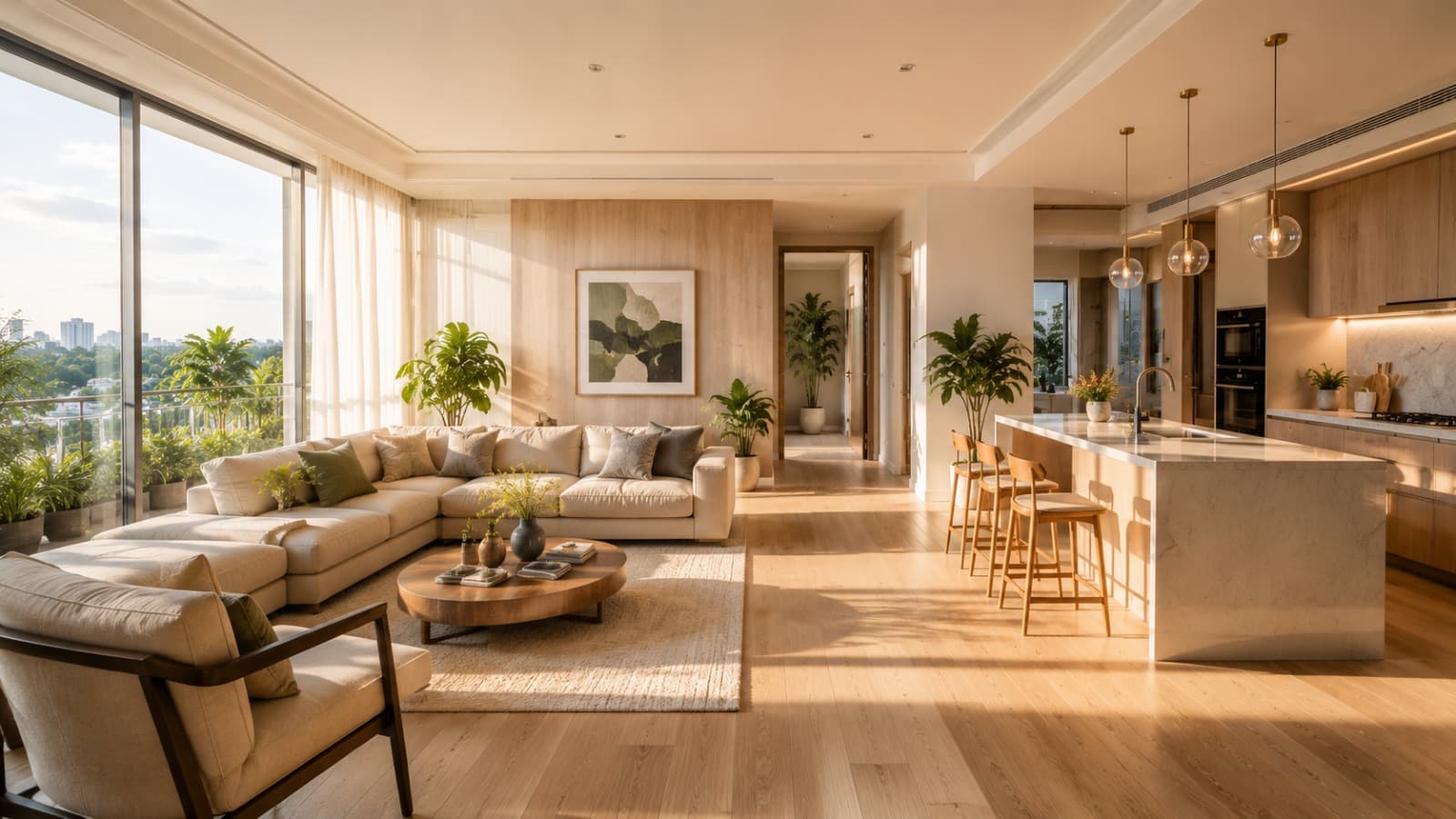
Even when a flat's natural orientation is not ideal, smart placement choices recover a surprising amount of perceived space. Light placement small flat India strategies that consistently work include positioning mirrors directly opposite windows to bounce daylight deeper into the room, choosing sheer curtains over heavy drapes so light filters through even when privacy is needed, and keeping furniture below window-sill height near any light source so the glow is not blocked at its origin point.
Pale wall colours reflect more light than dark, saturated ones, which matters considerably in rooms that already receive limited daylight. A pale ceiling in particular bounces light downward and makes the entire room read brighter.
Summary
How natural light changes the way a flat feels bigger or smaller is one of the most underrated factors in Indian home buying decisions, often overshadowed entirely by carpet area discussions. Natural light tips for small apartments feeling larger India combine smart orientation awareness, careful furniture placement, and light-reflective colour choices to recover space that no renovation budget could otherwise buy.
The next time you walk into a flat for a viewing, spend less time measuring the walls and more time watching how the light moves through the room across the hour you are there. It will tell you more about how the space will actually feel to live in than the floor plan ever can.