
Move-In Inspection Checklist: A Comprehensive Guide for Your New Flat
Summary
Protect your investment with a comprehensive move-in inspection checklist. This guide covers essential document verification, room-by-room checks, and amenity inspections to ensure the builder addresses defects before you take possession.

Introduction
Getting the possession letter in hand feels like the finish line. After months of waiting, paying instalments and following up with the builder, the keys are finally within reach. But this moment, right before you sign off and take the flat, is actually one of the most important checkpoints in the entire homebuying journey.
A thorough move-in inspection checklist protects everything you have invested. Issues identified before possession are the builder's legal responsibility. The same issues discovered after you have signed the handover documents become your personal repair bill. The difference between the two outcomes is the quality of your final inspection.
Here is a structured, room-by-room and document-by-document guide to walk you through it properly.
Documents First, Keys Second
Before you step inside the flat for a physical inspection, verify the paperwork. This order matters.
The Occupancy Certificate, issued by the local municipal authority, confirms the building is legally fit for habitation. Never accept possession without one. A flat without an OC can face problems with electricity connections, water supply approvals and future resale.
The Completion Certificate confirms the building was constructed in accordance with the sanctioned plans. Ask the builder to share a copy.
Check the Sale Agreement and match the carpet area, flat configuration and promised specifications against what has actually been delivered. Discrepancies here need to be raised before signing anything.
If you have a home loan, confirm the bank has disbursed the full amount and that the builder has received it. Obtain the bank NOC and the allotment letter.
Collect the No Objection Certificate for water and sewage from the builder, along with utility sanction documents for your specific unit. Also request the RERA registration details and verify that the project matches its filings.
Never sign the possession letter before completing both the document check and the physical inspection below. Once you sign, the builder can legitimately claim the flat was handed over in acceptable condition.
Structural Checks: Walls, Floors and Ceilings
Start with the structural basics of each room.
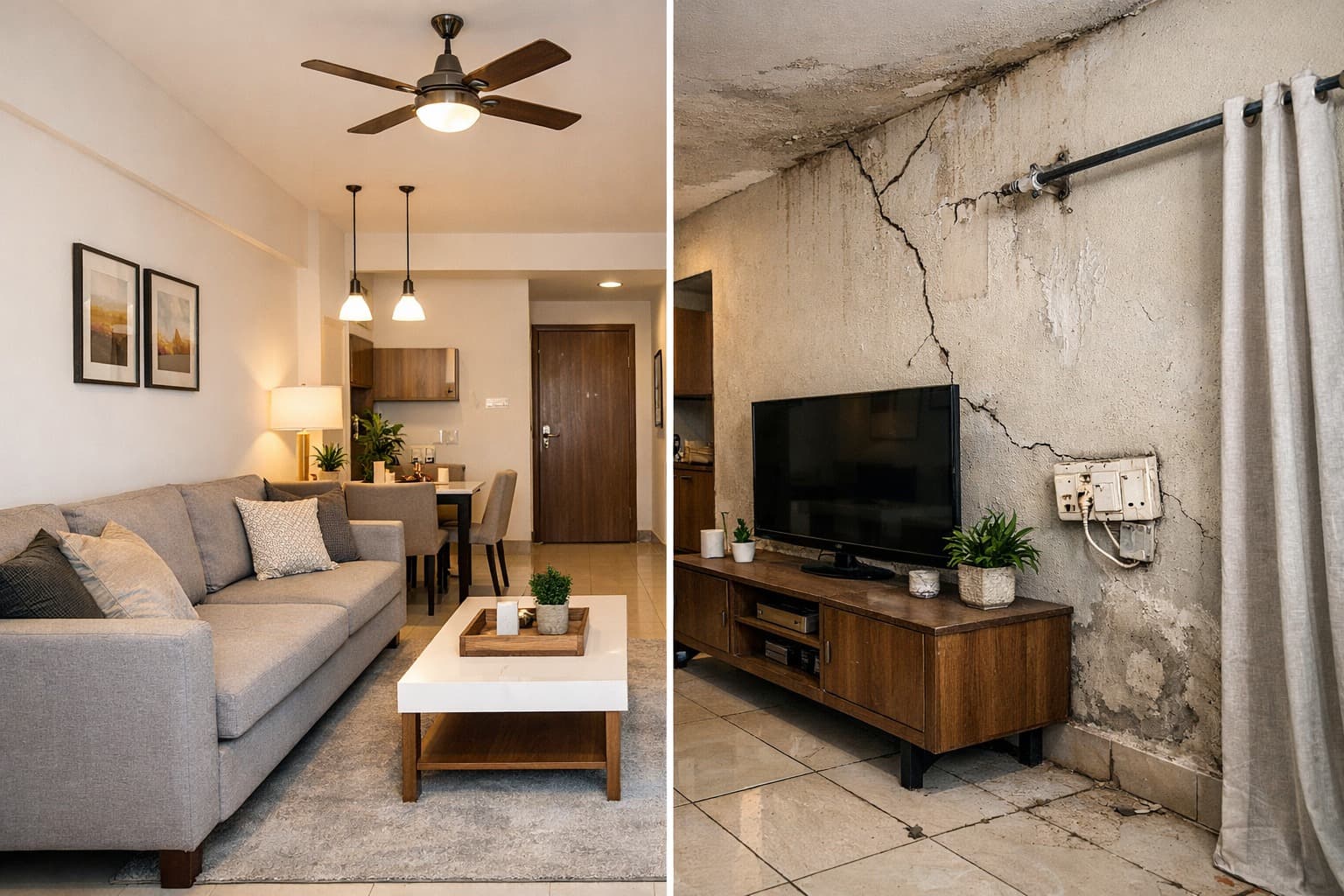
Check every wall carefully for cracks, especially at corners and around window frames. Hairline cracks in plaster are common but horizontal or diagonal structural cracks warrant a serious conversation with the builder.
Test floor levelness by placing a round object on the floor in different spots. If it rolls consistently in one direction, the floor has a level problem. Uneven flooring can cause drainage issues in bathrooms and aesthetic problems in living areas after furniture placement.
Inspect the ceiling for water stains, seepage marks or discolouration. These are early signs of moisture issues from the slab or terrace above. Check all four corners of each room where ceiling meets wall.
Look for dampness along the base of external walls. Ground-floor and top-floor flats are particularly prone to this. Press your hand against suspicious patches on walls to feel for moisture.
Electrical Inspection
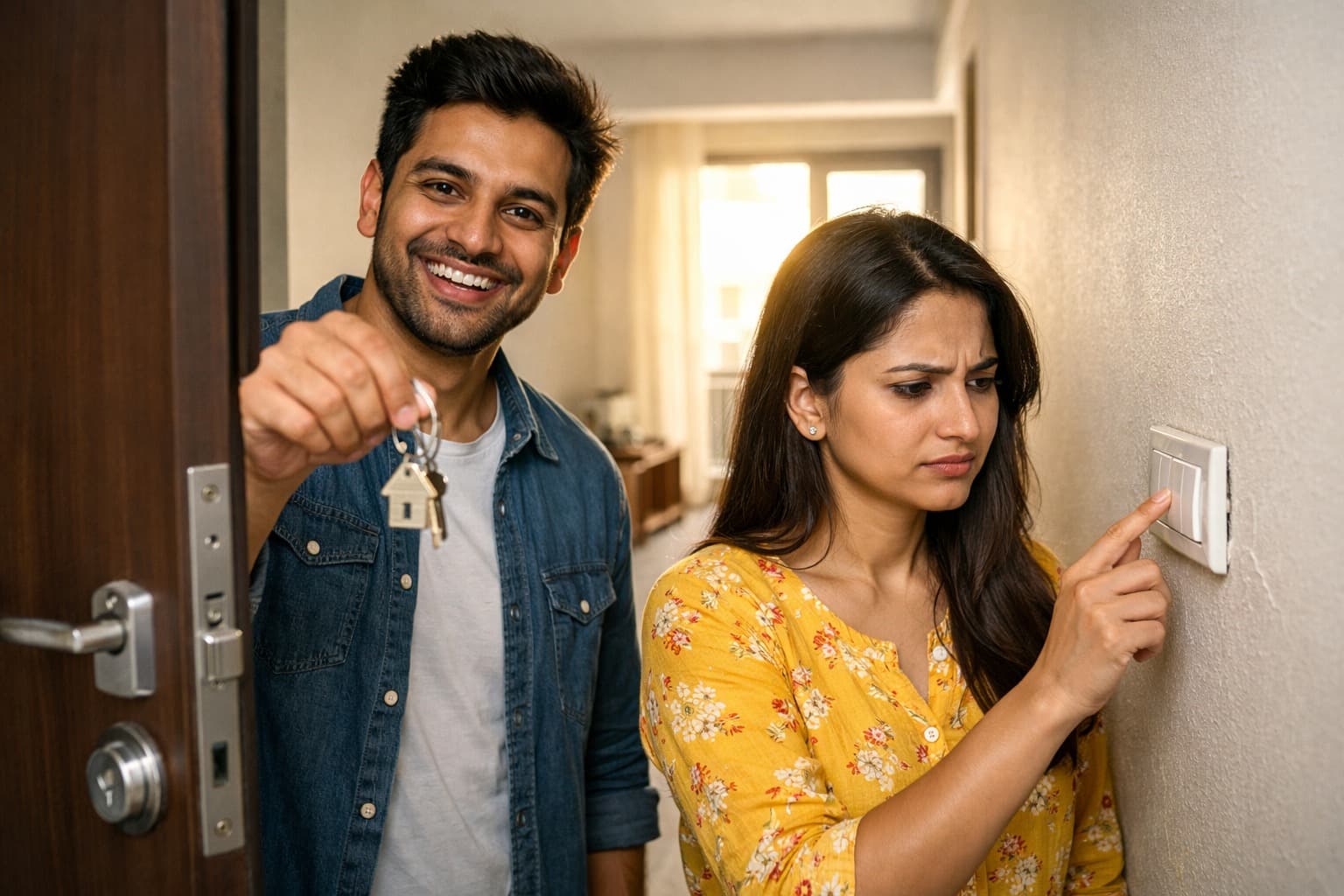
Switch on every light point in the flat. Take a working phone charger or a small device to test every plug point individually. Do not assume they all work because some are lit.
Check that the MCB (Miniature Circuit Breaker) board is properly labelled and that all switches correspond correctly to their intended fixtures. Test the earthing by checking whether a qualified electrician or your inspector can verify it.
Confirm that the number of electrical points in each room matches what was promised in your agreement.
Plumbing and Water Checks
Open every tap in the kitchen and all bathrooms and let water run for a few minutes. Check water pressure at each point. Low pressure in upper-floor flats is a common but significant issue.
Test all drainage outlets by filling sinks and basins and observing how quickly water drains. Slow drainage at this stage points to blocked pipes that need clearing before you move in.
Check under sinks and below the toilet cistern for leaks or damp patches. Inspect the flush mechanism in every bathroom. Test the hot water connection if a geyser point has been provided.
Room-by-Room Essentials
In the kitchen, check that all tile joints are properly grouted, that the chimney point is in place and that the drainage below the sink is watertight.
In bathrooms, check tile alignment, the quality of grouting, and whether anti-skid tiles were used on the floor as specified.
Check all door frames for alignment. Doors should close completely without sticking or leaving gaps. Test window latches, handles and sliding mechanisms on every window.
Common Areas and Amenities
Do not sign off until you have walked the amenities your agreement promised. Check the gym, swimming pool safety railings, children's play area, parking allocation and basement ventilation. Incomplete amenities must be documented with a written timeline from the builder before possession.
Summary
A rigorous move-in inspection checklist covers documents, structure, electrical, plumbing and amenities before you accept the keys. The flat possession checklist India standard requires verifying the Occupancy Certificate, testing all utilities, checking structural integrity room by room and documenting every defect with photographs. A proper home inspection before possession shifts repair responsibility squarely onto the builder where it legally belongs. Never rush this step regardless of how eager you are to move in. An hour of careful inspection today can save months of dispute and lakhs in repairs tomorrow.