
Monsoon Inspection: Your Best Window into Property Quality
Summary
A monsoon inspection is crucial for property buyers, revealing hidden construction flaws and water damage that dry weather visits conveniently hide. It exposes shortcuts, from terrace drainage to basement seepage, enabling informed purchasing decisions and negotiation leverage.

Introduction
Most buyers walk into a flat on a bright sunny afternoon, admire the natural light, sign the token amount, and only discover the truth about the building three monsoons later. That is backwards. A monsoon inspection tells you things a summer site visit simply cannot, because water has a way of exposing every shortcut a builder took. If you are serious about a property inspection before putting your money down, the rainy season is not an inconvenience to work around. It is your best window into what you are actually buying.
Why Builders Fear the Monsoon Inspection
Sales teams quietly discourage site visits during heavy rain, and there is a reason for that. Puddles collect where they shouldn't. Lift lobbies that looked marble smooth in April start smelling of damp concrete. None of this is an accident of weather. It is the building telling on itself, and a buyer who shows up anyway gets information that no brochure will ever offer.
Start With The Terrace And Common Areas
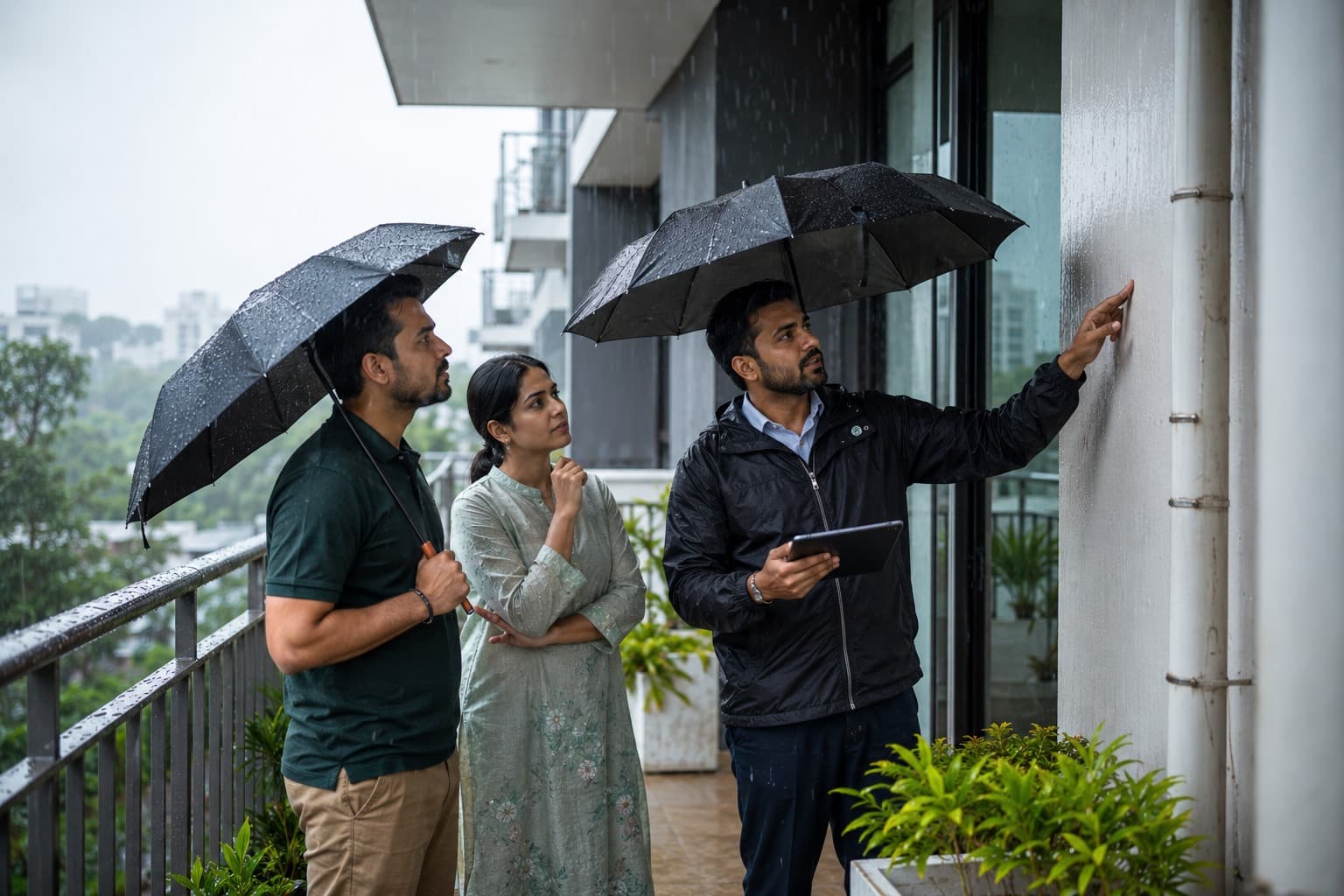
Ask to walk the terrace during or right after a spell of rain. Standing water that takes hours to drain usually points to poor slope work or a waterproofing check that was never done properly. Check the parapet walls too. Hairline cracks that look harmless in dry weather often become active leak points once water finds its way in.
Windows, Balconies, And The Silent Seepage Problem
Run your hand along the window frames and balcony ledges. A faint dampness or a slightly swollen wooden frame is an early warning sign, not a cosmetic issue. Signs of seepage in new apartment units rarely announce themselves with a dramatic leak on day one. It shows up first as a musty smell in a cupboard, then a paint bubble, then finally the crack everyone notices too late.
Basement And Parking Level Checks
Basements and stilt parking areas are where monsoon problems hide best because owners rarely visit them regularly. Look at the base of support columns and along the boundary walls. Efflorescence, that white chalky residue on concrete, is a fairly reliable sign that water has been seeping through for a while, regardless of what the sales brochure promises.
Drainage And Waterlogging Around The Building
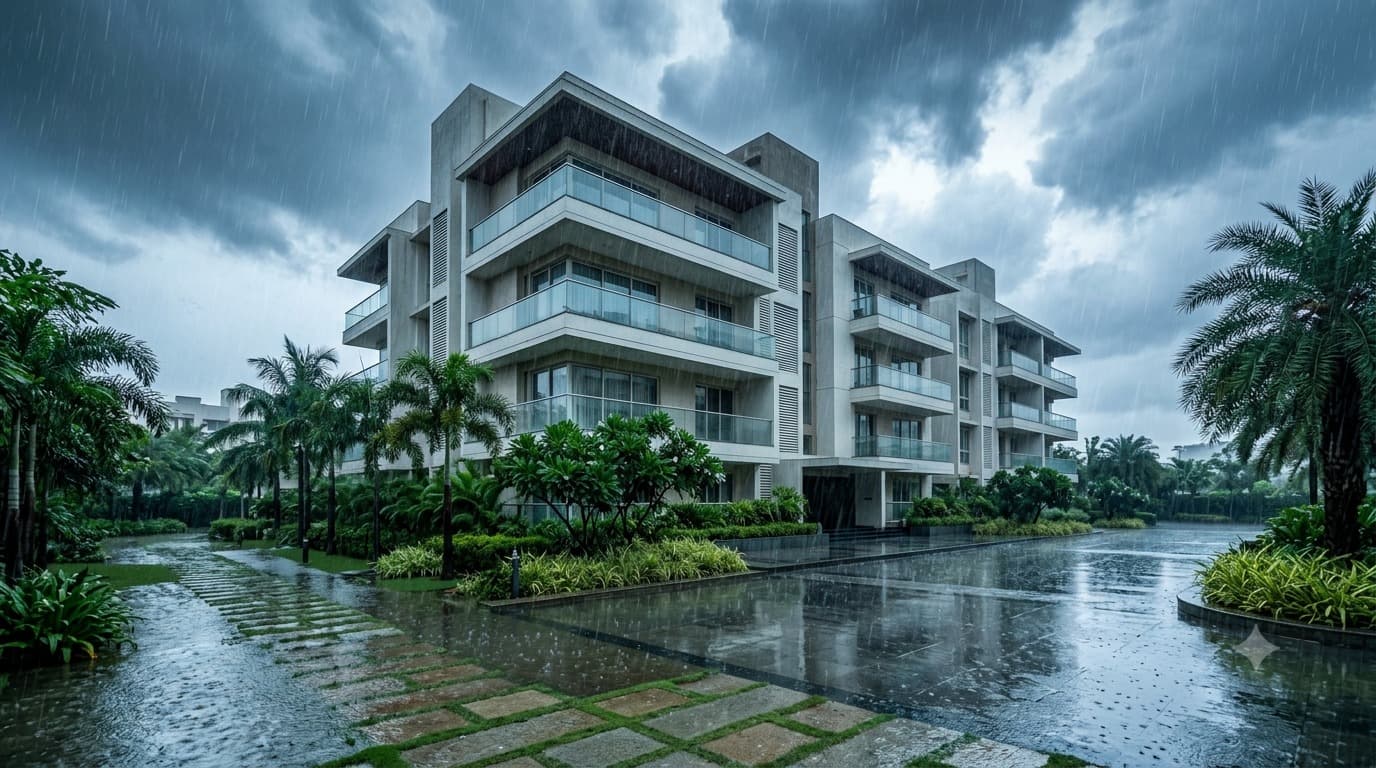
Step outside and look at how the compound handles rainwater. Does it drain within an hour, or does the entire driveway turn into a small lake every time it rains? Waterlogging in apartments at the project level tends to repeat itself every single monsoon, and it is not something a fresh coat of paint will ever fix.
Electrical Fittings And Dampness Risk
Dampness near electrical points is more than an aesthetic problem, it is a safety one. Check switchboards on external walls and near balconies for any discoloration or corrosion around the fittings. A property that looks fine but smells faintly of wet plaster near its electrical panels deserves a much closer second look before you commit.
What To Ask The Builder Or Seller
Do not accept vague reassurances. Ask specifically what waterproofing method was used on the terrace, how old the membrane is, and whether there have been any leak complaints from existing residents in that block. A builder confident in the construction quality will usually answer without hesitation. Evasive answers are, on their own, a fairly useful red flag.
Timing Your Visit Right
The best time to inspect flat options is to plan two visits, one during a dry spell and one during or right after heavy rain. Comparing the same flat under both conditions tells you far more than either visit alone. It also gives you leverage. Genuine issues found during a monsoon visit are excellent, and entirely fair, grounds for price negotiation.
Summary
A monsoon inspection remains one of the most underused tools in real estate India home buying, yet it reveals what a dry season visit conveniently hides. Following a proper monsoon property inspection checklist, from terrace drainage to basement seepage and swollen window frames, exposes construction quality far better than any brochure can. Buyers who treat this as part of their standard property inspection routine make far more informed decisions, avoiding years of repair costs that a five minute rainy day walkthrough could have flagged before the sale was finalised.
Video will be embedded from: https://www.youtube.com/watch?v=LaFdfJ8U4Qc