
Luxury Apartments With Pet-Friendly Amenities: How Indian Housing Is Catching Up With Pet Owners
Summary
Luxury apartments in India are increasingly catering to pet owners with dedicated amenities like dog parks and grooming stations. Buyers should verify pet-friendly commitments in society bylaws and assess neighborhood veterinary access.

Introduction
India has somewhere between 30 and 35 million pet dogs and the number keeps climbing. Urban households, particularly in Mumbai, Bengaluru, Delhi NCR, and Pune, have been adopting pets at a pace that the country's residential real estate market largely ignored for years. Pet friendly apartments India were almost nonexistent as a deliberate product category as recently as five years ago. What existed was tolerance at best, restrictions at worst. That is changing now, and the change is happening fastest at the top end of the market. Luxury pet friendly homes are no longer a niche offering. They are becoming a buyer expectation among a specific and growing segment of urban professionals who will not compromise on where their dog lives any more than on where they do.
Why the Luxury Segment Moved First
Premium residential buyers pushed this conversation into developer boardrooms because they had the leverage to do so. A buyer spending Rs 3 crore to Rs 8 crore on an apartment asks different questions than someone buying at Rs 80 lakh. They ask about the pet policy on day one. They ask about where the dog walks, where it gets bathed, whether the lift allows pets, and whether the society committee has breed restrictions that will create conflict after possession.
Developers targeting this segment quickly learned that losing a sale over a Labrador was a preventable outcome. The pet-friendly design conversation started as a concession and has evolved into a genuine product feature that some buyers specifically seek out.
What Pet-Friendly Actually Means in a Well-Designed Project
The difference between a project that says it is pet friendly housing India and one that genuinely is comes down to infrastructure. A simple declaration that pets are allowed does not make a project pet-friendly. What does is a dedicated dog park within the complex where animals can run off-leash without disturbing non-pet-owning residents. Separate pet washing stations with appropriate drainage, warm water access, and drying space. Designated relief zones with waste disposal infrastructure placed logically along internal walking paths.
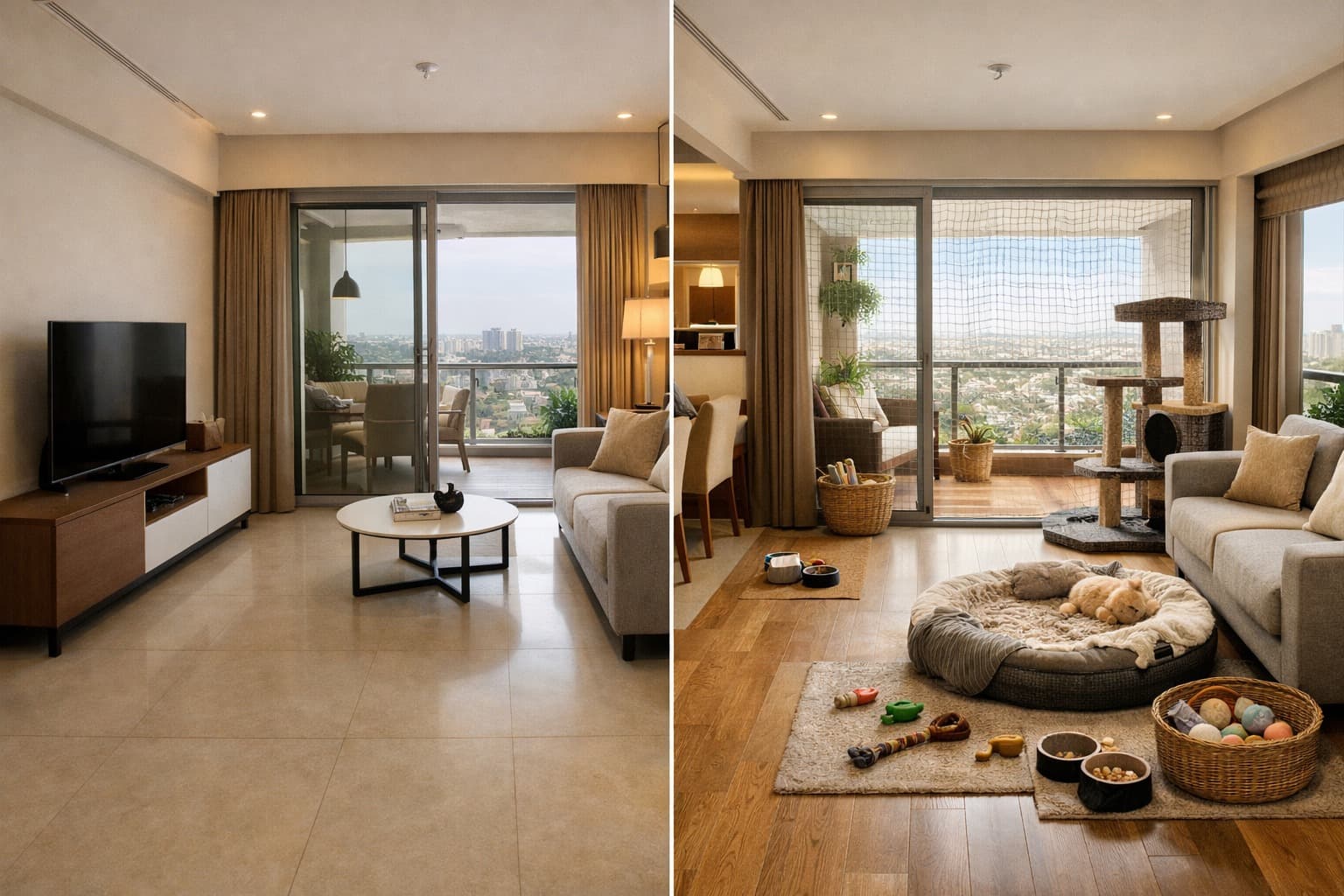
Some projects are going further. Wider lift cabins that accommodate large breeds comfortably. Separate service entrances for returning from walks so muddy paws do not cross the main lobby. Storage lockers near ground level for leashes, waste bags, and outdoor pet gear. These details are small individually but collectively they signal that the developer thought seriously about how pet owners actually live.
Projects Setting the Standard
Several developers have moved from policy to product in a meaningful way. Lodha's premium projects in Thane and South Mumbai have incorporated dedicated pet parks and grooming zones in their lifestyle infrastructure. Godrej Properties has introduced pet-friendly policies with on-site facilities across select projects in Bengaluru and Pune. Brigade Group in Bengaluru has been among the more consistent performers on this front, integrating dog park luxury apartment spaces into township layouts where scale makes dedicated infrastructure viable.
Prestige Group's larger integrated townships in Bengaluru and Hyderabad have pet zones built into their open landscape design. The common thread across all of these is that the pet-friendly features arrived as part of the original master plan rather than as an afterthought added when buyer feedback demanded it.
The Society Committee Problem
Here is something developers cannot fully control. A project can be designed with every pet amenities luxury apartment feature imaginable and still become hostile to pet owners if the resident welfare association decides to impose its own restrictions after possession. Breed bans, lift restrictions, and mandatory muzzle rules in common areas are all decisions that societies can make independently of what the developer originally promised.
Buyers need to ask specifically whether the pet-friendly commitments are written into the registered society bye-laws or whether they exist only as marketing material. The two are very different things and the distinction becomes visible only after you have moved in with a Golden Retriever.
Veterinary Access and the Neighbourhood Layer
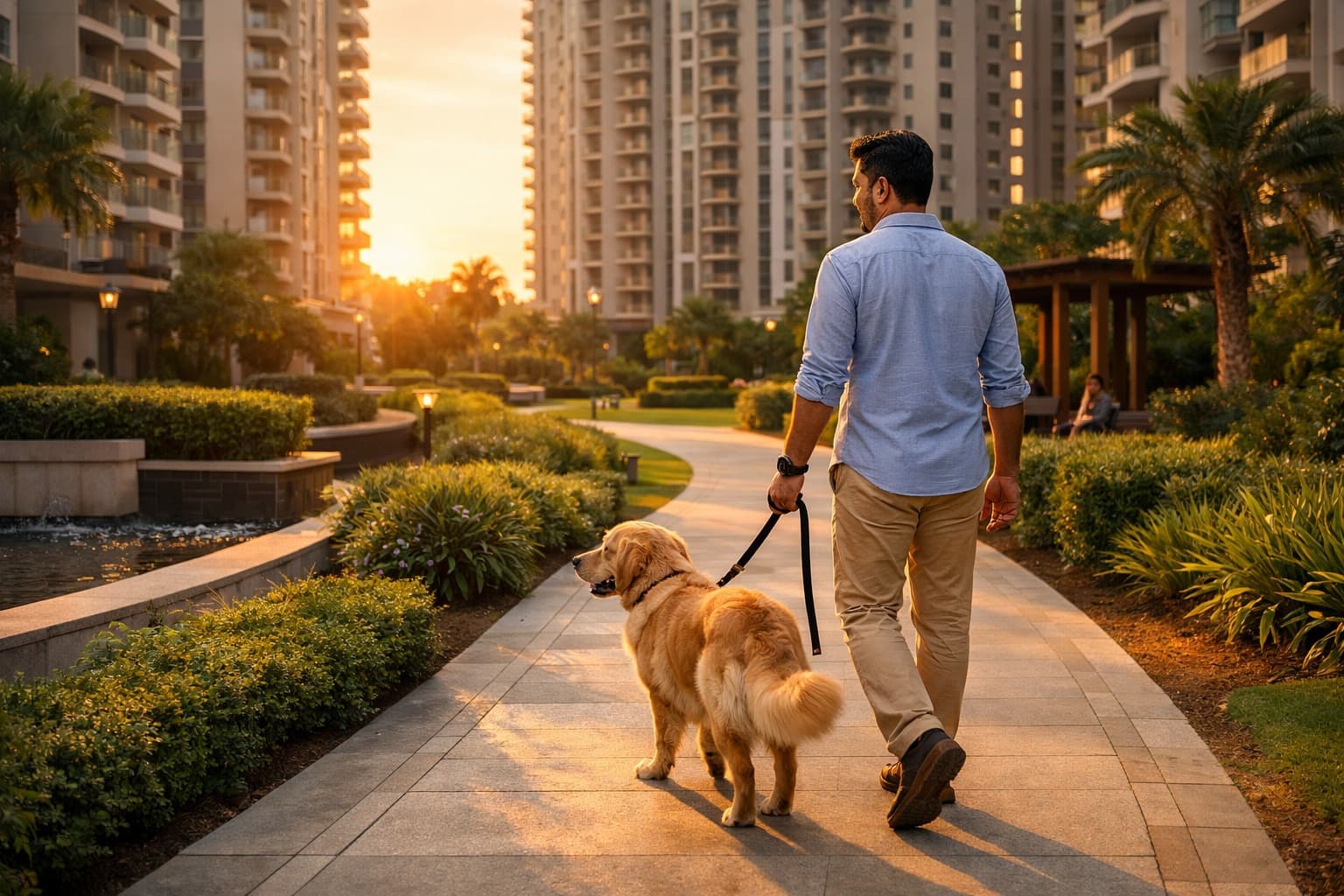
The amenities inside a project matter but so does what surrounds it. Dog friendly apartments India buyers are increasingly factoring in proximity to veterinary clinics, pet supply stores, and dog-friendly parks or beaches beyond the project boundary. A luxury apartment with an internal dog park is wonderful. A luxury apartment with an internal dog park and a veterinary clinic within two kilometres is significantly better.
Localities like Bandra, Powai, Koramangala, Indiranagar, and Gurgaon's Golf Course Road belt score well on this external pet infrastructure dimension because the density of pet-owning residents in these areas has created a supporting commercial ecosystem over years.
Summary
Luxury apartments with pet friendly amenities are shifting from a differentiator to a baseline expectation among premium residential buyers in India's major cities. Dedicated dog parks, grooming stations, pet-friendly lift policies, and waste management infrastructure are the features that separate genuinely pet friendly housing India projects from those that simply do not prohibit animals. Buyers should verify that commitments are embedded in society bye-laws, assess neighbourhood veterinary access, and visit the pet zones during a site visit rather than trusting the brochure photograph.